Dealing with the aftermath of a traumatic incident is one of the most overwhelming experiences anyone can face. Whether it’s a crime scene, an unattended death, or another biohazardous event in your Indianapolis home or business, the emotional toll is immense. But beyond the grief, there’s the practical challenge of trauma scene cleanup—a task that requires care, expertise, and adherence to strict safety protocols to prevent health risks from bloodborne pathogens, bodily fluids, and other contaminants.
As a resident of Indianapolis, you might feel isolated in these moments, but you’re not alone. Local services like Indianapolis Biohazard Cleanup are here to guide you through this process with compassion and professionalism. In this comprehensive guide, we’ll walk you through how to handle trauma scene cleanup step by step, offering practical tips tailored to the Hoosier State. From immediate actions to long-term recovery, we’ll cover everything you need to know to restore safety and peace to your space.
Understanding Trauma Scene Cleanup
Trauma scene cleanup, often referred to as biohazard remediation, involves the safe removal and disinfection of hazardous materials left behind after violent crimes, suicides, or accidents. In Indianapolis, where urban density and suburban sprawl mix, these incidents can occur in apartments downtown, family homes in Westfield, or quiet neighborhoods like Zionsville.
Why Professional Help is Essential
Attempting DIY cleanup without proper training can expose you to serious health risks, including exposure to hepatitis, HIV, and other infectious diseases. Indiana state regulations require certified professionals for biohazard handling to ensure compliance with OSHA and EPA guidelines. For instance, in the bustling areas around Geist or Irvington, where properties vary from historic homes to modern condos, improper cleanup could lead to legal liabilities or prolonged contamination.
Hiring experts not only protects your health but also speeds up the process, allowing you to focus on healing. At Indianapolis Biohazard Cleanup, our team is IICRC-certified and equipped to handle even the most complex scenes with discretion and efficiency.
Immediate Steps After an Incident
When a traumatic event occurs, your first priority is safety. Here’s how to respond right away:
Secure the Area
-
Evacuate and Isolate: Immediately evacuate the space and cordon off the affected area to prevent accidental exposure. Use caution tape or barriers if available.
-
Contact Authorities: In Indianapolis, dial 911 for emergencies. Once law enforcement has processed the scene, they’ll release it for cleanup—typically within hours or days, depending on the investigation.
-
Notify Insurance: Reach out to your homeowner’s or renter’s insurance provider. Many policies cover biohazard cleanup costs, especially in high-risk areas like Fall Creek Place, where urban incidents are more common.
Avoid Common Mistakes
Don’t touch anything with bare hands—use gloves if you must move items minimally. Refrain from using household cleaners, as they can spread contaminants rather than neutralize them. In humid Indianapolis summers, bacteria can multiply quickly, making prompt action crucial.
Preparing for Professional Cleanup
Once the scene is secured, preparation ensures a smooth remediation process.
Gather Necessary Documentation
Collect police reports, photos (if safe), and insurance details. This helps professionals like those at Indianapolis Biohazard Cleanup assess the scope without delay.
Choose the Right Service
Look for companies with 24/7 availability, as trauma doesn’t wait for business hours. Our 24 Hour Biohazard Cleanup service is designed for Indianapolis residents facing urgent needs, from downtown high-rises to suburban estates in Geist.
What to Expect During the Process
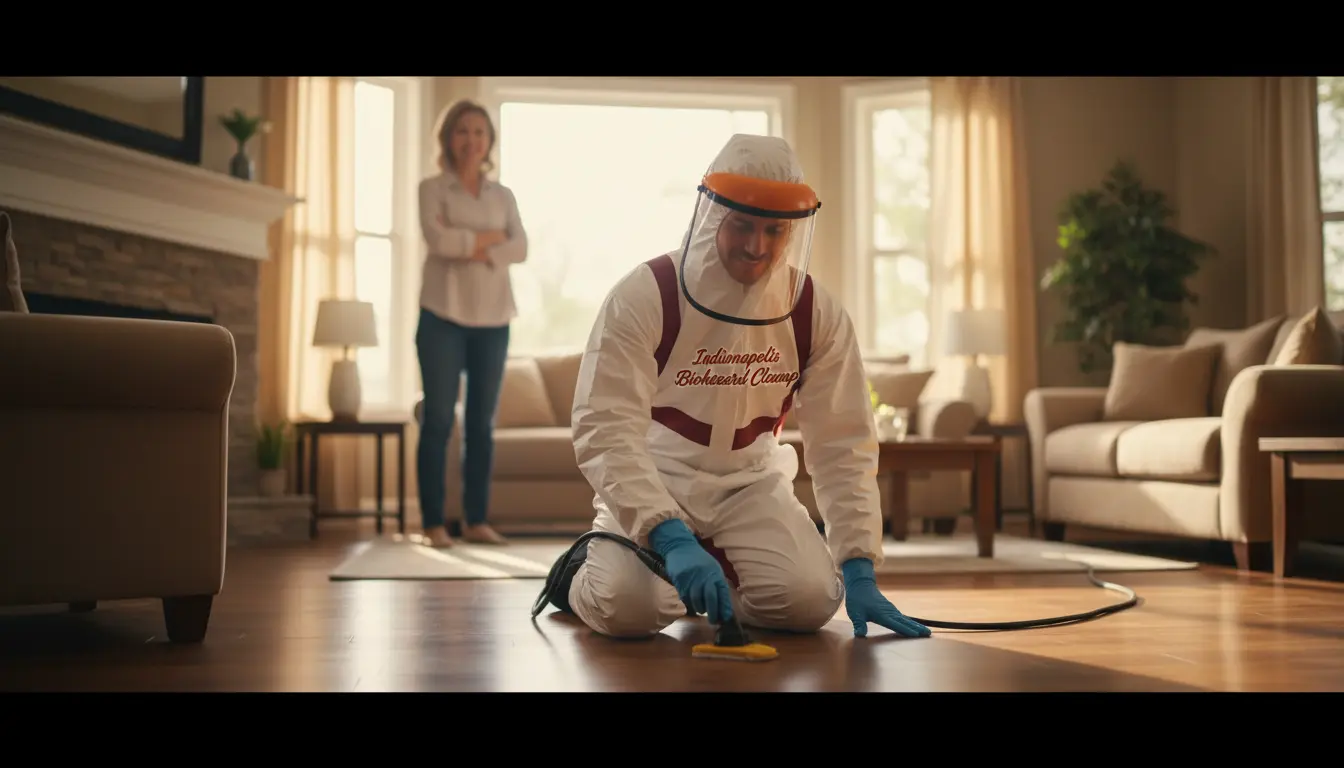
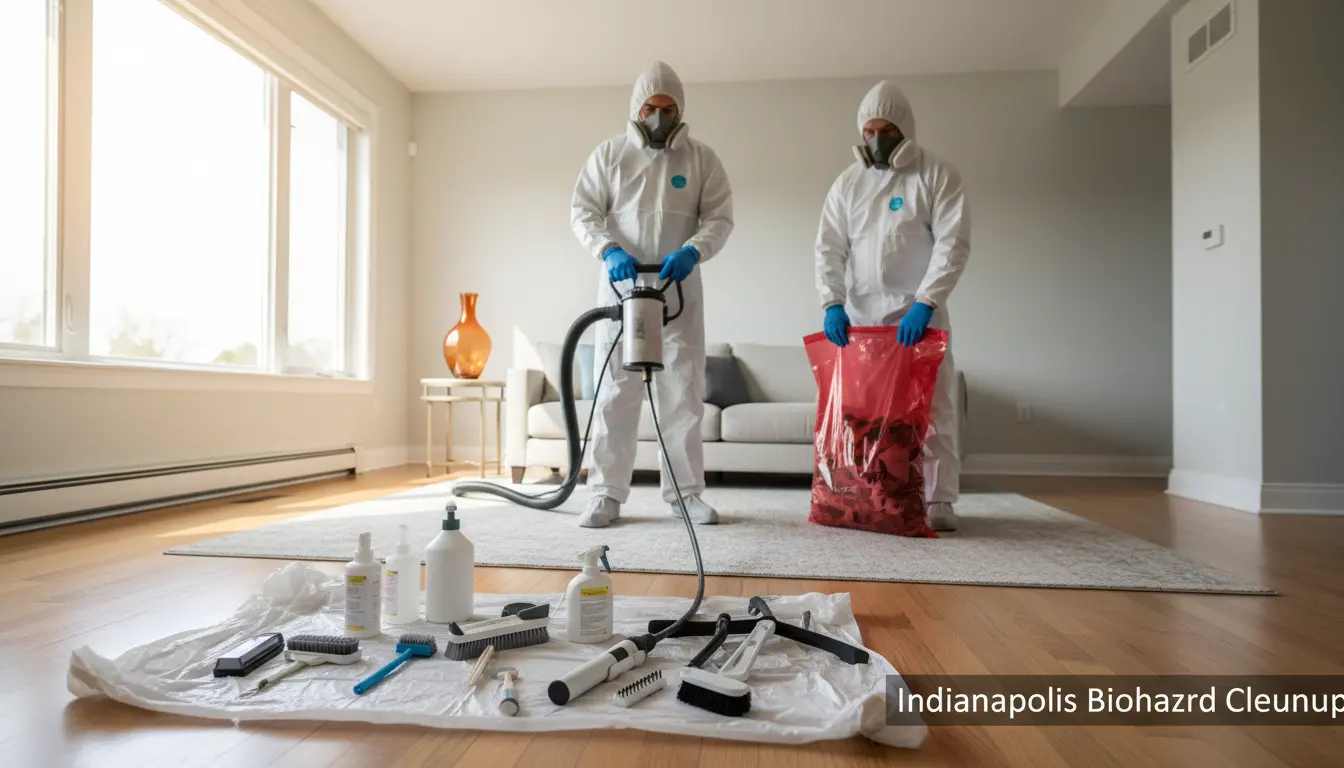
Professionals arrive in unmarked vehicles for privacy, wearing full PPE. They’ll remove debris, decontaminate surfaces, and dispose of waste at licensed facilities. For suicide sites, specialized Suicide Site Sanitization protocols ensure thorough emotional and physical restoration.
Practical Tips for Safe Trauma Scene Cleanup
If professionals are en route, here are actionable steps to minimize risks in the interim:
Personal Protective Equipment (PPE)
-
Gloves and Masks: Use nitrile gloves and N95 respirators to shield against airborne particles.
-
Footwear Covers: Booties prevent tracking contaminants through your home.
In Indianapolis’s variable weather, ensure your PPE is weather-resistant to avoid slips on rainy days common in spring.
Cleaning Techniques
-
Ventilation: Open windows and use fans to air out the space, but avoid cross-contamination between rooms.
-
Initial Removal: Use absorbent materials like cat litter for fluids, then bag them securely in biohazard-marked containers.
-
Disinfection: Apply EPA-approved disinfectants with a 10-minute contact time. For persistent issues like Mold Biohazard Remediation, which can arise post-incident in damp Indy basements, combine with HEPA vacuuming.
Odor Control
Trauma scenes often leave lingering smells. Neutralize them with enzyme-based cleaners rather than masks, which only hide the issue. Our Odor Elimination Treatment service uses advanced ozone technology to restore fresh air, vital in enclosed Indianapolis apartments.
Handling Specific Types of Incidents
Different traumas require tailored approaches.
Crime Scene Cleanup
For violent crimes, expect blood spatter on walls and floors. Our Crime Scene Cleanup experts in Indianapolis use forensic cleaning methods to remove traces invisible to the naked eye, ensuring no residue remains in areas like Irvington.
Unattended Death Scenarios
Decomposition can occur quickly in Indy’s warm climate. Act within 24-48 hours to prevent structural damage. Tips include sealing the room and using air scrubbers.
Homicide or Accident Sites
These often involve multiple biohazards. Coordinate with local authorities, as Indy Metro Police may require scene documentation before cleanup.
Emotional and Legal Considerations
Cleanup isn’t just physical—it’s emotional. Seek support from Indianapolis-based resources like the Indiana Crisis Line (211). Legally, document everything for insurance claims, and note that Indiana law mandates proper biohazard disposal to avoid fines.
In neighborhoods like Zionsville, where community ties are strong, restoring normalcy quickly helps neighbors heal too.
FAQ: Common Questions About Trauma Scene Cleanup
1. How long does trauma scene cleanup take?
It varies by scene size—small apartments might take 4-8 hours, while larger homes in Westfield could require a full day. Our team provides timelines upfront.
2. Is trauma cleanup covered by insurance in Indianapolis?
Yes, most policies include it under biohazard or dwelling coverage. We’ll assist with claims to minimize your out-of-pocket costs.
3. Can I clean up a small trauma scene myself?
We strongly advise against it due to health risks. For minor incidents, consult professionals to ensure safety.
4. What if mold develops after cleanup?
Post-trauma moisture can lead to mold. Our remediation services address this, especially in humid Indy summers.
5. How discreet is the cleanup process?
We prioritize privacy with unmarked vans and respectful teams, understanding the sensitivity in close-knit areas like Fall Creek Place.
Conclusion: Restore Safety with Expert Help
Handling trauma scene cleanup after an incident is daunting, but with the right steps and professional support, you can reclaim your space and peace of mind. In Indianapolis, from the cultural hubs of Irvington to the serene suburbs of Geist, Indianapolis Biohazard Cleanup stands ready to assist 24/7.
Don’t face this alone—contact us today at (317) 978-8032 for compassionate, efficient service. Let us handle the cleanup so you can focus on healing.