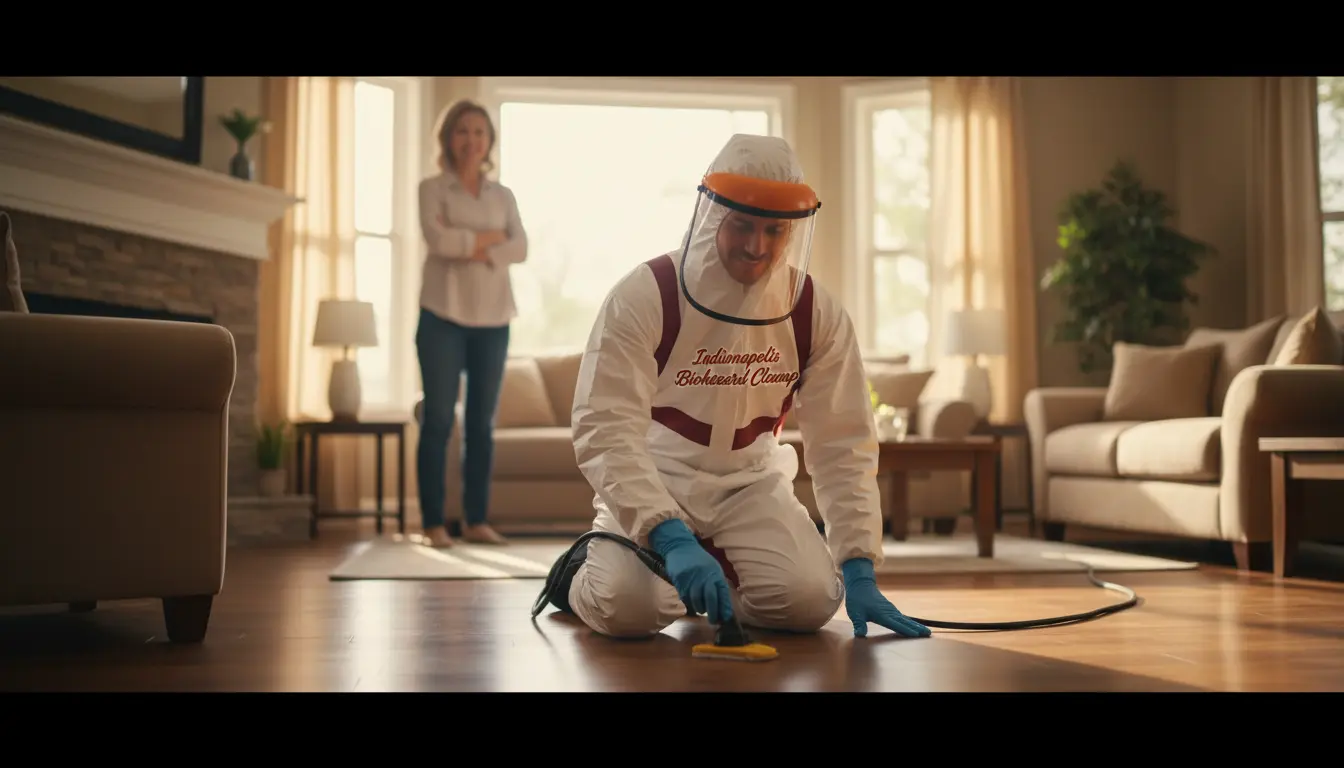
Indianapolis presents unique challenges for this work. The Midwest’s seasonal temperature extremes—summer heat indexes above 95°F and winter wind chills below zero—directly affect decomposition cycles and the migration of biological contaminants. In an unattended death scenario, the body’s natural breakdown releases volatile organic compounds (VOCs) and airborne pathogens that embed themselves into porous building materials. If not addressed correctly, these contaminants compromise indoor air quality for months or even years. Professional remediation, conducted by a certified specialist following OSHA and IICRC S540 standards, is the only reliable path to a safe, habitable space. Indianapolis Biohazard Cleanup provides that level of expertise, combining technical precision with compassionate discretion for property owners across Marion County.
Understanding the Scope of Biohazard Contamination
A biohazard event is not a simple mess. It is a complex contamination scenario involving blood, bodily fluids, tissue, and the microbial byproducts of decomposition. Each component presents distinct risks to indoor air quality. Bloodborne pathogens such as hepatitis B, hepatitis C, and HIV can remain viable in dried blood for days or weeks. Decomposition fluids, rich in enzymes and bacteria, break down organic materials and release gases that include putrescine and cadaverine—compounds that create that unmistakable, nauseating odor. These contaminants do not stay on surfaces. They aerosolize—meaning they become airborne particles that circulate through HVAC systems, settle into ductwork, and penetrate porous materials like drywall, carpet, and unfinished wood.
In Indianapolis, the age and construction style of many residential properties compound the problem. Historic homes in neighborhoods like Irvington or Meridian-Kessler often have plaster-and-lath walls, hardwood subfloors, and unsealed crawl spaces. These materials act like sponges for biological fluids. A remediation plan that only addresses visible stains will fail. The underlying contamination will continue to off-gas, degrading indoor air quality and potentially causing respiratory issues, allergic reactions, or psychological distress for future occupants. A thorough assessment must include moisture mapping, thermal imaging, and adenosine triphosphate (ATP) testing to detect hidden biological residue.
The Professional Remediation Workflow
Restoring indoor air quality after a biohazard event follows a strict, repeatable protocol. The process begins with a site assessment. A certified technician evaluates the extent of contamination, identifies affected materials, and tests for airborne particulate levels. This step determines the containment strategy and the level of personal protective equipment (PPE) required. For a typical unattended death in an Indianapolis residence, the team establishes a negative pressure containment zone using industrial-grade negative air machines equipped with HEPA filters. This prevents cross-contamination to unaffected areas of the property.
Physical Removal and Chemical Decontamination
Once containment is secured, the team removes all visible biohazardous material. This includes saturated carpet, padding, drywall, and insulation. In many cases, hardwood flooring must be lifted if fluids have seeped into the subfloor. These materials are double-bagged in biohazard waste bags, labeled according to OSHA standards, and transported to an authorized medical waste disposal facility. After physical removal, the remaining surfaces undergo a rigorous cleaning process. Technicians apply EPA-registered hospital-grade disinfectants specifically formulated to kill bloodborne pathogens and neutralize decomposition enzymes. These disinfectants require a specific dwell time—usually 10 to 15 minutes—to achieve viral inactivation.
The cleaning phase also addresses odor at a molecular level. Standard cleaners simply mask smells. Professional-grade enzyme treatments break down the organic compounds that cause odors, eliminating them rather than covering them up. In properties where decomposition has been active for several days or weeks, ozone generators or hydroxyl generators may be employed to oxidize airborne VOCs. However, these machines are used only after the space is unoccupied and the biological material has been removed, as ozone can be harmful to human health if inhaled.
Verification and Structural Encapsulation
After cleaning, the team performs verification testing. ATP testing measures the presence of biological residue on surfaces. A reading below a specified threshold indicates that the surface is biologically clean. Air quality testing, using a particle counter, confirms that airborne contaminant levels are within safe limits. Only then does the team proceed to structural encapsulation—sealing any exposed subfloor, wall cavities, or ductwork with a specialized antimicrobial primer. This step prevents future microbial growth and ensures that residual odors do not re-emerge.
Seasonal factors in Indianapolis heavily influence this workflow. During the humid summer months, decomposition accelerates, and biological fluids spread more quickly through porous materials. Winter conditions, with frozen ground and icy roads, can delay waste disposal and complicate site access. A skilled remediation team adapts its timeline and methods accordingly, always prioritizing thorough decontamination over speed.
Professional Remediation vs. Standard Cleaning: A Data Comparison
Property owners often ask why they cannot simply hire a janitorial service or handle the cleanup themselves. The answer lies in the fundamental differences in training, equipment, and regulatory compliance. The table below outlines the key distinctions.
| Feature/Metric | Professional Biohazard Remediation | Standard Residential Cleaning |
|---|---|---|
| Regulatory Compliance | Follows OSHA 29 CFR 1910.1030, EPA waste disposal regulations, and IICRC S540 standards | No specialized regulatory oversight for biohazards |
| Pathogen Elimination | EPA-registered hospital-grade disinfectants with verified dwell times; ATP testing for verification | Household bleach or all-purpose cleaners, often ineffective against bloodborne pathogens |
| Structural Assessment | Thermal imaging, moisture mapping, and inspection of subfloor, drywall, and HVAC systems | Visual inspection only; hidden contamination remains |
| Odor Removal | Enzyme treatments, hydroxyl generators, and negative air pressure to neutralize VOCs at the molecular level | Air fresheners or candles that mask odors temporarily |
| Waste Disposal | Licensed transport and incineration at authorized medical waste facilities | Illegal and dangerous disposal in standard trash |
Expert Insights for Advanced Diagnostics
Experienced remediation specialists rely on diagnostic techniques that go beyond surface inspection. Three advanced methods are critical for ensuring complete restoration of indoor air quality.
First, thermal imaging cameras detect temperature variations behind walls and under flooring. Biological fluids often create cooler or warmer zones as they saturate materials. A thermal scan can reveal the full footprint of contamination, guiding decisions about material removal. Second, moisture meters measure the saturation level of porous materials. Even if a surface appears dry, underlying moisture may still support microbial growth. Third, ATP swabbing provides a quantitative measure of biological residue. A reading above 10 relative light units (RLU) indicates that a surface requires additional cleaning. These tools eliminate guesswork and ensure that no contaminated area is missed.
Property owners frequently make mistakes that compromise the remediation process. One common error is using household bleach on biological matter. Bleach is corrosive, damages surfaces, and its disinfectant properties degrade quickly in the presence of organic material. It does not penetrate porous surfaces effectively. Another mistake is waiting for odors to dissipate naturally. Decomposition odors bind to materials and will not fade without active intervention. Finally, allowing untrained personnel—such as maintenance staff or family members—into the site before remediation is complete risks cross-contamination and exposure to bloodborne pathogens. The consequences include long-term health risks, structural damage that reduces property value, and potential liability for the property owner.
Understanding Pricing for Biohazard Remediation
The cost of restoring indoor air quality after a biohazard event varies based on several factors. Transparency is essential for property owners making decisions under stress. Indianapolis Biohazard Cleanup provides detailed estimates after a site assessment, but understanding the general pricing structure helps set expectations.
- Site mobilization fees: These cover the cost of transporting equipment—negative air machines, HEPA vacuums, PPE, and waste disposal containers—to the property. Typical fees range from $150 to $500 depending on the distance and urgency of the response.
- Hourly remediation rates: Most professional services charge between $150 and $300 per hour per technician. A standard unattended death cleanup in a single room may require 8 to 16 hours of labor, including containment setup, removal, cleaning, and verification.
- Specialized waste disposal: Biohazardous waste must be incinerated at an authorized facility. Disposal costs are typically calculated by weight, ranging from $0.50 to $2.00 per pound. A full cleanup can generate 50 to 200 pounds of waste.
- Structural material replacement: If drywall, flooring, or cabinetry must be removed and replaced, the cost increases. Subfloor replacement alone can add $500 to $2,000 depending on the square footage.
- HVAC decontamination: If the HVAC system circulated contaminated air, duct cleaning and disinfection may be necessary. This can cost $300 to $1,000 per unit.
Three factors most heavily influence the final cost: the extent of structural material replacement required, the total volume of biohazardous waste generated, and the necessity for specialized HVAC decontamination. Properties with central air systems that were running during the event almost always require ductwork attention to prevent recontamination of the indoor air.
Safety Standards and Regulatory Compliance
Adherence to established safety standards is non-negotiable in biohazard remediation. The Occupational Safety and Health Administration’s Bloodborne Pathogens Standard (29 CFR 1910.1030) mandates specific protocols for handling and disposing of materials that may contain blood or other potentially infectious materials. Technicians must be trained in these protocols, wear appropriate PPE, and use engineering controls such as sharps disposal containers and splash shields.
The Institute of Inspection, Cleaning and Restoration Certification (IICRC) publishes the S540 standard for trauma and crime scene cleanup. This standard defines the minimum requirements for cleaning, disinfecting, and restoring affected areas. It covers everything from initial risk assessment to final verification testing. A remediation company that follows S540 provides a higher level of assurance that the property is safe for reoccupancy. In the context of an Indianapolis property, compliance with these standards also protects the owner from liability if future tenants or buyers develop health issues linked to the event.
Frequently Asked Questions About Unattended Death Remediation
How long does it take for decomposition to affect indoor air quality?
Decomposition begins within minutes of death, but noticeable odor and airborne contamination typically develop within 24 to 48 hours, depending on temperature and humidity. In Indianapolis summer conditions, a body may reach advanced decomposition in 3 to 5 days, saturating the surrounding materials with fluids and VOCs. Air quality degrades rapidly as bacteria break down soft tissues, releasing compounds that can permeate drywall, carpet, and HVAC systems. Professional remediation must begin as soon as the scene is released by law enforcement to minimize structural damage and health risks.
Can opening windows and using fans restore indoor air quality after a biohazard event?
No. Ventilation alone cannot remove bloodborne pathogens or decomposition particles embedded in porous materials. Air circulation may temporarily reduce the concentration of airborne odors, but it does not address the source of contamination. In fact, running fans or opening windows can spread pathogens to other areas of the property and draw contaminated air into the HVAC system. Proper restoration requires containment, physical removal of affected materials, chemical disinfection, and verification testing.
What happens if biohazard contamination is not properly remediated?
Incomplete remediation leaves behind biological residue that continues to degrade indoor air quality. Occupants may experience respiratory irritation, allergic reactions, or infections from exposure to bloodborne pathogens. The odor will persist and often intensify over time as organic matter continues to break down. Structurally, contamination can cause wood rot, drywall deterioration, and mold growth. These issues reduce property value and can lead to legal liability if a future tenant or buyer becomes ill. Professional remediation with verification testing is the only way to ensure complete safety.
Is it safe to stay in the property during remediation?
No. The remediation process generates airborne particulates and uses chemicals that require the space to be unoccupied. Negative air pressure machines create a contained zone, but the area directly under remediation must be sealed off. Property owners should plan to vacate the premises until verification testing confirms that air quality meets safety standards. Typically, this takes 1 to 3 days for a single-room event, depending on the extent of contamination and the complexity of structural repairs.
Professional Biohazard Remediation in Indianapolis
Restoring indoor air quality after a biohazard event demands technical expertise, regulatory knowledge, and a commitment to thoroughness. In Indianapolis, where seasonal extremes and aging housing stock create unique challenges, professional remediation is not optional—it is essential. Indianapolis Biohazard Cleanup brings certified specialists, advanced diagnostic tools, and a deep understanding of local conditions to every project. From the initial site assessment through final verification, the goal is always the same: return the property to a safe, habitable condition while treating the situation with the discretion and respect it deserves. If you are facing the aftermath of a biohazard event, trust a team that operates at the highest standard of care.