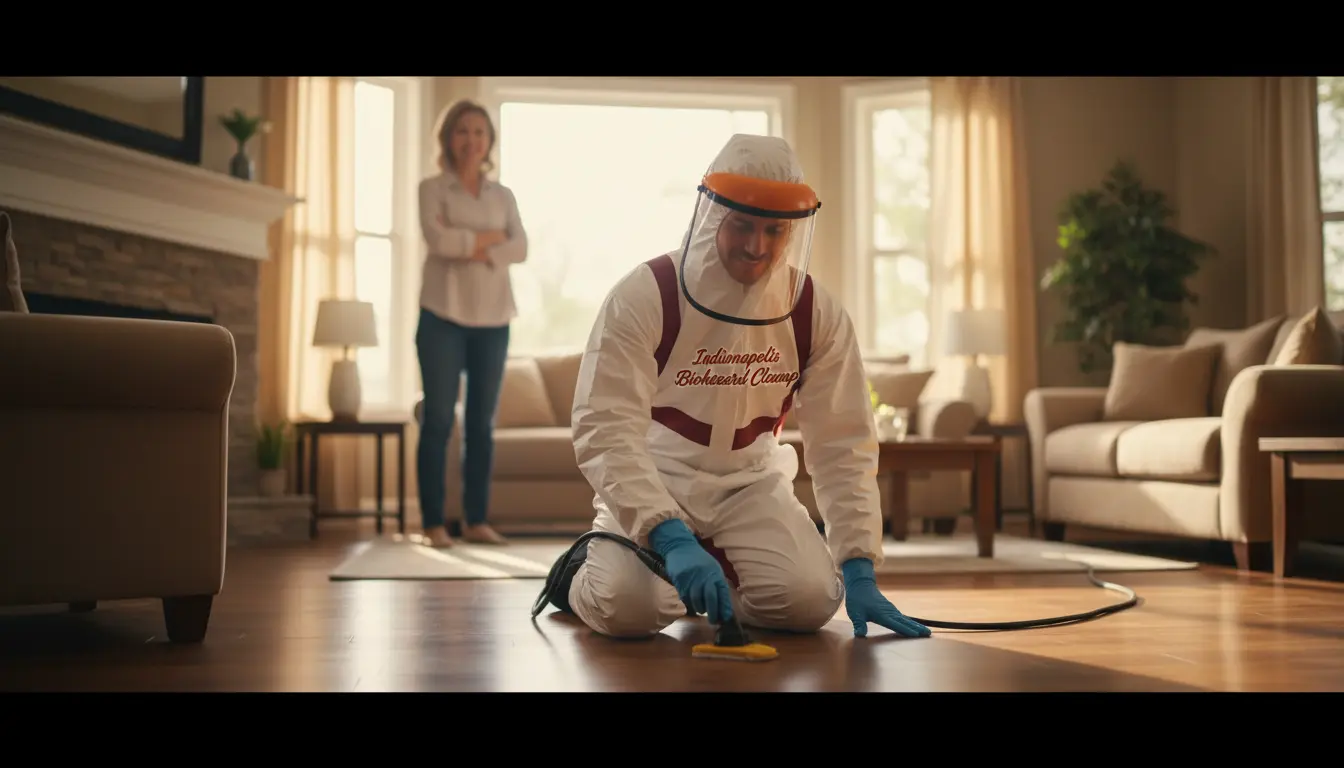
Biohazard remediation is the systematic process of containing, removing, and decontaminating biological hazards from a structure to render it safe for reoccupation under OSHA and IICRC S540 standards. It is commonly confused with standard janitorial cleaning or even crime scene cleanup as depicted in media, but the reality involves far more scientific rigor and regulatory compliance. In Indianapolis, where seasonal temperature swings can accelerate decomposition and odor migration in older Midwestern homes, this distinction is not academic—it is a matter of public health and property integrity.
Professional biohazard cleanup addresses a range of scenarios including unattended death, suicide, trauma, hoarding environments with bio-contamination, and industrial accidents involving bloodborne pathogens. Unlike a general cleaning crew, certified technicians follow a strict protocol that begins with a site risk assessment and ends with adenosine triphosphate (ATP) testing to verify microbial elimination. This level of precision is why property owners, real estate agents, and facility managers in Marion County rely on specialized providers like Indianapolis Biohazard Cleanup to restore safety and value without cutting corners.
The stakes are high. Untrained attempts to clean biohazards often lead to cross-contamination, long-term structural damage, and liability exposure. Professional remediation does not just clean what is visible—it neutralizes what is not, using industrial-grade equipment and EPA-registered disinfectants tailored to the specific biological threat. This article breaks down exactly what is included in a professional biohazard cleanup service near you, grounded in the technical realities of Indianapolis and the regulatory frameworks that govern this critical work.
The Initial Risk Assessment and Site Containment
Every professional biohazard remediation begins with a thorough risk assessment conducted by a certified technician. This is not a simple walkthrough. The assessor evaluates the type and volume of biohazardous material, the porosity of affected surfaces, the HVAC system layout, and potential routes of contamination to unaffected areas. In Indianapolis, where many homes were built before 1950 and feature original hardwood floors or plaster walls, the assessment must account for sub-floor seepage and hidden biological reservoirs that standard cleaning methods cannot reach.
Once the assessment is complete, the team establishes containment zones using polyethylene sheeting and negative air machines. These machines create a pressure differential that prevents airborne pathogens from migrating into clean areas of the property. This step is particularly critical in multi-unit dwellings common in downtown Indianapolis neighborhoods like Fountain Square or Broad Ripple, where cross-contamination between units could create a cascading health crisis. Containment also involves setting up decontamination chambers for technicians to enter and exit safely, reducing the risk of tracking biohazards beyond the work zone.
The containment protocol is not optional—it is mandated by OSHA’s Bloodborne Pathogens Standard (29 CFR 1910.1030) and the IICRC S540 standard. Without it, the remediation is incomplete and potentially dangerous. Property owners who attempt DIY cleanup often skip this step entirely, leading to invisible contamination that can persist for years and cause respiratory issues or infections in future occupants. Professional teams treat containment as the foundation of every job, ensuring that the cleanup is as safe for the surrounding environment as it is for the technicians performing the work.
Personal Protective Equipment and Safety Protocols
Level of Protection Required for Biohazard Work
Technicians engaged in biohazard remediation wear personal protective equipment (PPE) that goes far beyond standard cleaning gloves and masks. The minimum requirement includes Tyvek suits, nitrile gloves with cut-resistant liners, full-face respirators with P100 filters, and chemical-resistant boots. For scenes involving large volumes of blood or bodily fluids, such as unattended death in a closed Indianapolis apartment during a summer heatwave, the PPE regimen may escalate to Level B hazmat suits with supplied air systems to protect against aerosolized pathogens.
The selection of PPE is determined by the site assessment and the specific biological hazards present. Pathogens like Hepatitis B, Hepatitis C, and HIV can survive outside the body for days or weeks, especially in the humid conditions common in Midwestern summers. Even dried blood can harbor infectious agents if disturbed. Professional teams do not take shortcuts—every technician is trained in proper donning and doffing procedures to avoid self-contamination, and all PPE is disposed of as regulated medical waste after a single use.
Decontamination of Personnel and Equipment
Safety protocols extend beyond the initial PPE. Technicians follow a strict decontamination sequence when exiting the containment area, using a series of wash-rinse-sanitize steps that mirror hospital infection control practices. Tools and equipment, including industrial vacuums and scrubbers, are cleaned and disinfected after each job to prevent cross-contamination between sites. This level of discipline is what separates professional biohazard remediation from general cleaning services and is a direct response to the liability risks inherent in handling bloodborne pathogens.
In Indianapolis, where winter ice and spring rains can complicate site access and decontamination logistics, teams must also account for environmental factors that affect safety. Slippery conditions, frozen ground that delays waste disposal, and power outages that disrupt negative air machines are all managed through contingency planning. The goal is to maintain a sterile work environment from start to finish, regardless of external conditions, ensuring that the property is not only clean but also legally and medically safe for reoccupation.
Physical Removal of Biohazardous Materials
The core of any biohazard remediation is the physical removal of all contaminated materials. This includes blood-soaked carpets, padding, drywall, insulation, and any porous items that cannot be effectively sanitized. In an unattended death scenario, where decomposition fluids have seeped into sub-flooring and wall cavities, the removal process is extensive and surgical. Technicians use forensic cleaning tools such as scrapers, absorbent pads, and enzyme-based solvents to break down biological matter at the molecular level before extraction.
The decision to remove versus clean a material is guided by porosity and contamination depth. Non-porous surfaces like tile, metal, or glass can often be disinfected and retained, but porous materials like wood, drywall, and fabric are assumed to be compromised. This is a critical distinction that DIY cleaners frequently miss. A homeowner might bleach a bloodstain on a hardwood floor, leaving the pathogen-laden fluid that seeped between the boards untouched. Over time, this hidden contamination can produce persistent odors and microbial growth that degrades indoor air quality and structural integrity.
Once removed, all biohazardous waste is double-bagged in red biohazard bags, labeled, and transported to an authorized treatment facility for incineration or autoclaving. In Indianapolis, waste disposal must comply with Marion County environmental regulations, which require tracking manifests for each load. Professional teams maintain these records, providing property owners with documentation that proves proper disposal—a crucial step for insurance claims and legal liability protection. Without this chain of custody, the property owner could be held responsible for improper waste handling, even if a third party performed the cleanup.
Sanitization, Disinfection, and ATP Testing
After all visible biohazardous material is removed, the site undergoes a rigorous sanitization and disinfection process. This is not a single pass with a mop and bucket. Technicians apply EPA-registered hospital-grade disinfectants using electrostatic sprayers or fogging machines that coat every surface, including walls, ceilings, and ductwork. The disinfectants used are specifically chosen for their efficacy against bloodborne pathogens, with contact times ranging from 5 to 15 minutes depending on the product and the bioburden level.
The critical validation step is adenosine triphosphate (ATP) testing. ATP is a molecule present in all living cells, including bacteria, fungi, and residual biological material. A swab of a cleaned surface is inserted into a handheld luminometer that measures the amount of ATP in relative light units (RLUs). A reading below a specific threshold—typically 30 RLUs for healthcare environments—indicates that the surface is biologically clean. Professional biohazard remediation teams in Indianapolis use ATP testing to confirm that disinfection has been effective, not just assumed.
This scientific rigor addresses a common misconception: that a site looks clean means it is safe. Odors can be masked with air fresheners, and visible stains can be scrubbed away, but invisible pathogens and byproducts of decomposition can linger. ATP testing provides objective evidence of cleanliness, which is essential for properties being prepared for sale, rental, or reoccupation by family members. It also gives property owners peace of mind that the remediation was thorough and defensible if questions arise later from health departments or insurers.
Structural decontamination may also involve the application of antimicrobial sealants to encapsulate any residual contamination in hard-to-reach areas like crawl spaces or attics. In older Indianapolis homes with unsealed concrete foundations, microbial remediation often includes treating the slab with a penetrating fungicide to prevent mold outbreaks triggered by moisture and organic residue. The combination of removal, disinfection, testing, and encapsulation creates a multi-layered barrier against biological hazards that a single cleaning pass cannot achieve.
Data Comparison: Professional Remediation vs. Standard Cleaning
| Feature/Metric | Professional Biohazard Remediation | Standard Residential Cleaning |
|---|---|---|
| Regulatory Compliance | OSHA 29 CFR 1910.1030, IICRC S540, EPA waste disposal | None; no OSHA or IICRC oversight |
| Pathogen Elimination | Verified via ATP testing; hospital-grade disinfectants | Assumed; no verification method used |
| Structural Assessment | Full evaluation of sub-floor, wall cavities, and HVAC | Surface-level only; hidden contamination missed |
| Waste Disposal | Regulated medical waste tracking and incineration | Household trash; illegal for biohazards |
| Liability Protection | Documented chain of custody; insurance support | Property owner remains liable |
Expert Diagnostic Insights for Property Owners
Detecting Hidden Biological Seepage
One of the most overlooked aspects of biohazard remediation is the detection of biological fluids that have migrated beyond the visible stain. In a multi-day unattended death, decomposition fluids can travel several feet through sub-flooring, wicking up baseboards and into adjacent rooms. Professional technicians use moisture meters and thermal imaging cameras to identify areas of elevated moisture that correspond to biological seepage. These zones are then cut out and removed, even if no visible discoloration exists. Property owners who skip this step often face recurring odors and microbial growth that necessitate a second, more expensive remediation later.
Why Porous Materials Require Replacement
Many homeowners believe that if a stain on a porous surface can be cleaned, the material is salvageable. This is false. Blood and bodily fluids penetrate porous materials like wood, drywall, and carpet padding at a depth that cannot be reached by cleaning agents. Even after surface disinfection, microorganisms remain embedded and can re-emerge when moisture or temperature conditions change. Professional remediation protocols mandate removal and replacement of any porous material that has contacted biohazardous fluids. This is not a waste of resources—it is the only way to achieve a biologically safe environment.
The Role of Negative Pressure in Preventing Cross-Contamination
Negative air pressure is a fundamental engineering control in biohazard remediation, yet it is rarely understood by property owners. By using high-efficiency particulate air (HEPA) filtered exhaust fans to pull air out of the containment zone, technicians create a vacuum that prevents airborne particles from escaping into the rest of the property. This is especially important in Indianapolis homes with shared HVAC systems, where a single contaminated air duct can spread pathogens to every room. Professional teams seal all supply and return vents within the containment area and use HEPA scrubbers to filter the air continuously during the process.
Common Mistakes Property Owners Make
Using Household Bleach on Biological Matter
Household bleach is a common first response, but it is not an effective disinfectant for organic material. Bleach is inactivated by blood and other proteins, meaning it loses its germicidal power as soon as it contacts bioburden. Moreover, bleach does not penetrate porous surfaces and can actually fix stains, making biological residues harder to remove later. Professional teams use chlorine dioxide or accelerated hydrogen peroxide-based disinfectants that maintain efficacy in the presence of organic matter and penetrate deeper into surfaces.
Waiting for Odor to Dissipate Naturally
Decomposition odors are caused by volatile organic compounds (VOCs) produced by bacterial breakdown of tissues. These compounds are not self-limiting—they will persist as long as any biological material remains, and they can adsorb into drywall, insulation, and wood. Waiting for the smell to fade means allowing microbial activity to continue, which can lead to structural damage and health risks from airborne mold spores and pathogens. Professional remediation includes ozone treatment or hydroxyl generation to neutralize odors at the molecular level, but only after all biological material has been removed.
Allowing Untrained Personnel into the Site
Family members, friends, or even well-meaning contractors who enter a biohazard scene without proper PPE risk exposure to bloodborne pathogens. In Indianapolis, where many unattended deaths occur in winter when homes are sealed tight, the concentration of airborne contaminants can be dangerously high. Untrained personnel may also disturb evidence or inadvertently spread contamination to other parts of the property. Professional teams secure the site and manage all access until remediation is complete, protecting both the occupants and the chain of custody for insurance and legal purposes.
Pricing Structures and Cost Factors
- Site mobilization fees: These cover the cost of transporting equipment, PPE, and a certified crew to the location. In Indianapolis, mobilization fees typically range from $250 to $500 depending on the distance from the company’s base and the urgency of the response. For after-hours or emergency calls, mobilization may include a premium.
- Hourly remediation rates: Most professional biohazard cleanup companies charge by the hour, with rates between $150 and $300 per technician. A typical unattended death scene requiring two technicians for eight hours would fall in the $2,400 to $4,800 range, not including materials or disposal fees. The hourly rate reflects the specialized training, insurance, and equipment required.
- Specialized disposal costs: Biohazardous waste must be transported and incinerated at authorized facilities. These costs are itemized separately and depend on the volume of waste generated. A moderate scene might produce 50 to 100 pounds of waste, costing $200 to $500 for disposal. Larger scenes involving significant structural removal can exceed $1,000 in disposal fees.
Three factors that most heavily influence the final cost are the extent of structural material replacement required (e.g., removing and replacing sub-flooring, drywall, and insulation), the total volume of biohazardous waste generated, and the need for specialized HVAC decontamination. Properties with forced air systems in Indianapolis, common in homes built after 1960, require additional time and materials to clean ductwork and replace filters. These variables are assessed during the initial site walkthrough, allowing the remediation company to provide a detailed estimate before work begins.
Safety Standards and Certifications
Professional biohazard remediation companies operate under a framework of certifications and standards that ensure safety and quality. The most relevant are the IICRC S540 standard for trauma and crime scene cleanup, which defines the procedures for containment, removal, and disinfection, and OSHA’s Bloodborne Pathogens Standard (29 CFR 1910.1030), which mandates training, PPE, and exposure control plans for any employee who may come into contact with human blood or other potentially infectious materials. Compliance with these standards is not voluntary—it is a legal requirement.
In practice, this means that every technician at a reputable company like Indianapolis Biohazard Cleanup has completed OSHA-compliant bloodborne pathogen training, holds current IICRC certifications, and participates in annual refreshers on new technologies and regulations. The company also maintains an exposure control plan that documents every aspect of safety, from needle stick protocols to post-exposure medical evaluation. For property owners, hiring a certified team means that the work meets or exceeds the standards required by insurance companies, health departments, and real estate disclosure laws.
Waste disposal is another area where certification matters. Biohazardous waste must be handled by a licensed medical waste hauler and tracked with a manifest from collection to destruction. In Indiana, the Indiana Department of Environmental Management (IDEM) oversees these regulations. A professional remediation company provides the property owner with a certificate of destruction, which serves as proof that the waste was legally and safely processed. This documentation is invaluable if the property is later sold or if a neighbor or tenant raises concerns about the cleanup.
Frequently Asked Questions About Unattended Death Remediation
How quickly should I respond after an unattended death is discovered?
Time is critical in unattended death remediation. Within hours, decomposition begins, releasing fluids and gases that saturate porous materials. Within 24 to 48 hours in the summer or 72 to 96 hours in the winter, the contamination can spread to sub-flooring, wall cavities, and HVAC systems. Prompt professional response minimizes the extent of structural damage and reduces the cost of remediation. In Indianapolis, where summer temperatures frequently exceed 90 degrees Fahrenheit, the window for effective containment can be as short as 12 hours. Contacting a certified remediation team immediately after law enforcement releases the scene is the single most important step a property owner can take.
Can I simply clean the area with bleach and air it out?
No. Bleach is ineffective against organic material and does not eliminate pathogens embedded in porous surfaces. Airing out the space does nothing to remove the biological material that is the source of odor and contamination. Professional remediation is required to achieve a safe environment. Attempting DIY cleaning risks exposure to bloodborne pathogens, legal liability, and long-term structural damage that far exceeds the cost of professional service. The IICRC S540 standard specifically states that trauma scenes must be remediated by trained professionals using validated methods.
Will my insurance cover the cost of biohazard remediation?
Most homeowners insurance policies cover biohazard cleanup as part of their dwelling protection or additional coverage for sudden and accidental events. However, coverage varies by policy and carrier. Some policies exclude unattended death if the death occurred over a prolonged period, while others require specific endorsements. The remediation company can provide a detailed invoice and documentation that your insurance adjuster will need to process the claim. It is advisable to contact your insurance provider as soon as possible and ask about biohazard remediation coverage. Many companies, including Indianapolis Biohazard Cleanup, work directly with insurance adjusters to streamline the process.
How do I know when the property is truly safe to reoccupy?
Safety is confirmed through a combination of visual inspection, odor elimination, and ATP testing. A professional remediation team will conduct a final walkthrough with you and explain the results of all tests. If ATP readings are below the acceptable threshold, the space is biologically clean. Additionally, the team should provide documentation of all work performed, including waste disposal manifests and photographs of the process. Never reoccupy a property until these conditions are met, as hidden contamination can pose health risks that may not manifest for weeks or months. In Indianapolis, where seasonal allergies and respiratory conditions are common, ensuring biological safety is especially important for vulnerable occupants.
Professional Biohazard Remediation in Indianapolis
Restoring a property after a biohazard incident is a complex, emotionally charged task that requires technical expertise, regulatory knowledge, and compassion. The process outlined in this article—from risk assessment and containment to physical removal, disinfection, and verification—represents the gold standard for professional biohazard cleanup. In Indianapolis, where diverse housing stock ranging from historic homes to modern apartments presents unique challenges, relying on a certified team ensures that every detail is addressed, from sub-floor seepage in a 1920s bungalow to HVAC contamination in a high-rise condo.
Indianapolis Biohazard Cleanup brings this comprehensive approach to every job, combining IICRC S540 compliance with local knowledge of Marion County regulations and Midwestern climate realities. Our technicians are trained to handle the most difficult scenes with discretion and efficiency, providing property owners with a clear path forward when they need it most. Whether you are dealing with an unattended death, trauma scene, or hoarding situation, we offer the technical rigor and compassionate service that makes the difference between a restored property and a recurring problem. Contact us today to schedule an assessment and take the first step toward a safe, clean environment.