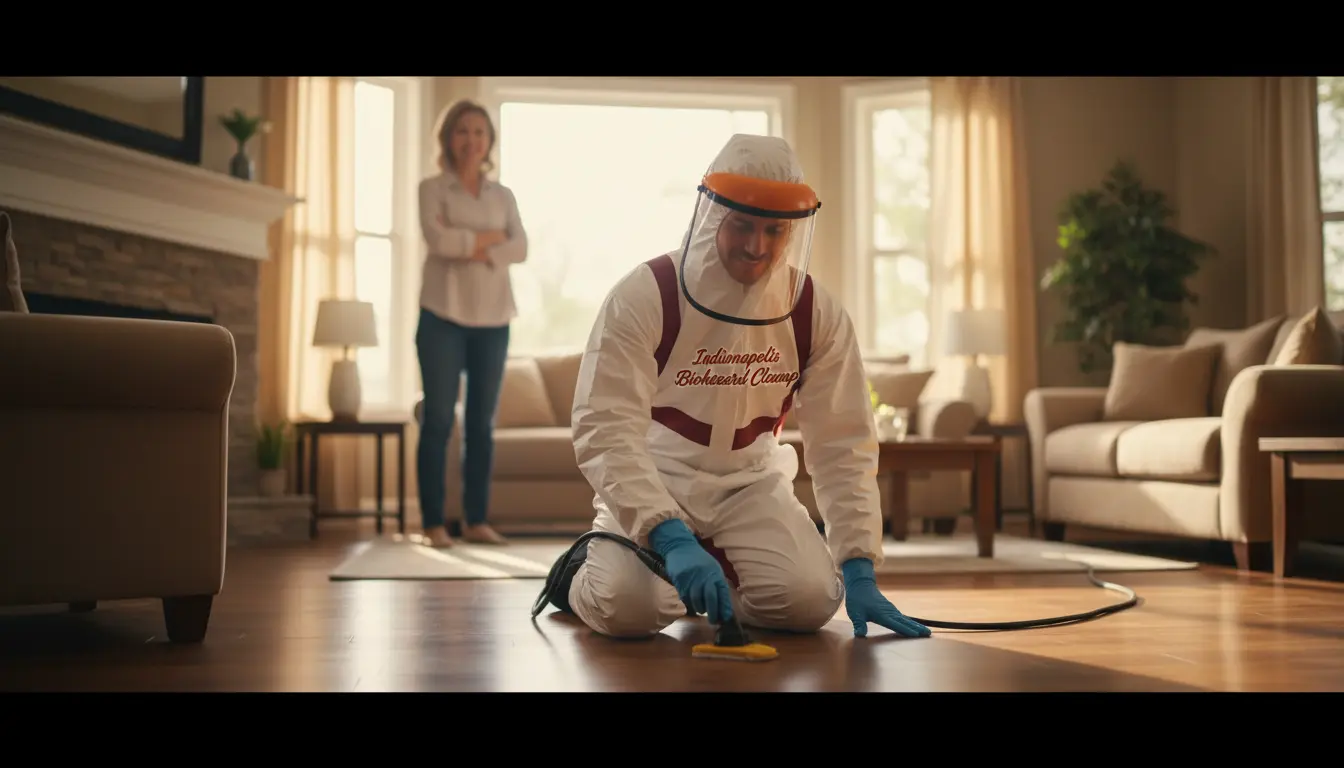
The technician knelt near the baseboard of a northeast Indianapolis bungalow, his UV flashlight casting a pale blue glow across the hardwood floor. What appeared to be a simple stain from a spilled drink was, under that light, a stark, branching pattern of biological seepage that had traveled three feet beyond the visible discoloration. This single moment, caught during an initial assessment of an unattended death scene, illustrates why the latest biohazard cleanup standards in 2026 are not just about cleaning—they are about a forensic-level understanding of fluid dynamics, material porosity, and pathogen containment.
For property owners in Indianapolis, the implications are profound. The city’s historic housing stock, combined with seasonal extremes that accelerate biological decomposition, means that proper remediation can be the difference between a safe, habitable space and a long-term health hazard. Professional biohazard remediation today follows protocols that would have seemed extreme a decade ago, but they are now proven necessities. Indianapolis Biohazard Cleanup integrates these latest standards into every project, ensuring that homes and commercial properties are restored to a condition that meets rigorous scientific and regulatory benchmarks.
The Step-by-Step Professional Remediation Workflow
Modern biohazard cleanup begins long before any cleaning solution touches a surface. The initial risk assessment is a comprehensive evaluation of the site, using tools like thermal imaging cameras and moisture meters to detect hidden pockets of biological fluid that might not be visible to the naked eye. This is paired with an air quality test to establish baseline contaminant levels. The goal is to map out zones of contamination and prioritize areas for immediate containment.
Once the assessment is complete, the next phase is the initiation of a stringent personal protective equipment (PPE) protocol. Technicians wear Level B or C PPE, including full-face respirators with HEPA filters, chemical-resistant suits, and multiple layers of gloves. This is not optional—it is mandated by OSHA’s Bloodborne Pathogens Standard (29 CFR 1910.1030) and reinforced by the IICRC S540 standard. The objective is to eliminate any pathway for pathogens to reach the worker’s skin or mucous membranes, a necessity when dealing with bloodborne pathogens like Hepatitis B, Hepatitis C, and HIV.
Physical Removal and Chemical Sanitization
The physical removal of biohazardous material is a meticulous process. Technicians use specialized forensic cleaning tools, including enzymatic cleaners that break down organic matter at a molecular level. This is not a mopping operation; it involves the careful excavation of affected materials, such as saturated drywall, carpet padding, and subflooring. In many older Indianapolis homes, the subfloor is often tongue-and-groove hardwood that has been soaked through, requiring removal down to the joists to ensure no biological residue remains.
Following physical removal, the site undergoes a thorough application of EPA-registered hospital-grade disinfectants. These disinfectants are chosen based on their efficacy against specific pathogens and their ability to remain effective on porous surfaces. The disinfection process is not a single pass; it typically requires multiple applications, with dwell times of 10-15 minutes to ensure complete viral inactivation. The selection of these chemicals is guided by the latest research on bacterial containment and viral inactivation rates, which have been updated based on data from global health agencies.
ATP Testing and Structural Encapsulation
The most critical difference between professional remediation and standard cleaning is the use of adenosine triphosphate (ATP) fluorescence testing. This technology measures the presence of organic material on a surface by detecting the energy molecule ATP, which is present in all living cells. A swab is taken from a cleaned surface, and a handheld luminometer produces a numerical reading. If the reading exceeds the threshold set by IICRC standards (typically under 100 relative light units for biohazard cleanup), the area must be re-sanitized and tested again. This is objective, science-based evidence that the surface is truly clean.
After testing confirms the area is free of biological contamination, structural encapsulation may be necessary. This involves applying a specialized sealant to areas where material could not be removed, such as concrete slabs or exposed joists. The sealant locks in any remaining microscopic particles and prevents future off-gassing or odor release. In Indianapolis, where humidity levels can swing from high in the summer to very low in the winter, this step is vital for preventing odor migration through the structural skeleton of the house.
Professional Remediation vs. Standard Cleaning: A Data-Driven Comparison
Many property owners mistakenly believe that a standard cleaning crew can handle a biohazard scene. The table below illustrates the stark differences in approach, regulation, and outcomes.
| Feature/Metric | Professional Biohazard Remediation | Standard Residential Cleaning |
|---|---|---|
| Regulatory Compliance | OSHA 29 CFR 1910.1030, IICRC S540, EPA waste disposal rules | None; may violate local health ordinances |
| Pathogen Elimination | Targets 99.99% reduction; verified by ATP testing | No verification; household cleaners ineffective on bloodborne pathogens |
| Structural Assessment | Thermal imaging, moisture mapping, sub-floor inspection | Visual only; hidden seepage undetected |
| Waste Disposal | Permitted medical waste transporter; incineration | Illegal to place in residential trash |
| Odor Control | Negative air pressure, ozone treatment, hydroxyl generators | Air fresheners mask smell; does not eliminate airborne pathogens |
Source: IICRC S540 Trauma and Crime Scene Cleanup Standard
The data is clear. Professional remediation adheres to a regulatory framework designed to protect everyone involved, while standard cleaning leaves critical gaps that can lead to long-term health risks and legal liabilities. In Indianapolis, where many older homes have porous materials like plaster and lath, the difference is even more pronounced. A standard cleaner cannot detect biological fluid trapped behind a baseboard; a certified technician with thermal imaging can.
Expert Diagnostic Insights and Common Pitfalls
Understanding the hidden realities of biohazard cleanup separates a true professional from a general contractor. Here are three advanced diagnostic tips that technicians rely on every day.
Hidden Biological Seepage Detection
The human body, after death, undergoes a process of putrefaction that releases fluids. These fluids do not simply stay where the body rests. They migrate through porous materials like wood, drywall, and concrete via capillary action. In a classic scenario, a body may have been lying on a hardwood floor for days, and the fluids will have soaked not only into the wood but also through the cracks into the subfloor and even the joist cavity below. UV fluorescence testing, paired with a moisture meter, is the only reliable way to trace this path. In Indianapolis, where construction often includes layered flooring systems (linoleum over hardwood over old pine), the migration can be extensive and requires a methodical approach to trace and remove all affected material.
Porous Materials Require Replacement, Not Cleaning
It is a common misconception that a strong cleaner can salvage porous materials like carpet, drywall, or upholstery. In reality, these materials act like sponges. Once biological fluid is absorbed, it is nearly impossible to remove all organic matter from the inner structure of the material. Even if the surface appears clean, the interior can harbor pathogens and continue to produce odor as it decomposes. The standard of care is to remove and replace all porous materials that have come into contact with biological fluids. This is not an aggressive upselling tactic; it is a scientifically proven requirement for rendering a site safe. Re-carpeting a room without addressing the padding and subfloor is a short-term fix that almost always results in lingering odor and health risks.
The Importance of Negative Pressure Zones
Cross-contamination is a primary concern during remediation. If the containment area is not properly sealed with negative air pressure, airborne particles can travel through ventilation systems and contaminate adjacent rooms. Technicians set up negative air machines that draw air out of the contaminated area, filter it through a HEPA filter, and exhaust it outside. This creates a pressure differential that ensures airborne pathogens do not escape into the rest of the house. In Indianapolis, where many homes share a single HVAC return, failing to establish this zone can lead to contamination spreading throughout the entire structure, turning a single-room event into a whole-house problem.
Common Mistakes Property Owners Make
Property owners often act out of panic or a desire to save money, leading to mistakes that compound the problem. One of the most frequent errors is using household bleach on biological matter. Bleach is a disinfectant, but it is not effective on all bloodborne pathogens and can be deactivated by organic material. Moreover, it can damage surfaces and create toxic fumes when mixed with other cleaning agents. A property owner in a Broad Ripple home used bleach on a spill, only to find that the odor returned within days and the stain had actually spread, having been pushed deeper into the wood grain by the liquid.
Another common mistake is waiting for the odor to dissipate naturally. Decomposition odors are caused by volatile organic compounds (VOCs) that are not only malodorous but also potentially harmful. Waiting days for the smell to fade exposes occupants to these compounds, which can cause respiratory irritation and nausea. Furthermore, the odor often indicates an active biological process that will not stop until the source is removed. Calling a professional team immediately after discovery is the only way to minimize exposure and structural damage.
A third mistake is allowing untrained personnel, such as family members or well-meaning neighbors, into the site to assist. This exposes them to hazardous pathogens and creates emotional trauma that can be lasting. Professional biohazard technicians are trained not only in technical cleanup but also in psychological first aid and trauma-informed care. They handle the situation with discretion and respect, ensuring that no one else has to witness the scene or risk their health.
Understanding Pricing Structures
- Site Mobilization and Assessment Fee: This covers the initial response, travel, and the comprehensive assessment of the affected area. Mobilization fees in Indianapolis typically range from $200 to $500, depending on the time of day and urgency. This fee includes the use of diagnostic equipment like thermal cameras and moisture meters to create a detailed scope of work.
- Hourly Remediation Rates: The labor portion of the work is billed hourly and covers the time spent by certified technicians on physical removal, chemical application, and testing. Rates generally fall between $150 and $300 per hour per technician. A complex job involving a large area or difficult-to-access spaces will require more hours. The average unattended death cleanup in a single-family home in Indianapolis ranges from 8 to 16 hours of total technician time.
- Specialized Disposal of Biohazardous Waste: All biological waste must be handled in accordance with Indiana state regulations. This involves placing materials in specialized red biohazard bags and transporting them in a permitted vehicle to a licensed medical waste incinerator. Disposal costs are typically itemized per pound or per container, with a typical range of $50 to $200 per container. The volume of waste is often the largest single cost driver, as replacing structural materials like subflooring or drywall generates significant debris.
- Environmental Control Costs: If HVAC duct cleaning or HEPA air scrubbing is required, these are billed separately. Duct cleaning for a standard Indianapolis home can cost between $300 and $700, while renting a negative air machine for several days adds another $200 to $400. These costs are necessary to ensure that the ventilation system does not re-circulate contaminants after the primary cleanup is complete.
Safety and Certification Standards
The regulatory landscape for biohazard cleanup is defined by several key standards. OSHA’s Bloodborne Pathogens Standard (29 CFR 1910.1030) is the foundational federal regulation, requiring employers to have an exposure control plan, provide PPE, offer hepatitis B vaccinations, and implement universal precautions. For a cleanup company operating in Indianapolis, compliance with this standard is mandatory and legally enforceable. Any technician who lacks this training or whose company does not have a documented plan is operating outside the law.
Beyond federal law, the IICRC S540 standard provides the industry-specific guidelines for trauma and crime scene cleanup. This standard covers everything from initial assessment and containment to waste disposal and final verification. Certification through the IICRC is the gold standard for demonstrating competence. When a company advertises IICRC certification, it signals that their technicians have undergone rigorous training and are tested on their knowledge of best practices.
In practice, these standards translate into specific actions. For example, before any cleanup begins, the team must establish a decontamination corridor: a two-room system where technicians move from the contaminated area into a wash-down zone where they spray down their suits and gloves, and then into a clean zone where they can remove PPE. This prevents contaminants from being tracked out of the containment area. Similarly, all tools and equipment used in the contaminated area must be thoroughly disinfected before being used on another job, or dedicated tools must be used and disposed of for a single project.
Frequently Asked Questions About Unattended Death Remediation
How long does it take for a body to begin affecting the surrounding structure after an unattended death?
The impact on the structure begins within hours. As soon as circulation ceases, fluids begin to pool and gravity pulls them into contact with the floor or furnishings. Within 12 to 24 hours, biological fluids will have started to seep into porous materials. By day three, the decomposition process is active, releasing gases that can permeate drywall and wood. The longer a body remains unattended, the deeper and more extensive the contamination becomes. In many cases discovered after weeks or months, the biological matter has soaked through multiple layers of flooring and into the joist cavities, requiring extensive structural replacement. The primary factor influencing the speed and severity of this process is temperature. In a summer Indianapolis home without air conditioning, decomposition can be two to three times faster than in a winter scenario.
Is it safe to stay in a house after a death cleanup has been completed?
Yes, provided the cleanup has been performed by a certified professional following IICRC S540 standards. The final step of the process is ATP testing, which provides objective, measurable proof that the affected surfaces are free of biological residue. Additionally, air quality testing post-remediation can confirm that airborne contaminants have been removed. The house can be declared safe for occupancy once these tests return results within acceptable thresholds. However, it is important to note that any residual odor could cause psychological distress for occupants, even if the house is physically safe. Many remediation companies offer ozone or hydroxyl treatment to neutralize odors at a molecular level, helping occupants feel comfortable returning.
Will my homeowners insurance cover the cost of unattended death cleanup?
Most standard homeowners insurance policies in Indiana do cover biohazard cleanup as part of a property damage claim, provided the death occurred inside the home. The cost of remediation, including removal of affected structural materials and professional cleaning, is typically covered under the dwelling coverage or the personal property coverage. However, coverage can vary based on the specifics of the policy, the cause of death, and whether the property was vacant for an extended period. It is essential to notify your insurance company as soon as possible and to work with a remediation company that can provide the detailed documentation required for a claim, including photographs, scope of work, and ATP test results. Indianapolis Biohazard Cleanup can assist with this documentation to streamline the claims process.
What happens to the biohazardous waste after the cleanup?
All biohazardous waste must be handled according to strict regulatory requirements in Indiana. The waste is double-bagged in red biohazard bags that meet OSHA standards for containment. These bags are then placed in rigid, leak-proof containers. A licensed medical waste hauler transports the containers to a permitted treatment facility, most commonly an incinerator that operates at high temperatures to completely destroy all biological material. Ash from incineration is disposed of in a landfill specifically permitted for medical waste ash. This entire process is tracked with a chain-of-custody manifest, which provides a legally defensible record of disposal. This is critical because improper disposal of biohazard waste in residential trash or regular dumpsters is illegal and can result in significant fines and public health consequences.
Professional Biohazard Remediation in Indianapolis
The landscape of biohazard cleanup has evolved dramatically, and in 2026, the standards are higher than ever. This is not a field for general contractors or well-meaning volunteers. It requires specialized training, advanced equipment, and a deep respect for the science behind pathogen containment and structural decontamination. For property owners in Indianapolis, facing the aftermath of an unattended death or traumatic event, the choice of who handles the cleanup is one of the most important decisions they will make.
Indianapolis Biohazard Cleanup brings together the latest industry standards, local expertise, and compassionate service. Our technicians are certified to the highest levels of the IICRC, trained in OSHA compliance, and experienced with the specific challenges of Marion County homes—from century-old brick structures with porous mortar to modern track housing with shared HVAC systems. We provide forensic restoration that goes beyond surface cleaning, ensuring that every trace of biological material is identified, removed, and verified. If you or your family are facing a difficult situation, know that there is a team ready to restore your property with skill and discretion. Contact Indianapolis Biohazard Cleanup today for a confidential consultation and a comprehensive plan for restoring your home to a safe, habitable state.