Losing a loved one is an unimaginable pain, and when a death occurs in the home, it can leave behind not just emotional scars but also serious biohazard risks. In Indianapolis, where families are tight-knit and homes are sanctuaries, dealing with the aftermath requires care, compassion, and quick action. This guide from Indianapolis Biohazard Cleanup is here to help you navigate those first overwhelming hours and days, ensuring your safety and peace of mind. Whether it’s an unattended death, suicide, or accident, understanding biohazards and the cleanup process is crucial. We’ll walk you through practical steps, from securing the scene to professional remediation, tailored for families in the Circle City.
Understanding Biohazards After a Death
Biohazards are biological substances that pose a threat to human health, and they become a reality after an unattended or traumatic death. Bodily fluids like blood, tissue, and decomposition matter can harbor dangerous pathogens, including bacteria, viruses, and fungi. In humid Indianapolis summers, decomposition can accelerate, amplifying risks.
Why Biohazards Are Dangerous
Exposure to these materials can lead to infections, allergic reactions, or long-term health issues. For instance, bloodborne pathogens like hepatitis or HIV can survive outside the body for days. Families in areas like Noblesville or Greenwood might not realize how quickly a scene can become hazardous, especially in older homes with porous surfaces.
Don’t attempt DIY cleanup—it’s not only unsafe but can spread contaminants further. Instead, rely on certified professionals who follow OSHA and EPA guidelines.
Immediate Steps: Securing the Scene
The first 24 hours are critical. Acting swiftly minimizes health risks and preserves the space for investigation if needed.
1. Ensure Safety and Isolate the Area
If you discover the scene, prioritize your safety. Do not touch anything. Evacuate the home immediately and call emergency services at 911. Once cleared, seal off the area with tape or barriers to prevent pets, children, or others from entering. In bustling neighborhoods like Lockerbie Square, where homes are close together, this helps contain odors and risks from spreading.
Ventilate the space if safe, but avoid fans that could aerosolize particles. Turn off HVAC systems to prevent contamination throughout the house.
2. Contact Authorities and Notify Next of Kin
Indianapolis Metropolitan Police Department (IMPD) will handle any investigation. Cooperate fully, but remember, their role isn’t cleanup. After official clearance, it’s time to call in biohazard experts. For families in Geist, our team understands the local protocols and can respond rapidly.
Practical Tips for Family Members
Grief can cloud judgment, so here’s actionable advice to guide you through the process.
Handling Personal Belongings and Emotional Support
Remove non-contaminated items first, like clothing or documents from unaffected areas. For contaminated belongings, professionals can decontaminate or advise on disposal. Seek emotional support—reach out to Indianapolis-area grief counselors or hotlines like the Indiana Suicide Prevention Lifeline.
Dealing with Odors and Initial Cleanup
Decomposition odors are pervasive and can linger. Use enzyme-based cleaners only on non-porous surfaces, but for thorough removal, opt for 24 Hour Biohazard Cleanup services. In Fall Creek Place’s historic homes, where materials like wood absorb fluids deeply, professional intervention is essential to avoid structural damage.
Wear PPE if you must enter: gloves, masks, and goggles. But again, limit exposure—let experts handle the heavy lifting.
When to Call Professional Biohazard Cleanup Services
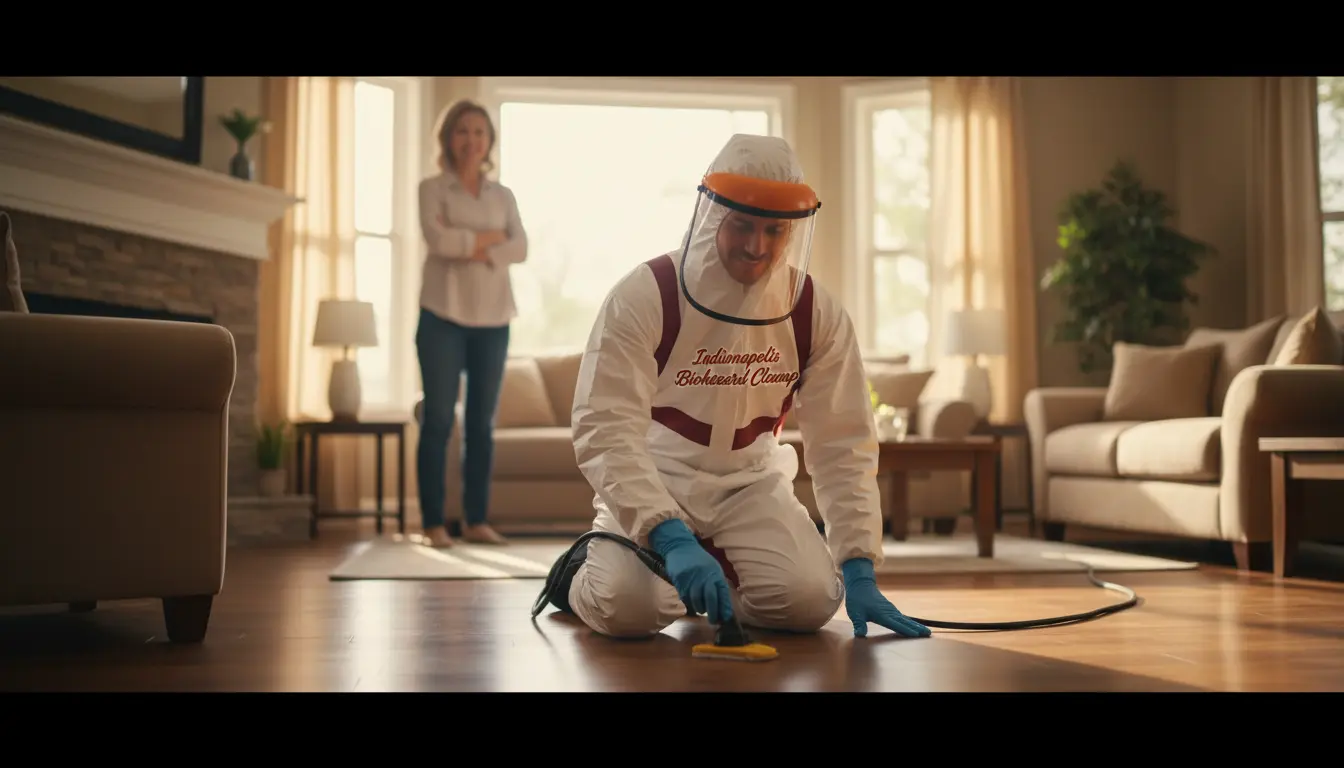
You shouldn’t go it alone. Indianapolis Biohazard Cleanup specializes in compassionate, discreet remediation. We arrive within hours, fully equipped for scenes involving blood spill removal or more complex cases.
Our Emergency Response Process
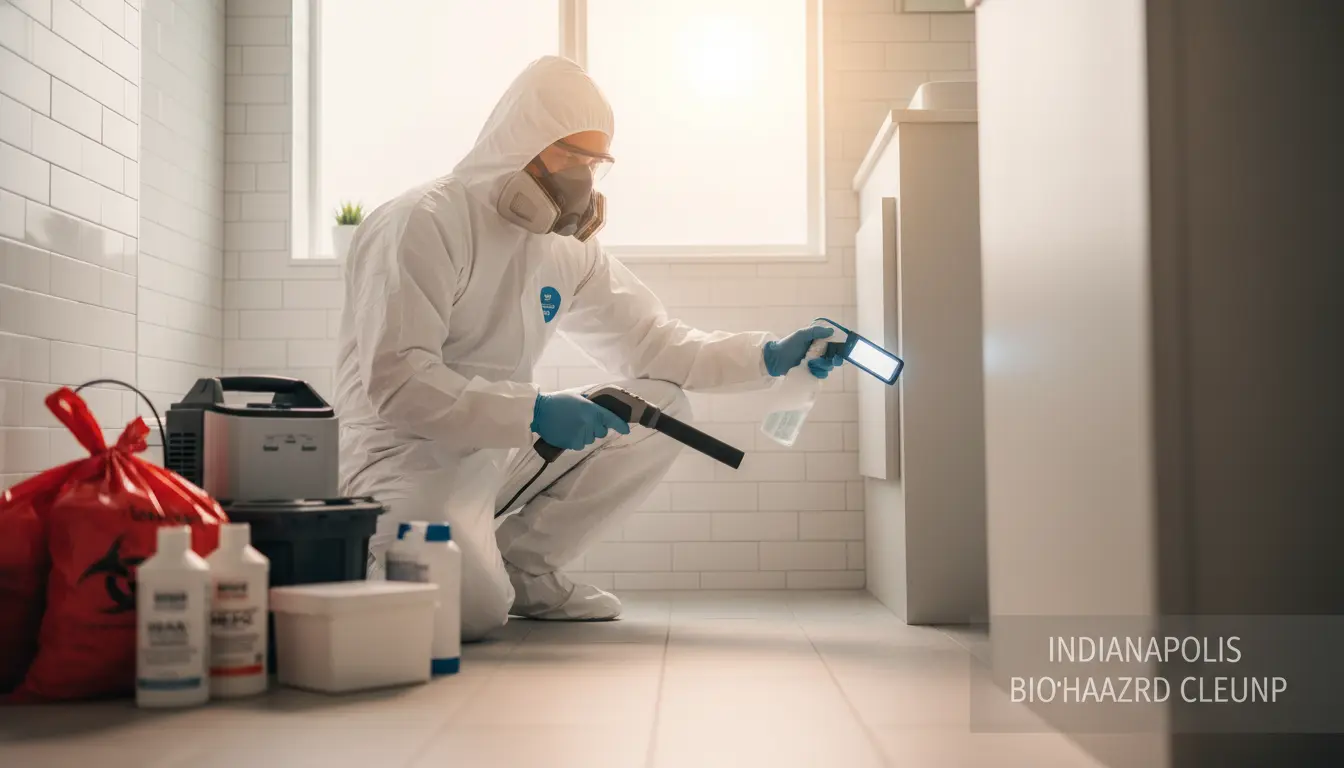
Upon your call to (317) 978-8032, we assess the scene remotely or on-site. Our emergency response services include containment, removal of biohazardous materials, disinfection with hospital-grade agents, and odor neutralization. For suicide scenes, our suicide site sanitization ensures restoration to a safe, livable condition.
We serve all of Greater Indianapolis, from downtown to suburbs like Carmel and Fishers, with IICRC-certified technicians. Costs vary by scene size, but insurance often covers services— we’ll help with claims.
Legal and Insurance Considerations in Indiana
Indiana law requires proper disposal of biohazard waste through licensed facilities. Keep records of all communications. Homeowners insurance may cover cleanup if it’s a covered peril; renters should check policies. Our team assists with documentation to ease this burden.
Long-Term Recovery: Restoring Your Home and Heart
After physical cleanup, focus on restoration. This might involve carpet replacement, wall repairs, or HVAC sanitization. In Indianapolis’s variable climate, moisture control prevents mold growth post-cleanup.
Emotionally, returning home can be daunting. Consider staging the space neutrally or consulting a therapist specializing in traumatic loss. Local resources like the Marion County Public Health Department offer support groups.
FAQ: Common Questions About Biohazard Cleanup After a Death
1. How long does biohazard cleanup take?
It depends on the scene’s severity, but most residential cleanups in Indianapolis take 4-8 hours. Complex cases, like those in multi-story homes, may require a full day.
2. Is biohazard cleanup covered by insurance?
Often yes, under homeowners or liability policies. Contact your provider immediately, and Indianapolis Biohazard Cleanup can provide a detailed estimate to submit.
3. Can I be present during the cleanup?
We recommend staying away for safety, but we understand the need for oversight. We’ll keep you updated via phone or secure video if requested.
4. What if the death was a suicide?
Suicide scenes require specialized handling due to potential blood volume. Our suicide site sanitization team is trained in sensitivity and thorough decontamination.
5. How do I prevent biohazards from spreading in my home?
Isolate the area immediately and avoid touching surfaces. For sewage-related complications, explore our sewage backup cleanup to address any secondary issues.
Conclusion: Take the First Step Toward Healing
Navigating the biohazards after a death is one of life’s toughest challenges, but you’re not alone. In Indianapolis, Indianapolis Biohazard Cleanup is committed to restoring safety and dignity to your home with empathy and expertise. Don’t delay—contact us at (317) 978-8032 for a free consultation. Let us handle the unclean so you can focus on healing. Your family’s well-being is our priority.
(Word count: approximately 1,200)