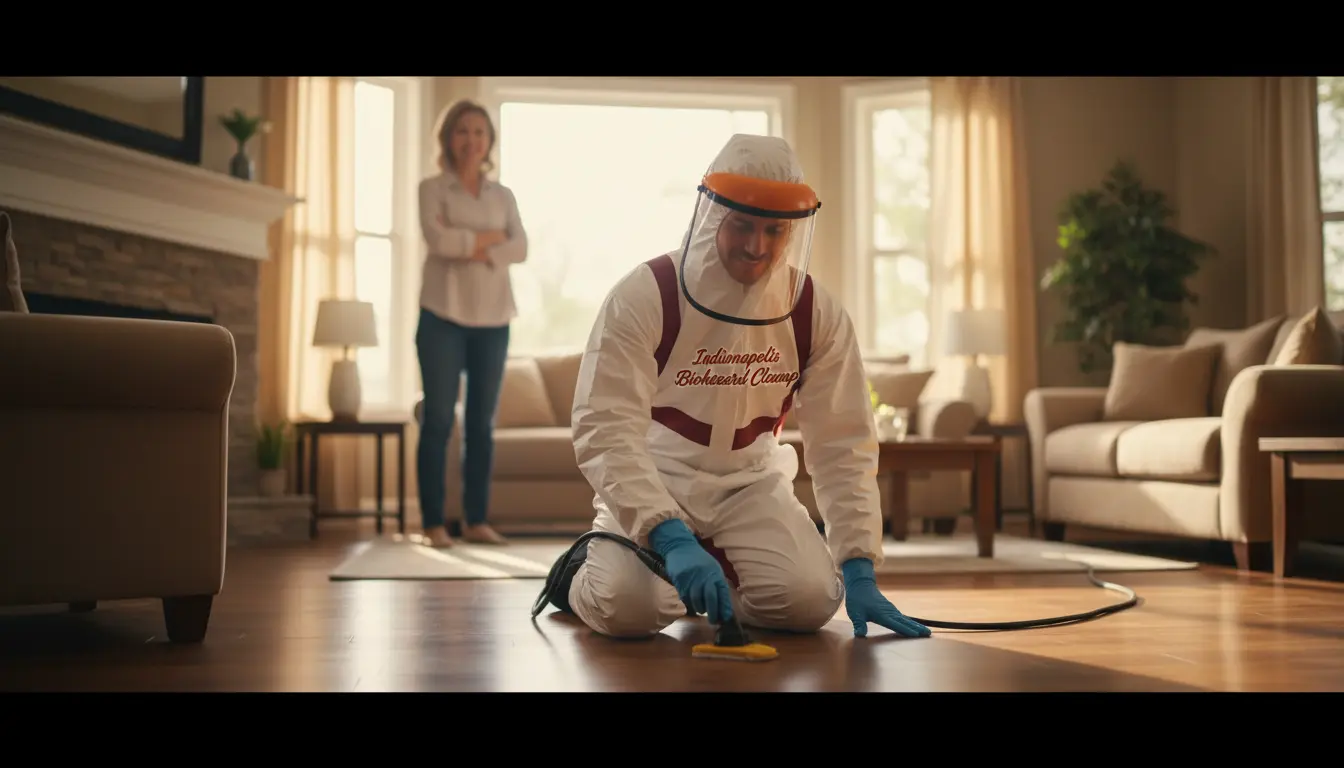
The smell hit him first—a sweet, sickly odor that no amount of air freshener could mask. Then he saw the dark stain seeping through the ceiling tiles, a slow reminder of a life that had ended days earlier without anyone noticing. That moment, standing in a quiet Indianapolis bungalow, is when most property owners realize they need professional help—but they rarely know what questions to ask before hiring a biohazard cleanup company.
As a certified senior remediation specialist with over a decade of experience in Marion County, I’ve seen the consequences of hasty decisions. Asking the right questions to ask before hiring a biohazard cleanup company in Indianapolis isn’t just about price—it’s about protecting your health, your property, and your peace of mind. The answers you get (or don’t get) will determine whether a site is truly safe for reoccupation or remains a hidden health hazard.
Indianapolis Biohazard Cleanup has built its reputation on technical rigor, compassionate service, and strict adherence to IICRC S540 standards. In this guide, I’ll walk you through the exact questions that separate competent professionals from amateurs, drawing on real-world cases and local conditions that affect cleanup in the Circle City.
Technical Process: What a Professional Remediation Workflow Looks Like
Before you can evaluate a cleanup company, you need to understand what a proper remediation workflow entails. Every step serves a specific scientific purpose, and skipping any one can leave behind dangerous pathogens or structural damage. Here’s the step-by-step process that IICRC-certified crews follow, adapted for Indianapolis’s unique challenges.
The process begins with an initial risk assessment. A certified technician evaluates the scene for biohazard types—blood, bodily fluids, tissue, or decomposition byproducts—and notes environmental factors. In Indianapolis, the Midwest’s humidity swings can accelerate decomposition, so the technician must also measure ambient moisture and temperature. This data informs the sequence of interventions.
Next, the crew establishes a containment zone using industrial-grade negative air machines. These units create negative pressure relative to the surrounding rooms, preventing airborne contaminants from migrating through HVAC ducts. This is especially critical in older Indianapolis homes with shared ductwork, where cross-contamination prevention is a top priority. Once containment is set, the team dons full PPE per OSHA Bloodborne Pathogens Standard 29 CFR 1910.1030, including Tyvek suits, N95 respirators, and face shields.
Physical removal of biohazardous materials follows. Trained technicians use forensic restoration tools—specialized scrapers, absorbent pads, and HEPA vacuums—to remove saturated drywall, carpet, and subflooring. In historic homes common in neighborhoods like Woodruff Place or Meridian-Kessler, sub-floor remediation often requires careful extraction of original hardwood to avoid structural compromise. The removed materials are double-bagged, labeled, and stored in regulated waste containers for incineration per Indiana Department of Environmental Management guidelines.
Data Comparison Table: Professional Remediation vs. Standard Janitorial Cleaning
Many property owners mistakenly believe that a deep cleaning service can handle biohazard situations. The differences are stark, as shown in the table below.
| Feature/Metric | Professional Biohazard Remediation | Standard Residential Cleaning |
|---|---|---|
| Regulatory Compliance | OSHA 29 CFR 1910.1030, EPA waste disposal, IICRC S540 | None |
| Pathogen Elimination | EPA-registered disinfectants + ATP verification | Household bleach (ineffective on organic matter) |
| Structural Assessment | Moisture mapping, subfloor inspection, HVAC evaluation | Visual only |
| Waste Disposal | Regulated medical waste incineration | Trash pickup (illegal for biohazards) |
| Containment | Negative air pressure, HEPA filtration | None |
Expert Insights: Advanced Diagnostic Tips and Common Mistakes
Over years of service in Indianapolis, I’ve developed a set of diagnostic techniques that go beyond textbook protocols. These insights help identify hidden hazards that can compromise a restoration if overlooked.
Detecting Hidden Biological Seepage
Biological fluids can migrate through porous materials like drywall and wood, traveling horizontally along studs or joists. In Indianapolis’s older homes, where plaster and lath are common, this seepage can extend several feet beyond the visible stain. Using a thermal imaging camera and moisture meter, I can trace the trail of moisture and microbial growth. If a company doesn’t perform this kind of assessment, they’re likely leaving contamination behind.
Why Porous Materials Require Replacement, Not Cleaning
Many property owners assume that a thorough cleaning can salvage carpet, padding, or drywall that has been exposed to blood or decomposition fluids. This is a dangerous misconception. Porous materials absorb biohazards at a cellular level, and no amount of disinfectant can fully penetrate and neutralize the pathogens. The only safe approach is removal and replacement. Attempting to clean porous materials increases the risk of cross-contamination to adjacent areas and creates a long-term source of odor and microbial remediation issues.
The Importance of Negative Pressure for Cross-Contamination Prevention
Without proper containment, airborne pathogens can spread throughout a building. In one Indianapolis case, a homeowner allowed a cleaning crew without negative air machines to scrub a bloodstain. Within days, family members developed respiratory symptoms, and subsequent testing revealed bacterial contamination in the HVAC system. The cost of remedial HVAC decontamination far exceeded the original cleanup. Always ask whether the company will use negative air pressure and HEPA filtration—it’s a non-negotiable safety measure.
Common Mistakes Property Owners Make
The first mistake is using household bleach on biological matter. Bleach reacts with proteins in blood, actually fixing the stain and making it harder to remove. More importantly, bleach does not kill all pathogens, especially those encapsulated in organic debris. The second mistake is waiting for odor to dissipate naturally. Odors from decomposition are caused by volatile organic compounds that continue to emanate from porous materials. Without proper remediation, the smell will persist attract pests and lower property value. The third mistake is allowing untrained personnel into the site. Family members, well-meaning neighbors, or unlicensed handymen often enter without PPE, exposing themselves to bloodborne pathogens. This can lead to long-term health risks including hepatitis B, hepatitis C, and HIV. It also complicates the legal and insurance process, as many policies require professional remediation for coverage.
Pricing: What to Expect and What Influences Cost
Pricing for biohazard cleanup in Indianapolis varies based on several factors. While no two jobs are identical, understanding the typical cost structure helps you compare quotes intelligently.
- Site mobilization fee: Most companies charge a flat fee to cover vehicle dispatch, equipment setup, and initial assessment. This typically ranges from $200 to $500 depending on the distance from their base.
- Hourly remediation rate: Labor is billed per hour, usually between $150 and $300 per technician. A standard unattended death cleanup in a single room may require 8 to 16 hours of crew time.
- Specialized disposal of biohazardous materials: Regulated waste disposal adds a per-pound fee, typically $0.50 to $1.50 per pound. A moderate cleanup might generate 50 to 200 pounds of waste.
Safety and Standards: Certifications That Matter
When you hire a biohazard cleanup company in Indianapolis, you are entrusting them with the safety of your property and everyone who enters it. The right certifications are not just pieces of paper—they are evidence of rigorous training and adherence to federal and industry standards.
The IICRC S540 standard for trauma and crime scene cleanup is the gold standard in the industry. It covers everything from PPE protocols to waste disposal to final clearance testing. A company that claims to be IICRC-certified should be able to provide proof of current certification. Additionally, OSHA’s Bloodborne Pathogens Standard (29 CFR 1910.1030) mandates that all employees handling potentially infectious materials receive annual training. This training includes proper use of engineering controls, work practices, and personal protective equipment.
Finally, insurance coverage matters. A professional biohazard remediation company should carry general liability insurance, workers’ compensation, and specific pollution liability coverage. This protects you from being sued if a worker is injured on your property or if a mistake leads to environmental contamination. Never hesitate to ask for proof of insurance—it’s a standard part of due diligence.
FAQ Section: Unattended Death Remediation
How long does an unattended death cleanup take in Indianapolis?
Duration depends on the extent of decomposition and the size of the affected area. In a typical Indianapolis home, a single-room cleanup may take one to three days. However, if fluids have seeped into subflooring, joists, or HVAC ducts, the timeline can extend to five days or more. Seasonal factors also play a role: summer heat accelerates decomposition, requiring more thorough removal and longer containment. Your contractor should provide a timeline based on an initial assessment.
Can I stay in my home during the cleanup?
No. During active remediation, the affected area is under negative air pressure to prevent cross-contamination. Occupants, especially those with respiratory conditions, should not be present. The company will typically seal off the zone and recommend that you stay elsewhere until final ATP testing confirms the area is safe. In some cases, if the contamination is isolated to a single room, the rest of the home may be habitable, but this must be evaluated by the remediation team.
Will my insurance cover unattended death cleanup?
Many homeowner’s insurance policies cover biohazard remediation as a part of their property damage provisions. However, coverage varies widely. Some policies require a specific rider for trauma or crime scene cleanup. You should review your policy and ask your agent before proceeding. Most professional remediation companies will work directly with your insurance adjuster and provide documentation needed for the claim, including detailed invoices and chain-of-custody forms.
What happens if the odor returns after the cleanup?
Recurring odor is often a sign that hidden biological seepage was missed. Professional remediation should include a guarantee of odor elimination. If the odor returns, it indicates that porous materials such as wall insulation or subflooring were not fully removed or that microbial remediation is needed. Reputable companies offer a warranty on their work and will return to reassess and retreat the area at no additional cost. Always ask about the warranty policy before hiring.
Is it safe to clean a small unattended death scene myself?
Absolutely not. Even a small amount of blood or bodily fluid can contain bloodborne pathogens such as hepatitis B, which can survive for weeks outside the body. The risk of exposure to you or your family is significant. Additionally, improper disposal of biohazardous materials is a violation of Indiana state law and can result in fines. Professional remediation ensures that all waste is handled according to regulations and that the site is verified safe through ATP testing. Do not attempt DIY cleanup of any biohazard scene.
Professional Biohazard Remediation in Indianapolis
Choosing the right biohazard cleanup company in Indianapolis is about more than just a quick response—it’s about ensuring that the job is done thoroughly, safely, and compassionately. Asking the right questions before hiring a biohazard cleanup company in Indianapolis gives you the confidence that your property will be restored to a safe, habitable condition, and that you won’t face hidden health risks or legal complications down the road.
Indianapolis Biohazard Cleanup combines technical expertise with local knowledge of Marion County’s building codes, seasonal variables, and regulatory requirements. Every crew member is IICRC-certified, OSHA-trained, and equipped with the latest forensic restoration tools. We don’t cut corners, and we don’t leave until ATP testing confirms the area is safe. Whether you’re dealing with an unattended death, a traumatic injury, or a hoarding situation, you can trust our team to handle the situation with discretion and professionalism.