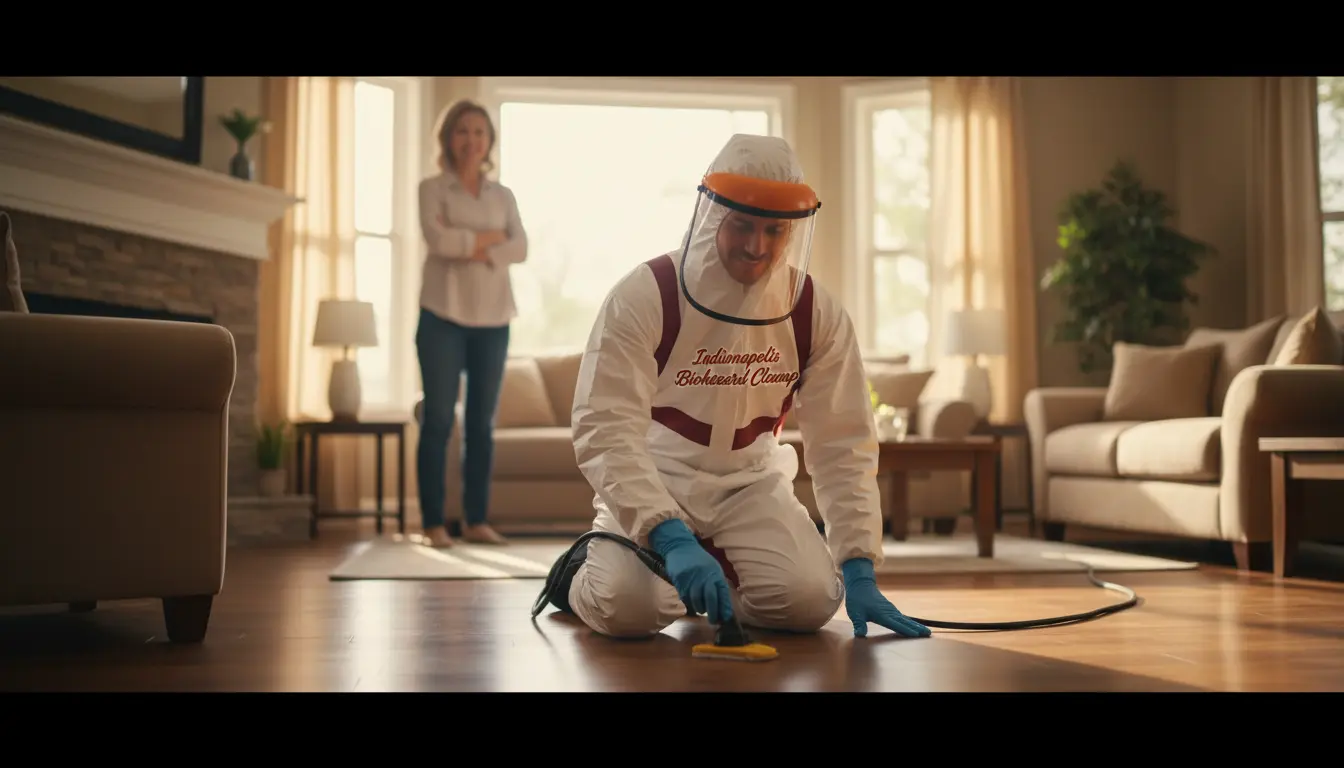
Most people assume that biohazard cleanup is a luxury service reserved for crime scenes on television. In reality, professional remediation is often the most affordable and necessary option for Indianapolis homeowners dealing with unattended deaths or hazardous spills. The common belief that hiring a certified crew is prohibitively expensive ignores the hidden costs of improper cleanup—structural damage, health liabilities, and plummeting property values that far exceed any professional service fee.
Indianapolis neighborhoods experience a unique set of challenges that make affordable biohazard cleanup not just a luxury but a critical investment. From the humid summers that accelerate decomposition to the historic homes in areas like Irvington or Broad Ripple with porous wood floors that absorb biological fluids, the risks of DIY or budget janitorial approaches are severe. Indianapolis Biohazard Cleanup offers a solution that combines technical rigor with transparent pricing, ensuring that every Indianapolis resident can access safe, compliant, and truly affordable remediation.
The Technical Process Behind Affordable Biohazard Remediation
Professional biohazard remediation follows a strict, science-based workflow that ensures complete pathogen elimination and structural restoration. The process begins with a comprehensive risk assessment that evaluates the site’s contamination level, the type of biohazard present (blood, bodily fluids, tissue, or decomposition residue), and the specific materials affected. This assessment determines the required level of personal protective equipment (PPE) and the containment strategy.
Technicians then establish a negative air pressure environment using industrial-grade negative air machines fitted with HEPA filters. This prevents airborne contaminants from migrating to unaffected areas of the property—a critical step that standard cleaning services never perform. Once containment is secure, the physical removal of biohazardous material begins. Specialized enzyme treatments break down organic matter at a molecular level, eliminating odors and residue that bleach cannot remove.
Data Comparison: Professional Remediation vs. Standard Janitorial Cleaning
| Feature / Metric | Professional Biohazard Remediation | Standard Residential Cleaning |
|---|---|---|
| Regulatory Compliance | Fully compliant with OSHA 1910.1030, EPA, and IICRC S540 | No knowledge of bloodborne pathogen standards |
| Pathogen Elimination | 99.99% reduction via EPA-registered hospital-grade disinfectants and ATP testing | Household bleach may kill surface bacteria but fails on viruses and spores |
| Structural Assessment | Identifies hidden saturation in subfloors, drywall, and HVAC systems | Cleans visible surfaces only; leaves porous materials unremediated |
| Odor Removal | Molecular-level enzyme treatment and ozone or hydroxyl generators | Air fresheners mask odors temporarily |
| Waste Disposal | Regulated medical waste transport to licensed incinerators | Illegal to dispose of biohazard waste in household trash |
| Insurance Coverage | Documented process for homeowners insurance claims | No documentation; may void coverage if contamination is discovered later |
Expert Insights: What Professionals Notice That Homeowners Miss
Having performed hundreds of remediations across Indianapolis, our team has developed diagnostic techniques that prevent secondary contamination. One critical insight is the use of thermal imaging cameras to detect hidden biological seepage behind walls and under flooring. Blood and body fluids wick into porous materials like drywall and wood, creating invisible reservoirs that continue to decompose and emit volatile organic compounds (VOCs) for months. Standard cleaning never addresses this.
Another advanced diagnostic is the “sniff test” combined with moisture meters. Decomposition gases, such as putrescine and cadaverine, migrate through the smallest cracks. Our technicians can pinpoint the source even when there is no visible staining. This is particularly important in older Indianapolis homes with lath-and-plaster walls, which trap fluids differently than modern drywall. A third insight involves HVAC systems: if the biological event occurred with the AC running, the entire ductwork may be contaminated. We perform duct inspection and, if necessary, microbial remediation of the HVAC system to prevent cross-contamination.
Pricing: How Affordable Biohazard Cleanup Actually Works
Affordable does not mean cheap. It means transparent, value-driven pricing that eliminates hidden costs. Indianapolis Biohazard Cleanup offers a standard site mobilization fee that covers the initial assessment, containment setup, and PPE. Hourly remediation rates are competitive and vary based on the complexity of the site. Itemized costs include specialized disposal of biohazardous waste, which is typically $1–$3 per pound at licensed incinerators, but we bundle this into the overall quote to avoid surprises.
- Cost Factor 1: Extent of structural material replacement. If the biological contamination has saturated subflooring, carpet padding, or drywall, those materials must be removed and replaced. This is a major cost driver. Our team uses moisture meters and thermal imaging to precisely determine the cut line, minimizing unnecessary removal while ensuring complete safety.
- Cost Factor 2: Volume of biohazardous waste. Larger events—such as unattended deaths discovered after weeks—generate more waste. Our pricing scales fairly, with discounts for higher volumes because disposal costs are bulk-based.
- Cost Factor 3: Specialized HVAC decontamination. If the HVAC system is affected, we perform a separate remediation process that includes duct cleaning, antimicrobial fogging, and HEPA vacuuming. This is quoted separately but often included in a package deal for comprehensive restoration.
Safety & Standards: Protecting Indianapolis Residents and Properties
Our certifications are not just badges—they are operational requirements. Every technician is trained to OSHA’s Bloodborne Pathogens Standard (29 CFR 1910.1030), which mandates proper use of PPE, decontamination procedures, and exposure control plans. We also follow the IICRC S540 standard for trauma and crime scene cleanup, which sets the benchmark for structural restoration. Additionally, we partner with authorized medical waste transporters who are permitted by the Indiana Department of Environmental Management (IDEM) to handle and dispose of biohazardous waste.
Real-world application: During a recent unattended death in a home near Fountain Square, the contamination had seeped through the hardwood floor into the crawlspace. Our team removed the affected floorboards, treated the joists with an antimicrobial encapsulant, and installed a vapor barrier to prevent future moisture issues. The homeowner was able to live in the rest of the house during the process because we maintained negative pressure and used a separate entrance. Standard cleaning services would have simply mopped the surface, leaving a health hazard that could have caused respiratory infections for the next occupants.
Frequently Asked Questions About Unattended Death Remediation in Indianapolis
How long does decomposition odor persist if not professionally treated?
Decomposition gases are volatile organic compounds that cling to porous materials. Without professional intervention, the odor can persist for months or even years, worsening with temperature and humidity changes. Our enzyme treatments break down the organic molecules at the source, and we use ozone generators or hydroxyl machines to neutralize residual vapor. In Indianapolis’s humid climate, untreated odors can permeate neighboring units in duplexes or apartment buildings, creating liability and tenant complaints.
Is it safe to stay in the home during remediation?
In most cases, yes. We set up containment barriers and negative air pressure to isolate the affected area. The unaffected portions of the home remain safe to occupy. However, if the HVAC system is contaminated, we recommend relocating until duct cleaning is completed. Our team assesses each situation individually and provides clear guidance. We never compromise safety for convenience.
What happens if I try to clean it myself?
DIY cleaning of a biohazard scene is illegal in many cases, as biological waste must be disposed of through regulated channels. Beyond the legal risk, you expose yourself to bloodborne pathogens such as hepatitis B, hepatitis C, HIV, and bacterial infections. The physical cleaning also often fails to remove all contaminants, leading to future health issues and structural decay. We have seen cases where homeowners attempted cleanup and later had to spend three times more to repair mold and rot that developed from missed saturation.
Will my homeowners insurance cover the cost?
Many policies cover biohazard cleanup under the “debris removal” or “limited fungi, wet or dry rot, or bacteria” endorsements. However, coverage varies. We recommend contacting your insurer immediately after the event. Our team provides detailed documentation, including photographs, ATP test results, and a scope of work that meets insurance requirements. We have experience working with all major carriers serving Indiana, including State Farm, Allstate, and Liberty Mutual.
How quickly can you respond in Indianapolis?
We offer 24/7 emergency response. In Indianapolis, we can have a crew on-site within 90 minutes for most neighborhoods. Winter ice storms or spring flooding can delay access to some rural areas, but we monitor weather conditions and adjust our response accordingly. We prioritize unattended death cases because time is critical—every hour of delay increases the risk of structural damage and odor migration.