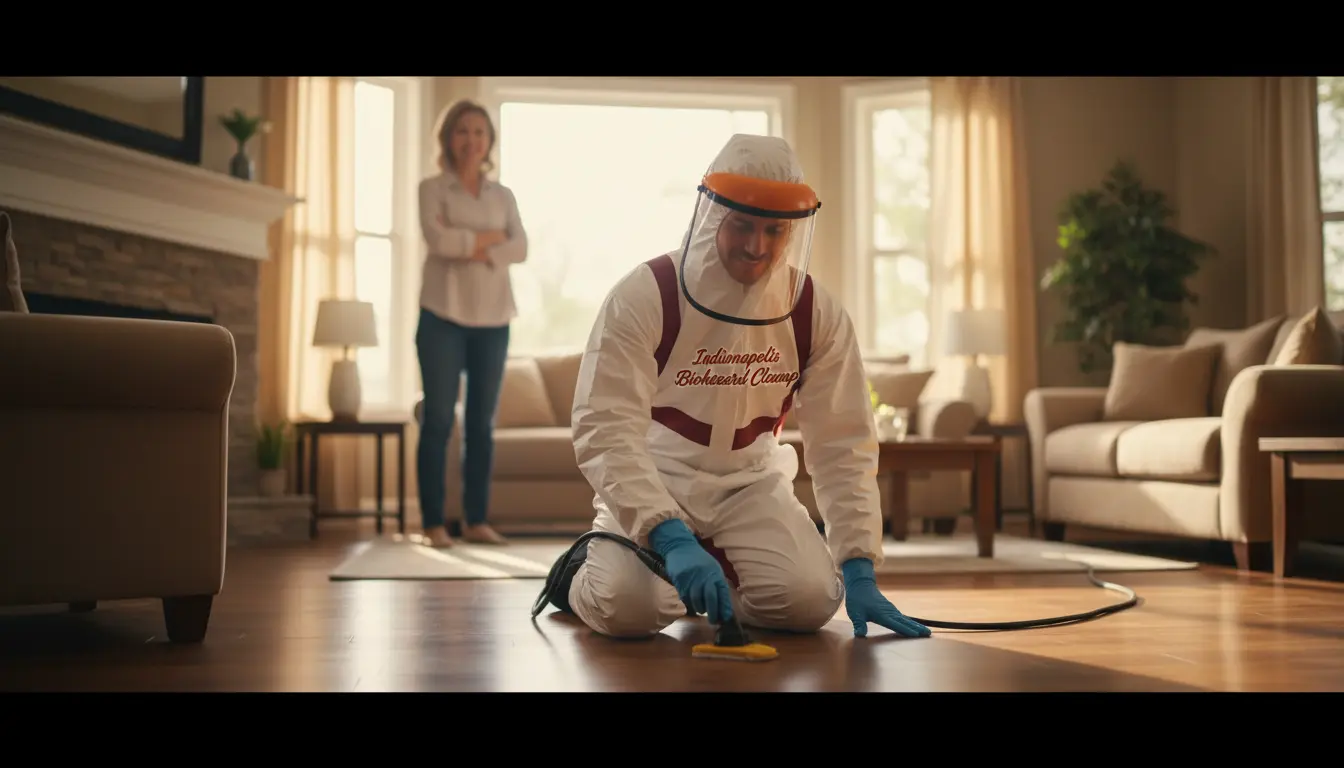
The homeowner found her father in the recliner, the television still murmuring a late-night talk show from two weeks prior. She called her brother first, then the coroner, and then she called us, because the carpet had turned black under the chair and the smell had taken over the house like a living thing. That call, more than any other single action, is the one that determines whether a biohazard site becomes a manageable restoration or a lifelong legal and health liability. The first hour after discovery sets the entire trajectory for remediation.
In Indianapolis, where summer humidity can push past 85 percent and winter winds drive temperatures well below zero, the clock on biological decomposition ticks at different speeds depending on the season. A biohazard incident—whether an unattended death, a violent crime, or a hoarding situation—demands an immediate, protocol-driven response that follows OSHA Bloodborne Pathogens Standard 29 CFR 1910.1030 and the IICRC S540 Standard for trauma and crime scene cleanup. The window for effective intervention is brief, and every moment counts.
Indianapolis Biohazard Cleanup provides the expert, discreet, and technically rigorous site restoration that property owners and families need during the most difficult moments. Our teams are certified, equipped, and ready to respond across Marion County, including the historic neighborhoods of Irvington, the sprawling subdivisions of Fishers, and the older structures downtown that often hide biohazards behind walls and under floorboards.
Secure the Scene and Prevent Cross-Contamination
The very first step after discovering a biohazard incident is to secure the area. Do not allow anyone who is not a trained, fully equipped professional inside the room or building. Well-meaning family members, curious neighbors, or even police officers who have already left the scene can track bloodborne pathogens on their shoes, clothing, or personal affects, spreading danger to other parts of the property and potentially their own homes.
This is not about being dramatic; it is about practical infection control. Hepatitis B can survive outside the body for at least seven days, and even dried blood can transmit the virus through a cut or mucous membrane. Once the scene is secured, ventilation is the next critical priority. Open windows if the weather permits, but only if doing so does not create a pathway for airborne pathogens to spread into occupied areas. In the winter, when Indianapolis homes are sealed tight against the cold, biological decomposition gases can build up to dangerous levels, creating a toxic environment that is invisible and odorless until it is too late.
Contact a Certified Biohazard Remediation Professional Immediately
Time is not on your side. The natural process of decomposition accelerates rapidly once the body is removed, releasing fluids and gases that penetrate porous materials like drywall, carpet, and subflooring. In central Indiana, where many homes were built before 1970 and feature historic plaster and lath walls or original hardwood floors, these materials act like sponges, drawing biological material deep into their structure. Once that happens, complete structural removal is often the only viable option.
Calling Indianapolis Biohazard Cleanup immediately allows our team to conduct an initial risk assessment, establish containment barriers, and begin deploying industrial-grade negative air machines designed to control airborne contaminants. Do not attempt to clean the area yourself using household products. Bleach, for example, may disinfect a hard, non-porous surface in ideal conditions, but it is largely ineffective against biological material that has soaked into wood, fabric, or insulation. Worse, bleach can react with certain biological compounds to create toxic chlorine gas.
Understand the Regulatory Landscape in Indianapolis
Marion County has specific regulations regarding the transportation and disposal of biohazardous waste. The waste must be double-bagged in red, marked biohazard containers, labeled correctly, and transported by a licensed carrier to an authorized treatment facility. Failing to follow these rules can result in significant fines and legal liability for the property owner, not to mention the ethical responsibility of ensuring no one else is exposed to potentially infectious material.
Indianapolis Biohazard Cleanup manages all waste disposal in full compliance with Indiana Department of Environmental Management guidelines. We maintain contracts with licensed incineration facilities that guarantee complete destruction of pathological waste. This is not a service that standard cleaning companies can provide, and it is one of the many reasons why professional remediation is the only safe option.
The Professional Remediation Process Step by Step
The workflow for a biohazard remediation follows a strict sequence designed to eliminate all biological contamination, verify its removal, and restore the property to a safe, habitable condition. Each step depends on the previous one, and skipping any phase can compromise the entire operation.
Initial Risk Assessment and PPE Protocol Initiation
Before any cleaning begins, the lead technician performs a detailed visual and olfactory assessment of the entire property, identifying all areas where biological material may have migrated. This includes checking behind baseboards, inside closets, along duct work, and under flooring. Technicians then don full personal protective equipment, including Tyvek suits, double gloves, boot covers, and full-face respirators with HEPA filters. Every person entering the containment zone must wear identical gear to ensure no one becomes a vector for contamination.
Physical Biohazard Removal
This is the manual removal of all visible biological material, including blood, tissue, and fluids. Specialized enzyme treatments break down proteins and fatty compounds at the molecular level, allowing them to be safely absorbed and removed. In the case of an unattended death, this often involves removing large sections of carpet, padding, subflooring, and drywall. The goal is not to clean the contaminated materials but to remove them entirely and dispose of them as regulated medical waste.
EPA-Registered Chemical Sanitization and ATP Testing
After all visible material is gone, the entire affected area is scrubbed with hospital-grade disinfectants approved by the EPA for the specific pathogens present. The surface is then tested using adenosine triphosphate (ATP) fluorescence testing, which measures the presence of organic residue at the molecular level. A reading below a specific threshold confirms that the surface is biologically clean. This is the same testing methodology used in hospital operating rooms and commercial food preparation facilities. It provides objective, scientific proof that the remediation is complete.
Expert Insights from the Field
Professional biohazard remediation relies on diagnostic skills that go beyond what any chemical or tool can provide. Seasoned technicians develop an eye for hidden seepage that untrained observers would miss entirely. For example, biological fluid can travel along the bottom edge of drywall, wicking upward through capillary action, leaving the surface of the wall apparently clean while the interior cavity is saturated with material that will eventually decompose and produce odor.
Another critical diagnostic principle is that porous materials almost never respond well to cleaning. Once blood or other biological material has soaked into wood, gypsum, or carpet fibers, it creates a permanent reservoir for microbial growth. The only safe option is removal and replacement. Property owners who try to save money by cleaning rather than replacing inevitably face secondary contamination and must pay for a second, more extensive remediation later.
Negative air pressure is one of the most important engineering controls in biohazard remediation. By using HEPA-filtered negative air machines, we create a slight vacuum inside the containment zone, ensuring that any airborne particles are pulled into the machine rather than escaping into the rest of the building. This prevents cross-contamination and protects everyone outside the immediate work area.
Common Mistakes Property Owners Make
One of the most frequent errors is using household bleach on biological material. While bleach is a strong disinfectant, it is quickly neutralized by organic matter, meaning it loses effectiveness before it can kill the microbes on a porous surface. Additionally, bleach does not remove the biological material itself; it only kills surface bacteria, leaving behind a potentially infectious matrix.
Another common mistake is waiting for the odor to go away naturally. The decomposition odor is a sign that biological material is actively breaking down and releasing gases that include volatile organic compounds and potentially harmful bacteria. The smell will not disappear until the source is removed. Trying to mask it with air fresheners or ozone generators only delays the necessary remediation and creates a health hazard for everyone inside the building.
Finally, allowing untrained family members or well-meaning friends to help with the initial cleanup is a serious error. These individuals are at high risk of exposure to bloodborne pathogens, and they often inadvertently spread contamination to other areas of the home. In many of our cases in Indianapolis, the initial attempt at cleanup by family resulted in contamination of adjacent rooms, hallways, and even the HVAC system, dramatically increasing the scope and cost of the eventual professional remediation.
Pricing for Biohazard Remediation Services
- Standard site mobilization fees for the initial assessment, containment setup, and deployment of negative air machines: typically between $500 and $1,000, depending on the size and complexity of the property.
- Hourly remediation rates for advanced trauma and crime scene cleanup: $150 to $300 per hour, per technician, reflecting the specialized training, full PPE requirements, and regulatory compliance involved.
- Itemized costs for disposal of biohazardous waste: $50 to $200 per sealed bag, depending on the weight and type of material, with all waste tracked from the property to the incineration facility.
Three primary factors influence the total cost of biohazard remediation. The extent of structural material replacement required is the single largest driver; removing and replacing several hundred square feet of subflooring, drywall, and insulation adds substantial labor and material expenses. The total volume of biohazardous waste also affects pricing, because each sealed bag must be transported and incinerated under strict regulatory oversight. The necessity for specialized HVAC decontamination can further increase costs. If biological material has entered the ductwork, the entire system must be cleaned and disinfected using industrial-grade equipment, which can add thousands of dollars to the project.
Safety and Standards in Biohazard Remediation
Professional biohazard remediation is governed by a comprehensive set of safety standards designed to protect workers, property owners, and the general public. The most important of these is the IICRC S540 Standard for trauma and crime scene cleanup, which provides a detailed methodology for every phase of the remediation process, from initial assessment to final clearance testing. Adherence to this standard is essential for ensuring that the work is complete, thorough, and legally defensible.
OSHA Bloodborne Pathogens Standard 29 CFR 1910.1030 establishes the baseline for worker safety, including requirements for vaccinations, personal protective equipment, and exposure control plans. Every technician at Indianapolis Biohazard Cleanup is fully trained and up to date with current OSHA requirements. We maintain a strict exposure control plan that governs everything from the moment a technician dons a glove to the moment the waste is loaded onto the incineration truck.
Authorized waste management services are another crucial component of safety. We cannot simply throw biohazardous material in a dumpster. It must be transported by a licensed carrier to a facility that is permitted to treat or incinerate medical waste. This process is tracked from pickup to final destruction, creating a chain of custody that protects everyone involved and ensures compliance with local, state, and federal regulations.
Frequently Asked Questions About Unattended Death Remediation
How quickly must remediation begin after an unattended death?
Remediation should begin as soon as the coroner has released the scene and the property is safe to enter. In the summer months in Indianapolis, where temperatures regularly exceed 85 degrees Fahrenheit, decomposition accelerates rapidly, and biological fluids begin to penetrate porous materials within hours. Starting remediation within the first 24 to 48 hours is critical to minimizing structural damage and reducing the risk of airborne pathogens. If the death occurred in a warmer environment, such as a poorly ventilated attic or a sun-exposed room, the timeline is even shorter.
Can biohazardous material be cleaned from drywall, or does it always need to be replaced?
In nearly all cases, drywall that has been exposed to biological fluids must be removed and replaced. The paper facing on gypsum board acts as a wick, drawing biological material into the core of the panel, where it cannot be reached by any cleaning agent. Even if the surface appears dry and clean, the interior cavity may be saturated with material that will eventually decompose, producing odor and promoting mold growth. The only way to eliminate the hazard is to cut out and discard the contaminated section, typically extending at least 12 to 24 inches above the visibly affected area.
What should I do if I discover a biohazard incident but cannot access the property immediately?
If the property is secured and no one is in immediate danger, the best course of action is to contact Indianapolis Biohazard Cleanup as soon as possible and arrange for an initial assessment. In the meantime, do not attempt to enter the area or ventilate it without proper PPE. If the property is accessible and safe to enter, our technicians can often stabilize the scene by deploying containment barriers and negative air machines remotely, pending full mobilization. Every case is evaluated individually, and we can often provide guidance over the phone to help property owners take the appropriate steps until our team arrives.
How is the property tested to confirm it is safe after remediation?
After all visible material is removed and the area is chemically sanitized, our technicians perform ATP fluorescence testing on multiple surfaces within the containment zone. ATP testing measures the presence of organic residue at the molecular level. A reading below the established threshold confirms that the surface is biologically clean. We also perform a visual inspection and a final odor assessment before removing containment. If the remediation involved structural replacement, we test the newly installed materials and the surrounding areas as well. Documentation of all test results is provided to the property owner for insurance and legal purposes.
Professional Biohazard Remediation in Indianapolis
When a biohazard incident occurs, the difference between a properly restored property and a long-term health and legal liability comes down to the expertise, speed, and thoroughness of the response. Indianapolis Biohazard Cleanup brings decades of experience, certified technicians, and strict adherence to industry standards to every project. We understand the local conditions that affect decomposition in central Indiana, and we have the specialized equipment and protocols necessary to handle even the most complex cases, from historic homes with hidden contamination to modern apartments where biological material has spread through the HVAC system.
Our team provides discreet, respectful service that prioritizes the safety and well-being of property owners and their families. We work directly with insurance companies, law enforcement, and property managers to ensure a seamless process from discovery to completion. Every job is backed by documented compliance with OSHA, EPA, and IICRC standards, and we offer a full guarantee on the safety and cleanliness of our work.
If you are facing the aftermath of a biohazard incident in Indianapolis, do not wait. Contact Indianapolis Biohazard Cleanup immediately to schedule an initial assessment and containment. Our trained technicians are on call 24 hours a day, seven days a week, and we will respond quickly to secure the scene and begin the process of professional, thorough, and compassionate restoration.