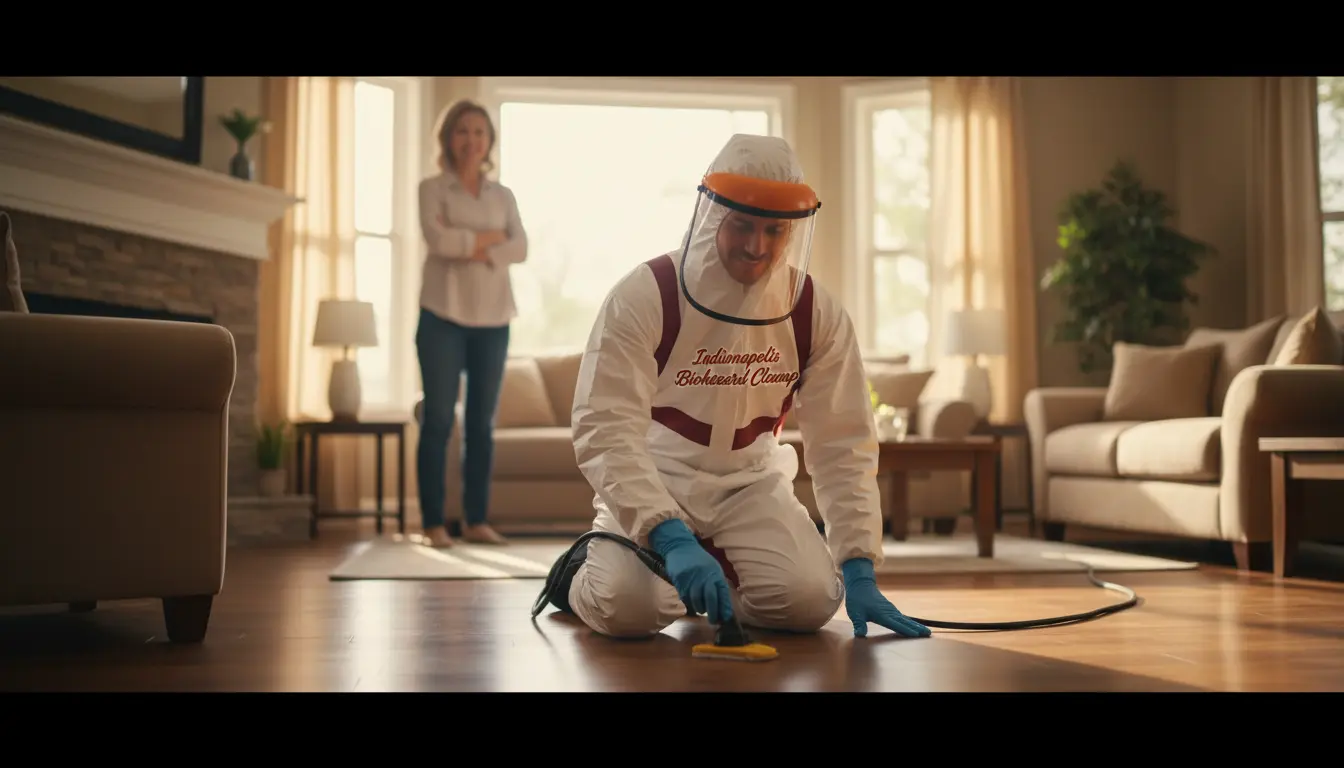
Believing you can save money by handling a biohazard scene with household cleaners or a local janitorial service is a mistake that can cost you tens of thousands of dollars in structural repairs and expose you to life-threatening bloodborne pathogens. I have been called to homes across Indianapolis where owners, hoping to cut corners, have attempted to clean a crime scene, unattended death, or severe accident themselves. The result is almost always the same: a partially decontaminated space that requires far more extensive remediation than would have been needed originally. Waiting for the odor to dissipate on its own or using bleach on porous materials guarantees that dangerous microorganisms remain embedded in your property. This approach does not save money; it multiplies the final invoice and puts every future occupant at risk.
Professional biohazard cleanup in Indianapolis is not a commodity service. It is a complex, scientifically driven process governed by strict regulations from OSHA, the EPA, and the IICRC. Every site presents unique challenges that directly determine the cost of restoration. Understanding these factors before making a decision will protect your property value, your health, and your peace of mind. Indianapolis Biohazard Cleanup is the premier, discreet, and technically rigorous service provider for homes and businesses throughout Marion County, offering certified solutions that standard cleaning crews simply cannot deliver.
How Seasonal Extremes in Indianapolis Affect Decomposition and Remediation Costs
One of the first variables I assess when estimating a job in Indianapolis is the duration of time a body has been present and the local weather conditions during that period. Our Midwestern climate, with its humid summers and freezing winters, dramatically alters the rate of biological decomposition. A summer unattended death in an unair-conditioned home near Broad Ripple can produce advanced decay and heavy insect activity within 48 hours. Fluids saturate wood subflooring and drywall, migrating far beyond the visible stain. In contrast, a winter death in a cold basement might leave the body relatively preserved for weeks, but once the space is heated for the cleanup, the rapid thaw releases a concentrated wave of biological material and odor that permeates the entire HVAC system.
Both scenarios require additional work. Summer cases often demand enzyme treatments and full subfloor replacement to neutralize deeply soaked organic matter. Winter cases frequently involve whole-home HVAC decontamination to eliminate airborne pathogens released during the thaw cycle. The season of the event is a direct cost driver that cannot be ignored. During initial site inspection, I use adenosine triphosphate testing to measure biological residue on surfaces. An ATP reading above 100 relative light units indicates a surface is not clean. In an Indianapolis home where high humidity has allowed microbes to flourish, readings can exceed 10,000 RLU in areas that appear dry to the naked eye. This hidden contamination is a primary reason why professional remediation is non-negotiable and why costs vary so widely from one property to the next.
The Step-by-Step Professional Remediation Process
Understanding the technical workflow helps explain why professional biohazard cleanup costs more than a standard cleaning. The process is methodical and backed by scientific protocols designed to eliminate all pathogens and restore the property to a safe condition. Every step adds labor, specialized equipment, and disposal fees to the final bill.
Initial Risk Assessment and Containment Setup
I begin every job by establishing a containment zone using polyethylene sheeting and negative air pressure. Industrial-grade negative air machines fitted with HEPA filters create a vacuum that prevents airborne contaminants from traveling to unaffected areas of the home. This is critical in older Indianapolis residences, where historic construction methods often create open pathways between floors through ductwork and gaps around baseboards. Establishing containment can take one to two hours and is a non-negotiable safety step. The cost of this setup is factored into the mobilization fee and hourly remediation rates.
Physical Removal and Disposal of Affected Materials
Once containment is verified, I personally oversee the removal of all porous materials that have been contaminated. This includes carpet, padding, drywall, insulation, and subflooring. Standard cleaning services attempt to scrub these surfaces, which is scientifically ineffective. Biological fluids seep into the porous matrix, and no amount of chemical application can reach deeply embedded pathogens. Replacement is the only safe option. For an Indianapolis home with original hardwood flooring over a crawlspace, I may need to remove multiple layers to find clean structural wood. This increases material costs, labor hours, and the volume of biohazardous waste requiring specialized disposal. All waste is placed in red biohazard bags and incinerated at an authorized facility, a service that carries per-pound fees.
Chemical Sanitization and Verification Testing
After removal, I apply EPA-registered hospital-grade disinfectants using electrostatic sprayers to ensure full surface coverage. The chemistry matters. Bleach, which many homeowners reach for first, is deactivated by organic material and loses efficacy within hours. I use quaternary ammonium compounds and accelerated hydrogen peroxide formulations that maintain antimicrobial activity for days. After treatment, I return with an ATP bioluminescence tester. No surface is signed off until it measures below 50 RLU. This verification step is not performed by standard cleaning crews and is a direct factor in the overall cost of professional remediation.
Technical Comparison: Professional Remediation vs. Standard Janitorial Cleaning
The table below outlines the critical differences between professional biohazard remediation and a routine cleaning service. These distinctions explain why opting for a lower price can lead to catastrophic consequences.
| Feature/Metric | Professional Biohazard Remediation | Standard Residential Cleaning |
|---|---|---|
| Regulatory Compliance | Full compliance with OSHA 29 CFR 1910.1030, EPA waste disposal rules, and IICRC S540 standards. | No specific compliance; crew may not have bloodborne pathogen training. |
| Pathogen Elimination | ATP testing verifies elimination; hospital-grade disinfectants applied with electrostatic sprayers. | Surface cleaning only; pathogens remain in porous materials. |
| Structural Assessment | Professional evaluation of subfloor, drywall, and HVAC for hidden contamination. | Visual inspection only; saturated areas often left in place. |
| Waste Disposal | Licensed transport and incineration of biohazardous waste with chain-of-custody documentation. | Disposal in standard trash; illegal and dangerous. |
Source: IICRC S540 Trauma and Crime Scene Cleanup Standard
Expert Diagnostic Insights for Indianapolis Property Owners
After two decades of hands-on remediation work, I have developed a checklist of diagnostic observations that directly affect cost and safety. Sharing these insights can help you understand why a particular quote may be higher than another.
First, I always check for hidden biological seepage behind baseboards and under floating floors. In many historic Indianapolis homes, subflooring consists of wide-plank pine laid directly over joists. Biological fluids run along the grain and soak into the wood fibers. A visual inspection from above shows a dry surface, but a moisture meter or thermal imaging camera reveals saturation. If you see a quote that seems too low, it likely does not account for removing and replacing this hidden material.
Second, porous materials are not salvageable. Some property owners ask me to treat drywall or carpet with chemicals to save money. I explain that the porous nature of gypsum and synthetic fibers allows pathogens to colonize the material. No chemical treatment can penetrate deeply enough to ensure sterilization. Replacement is the only method that meets IICRC S540 standards. Attempting to clean porous materials is the most common mistake I encounter, and it always leads to recurring odor and potential health hazards for future occupants.
Understanding Pricing for Biohazard Cleanup in Indianapolis
Pricing for professional biohazard remediation is not a one-size-fits-all number. Every property presents a unique combination of variables that influence the final invoice. I break down the estimated costs transparently so property owners can make an informed decision.
- Standard site mobilization fees range from $250 to $500 and cover the initial inspection, containment setup, and transport of specialized equipment.
- Hourly remediation rates for certified technicians typically fall between $150 and $250 per hour. The number of hours required depends directly on the scope of contamination discovered during the initial assessment.
- Disposal of biohazardous waste is itemized per pound or per container, with incineration fees ranging from $50 to $150 per red bag. A moderate unattended death cleanup can produce ten or more bags.
Three factors consistently drive these costs higher than initial expectations. The extent of structural material replacement is the largest single variable. If subflooring, drywall, and insulation must be removed from an entire room, material and labor costs increase significantly. The total volume of biohazardous waste also matters; a larger volume means more disposal fees and more labor hours for removal and transport. Finally, if the event has been undiscovered for more than three days, or if the HVAC system has been operating during that time, the entire ductwork may require decontamination by a specialized service provider. That single task can add $500 to $1,500 to the total.
Safety Standards and Regulatory Compliance
Every technician at Indianapolis Biohazard Cleanup holds current certification in OSHA Bloodborne Pathogens Standard 29 CFR 1910.1030 and follows the IICRC S540 standard for trauma and crime scene cleanup. These certifications are not decorative; they represent rigorous training in the safe handling of infectious materials, proper use of personal protective equipment, and lawful disposal of regulated waste. I require my team to undergo annual refresher courses and participate in biannual field competency assessments.
The practical importance of these standards cannot be overstated. In a real-world scenario, a property owner who attempts to clean a biohazard site without proper training risks exposure to hepatitis B, hepatitis C, HIV, and bacterial pathogens like MRSA. Beyond personal health, improper disposal of biohazardous waste can result in state and federal fines. A general contractor or friend helping with the cleanup is not covered under any regulatory framework. By hiring a certified and insured remediation specialist, you transfer all liability and ensure compliance with Marion County health ordinances and EPA guidelines. This protection is a primary reason to choose a professional service over any alternative.
Frequently Asked Questions About Unattended Death Cleanup in Indianapolis
Why can’t I just clean the area with bleach after an unattended death?
Bleach is a common household disinfectant, but it is ineffective for biohazard remediation. Organic material, such as blood or bodily fluids, deactivates the chlorine in bleach within minutes of contact. The cleaning action of bleach is limited to the surface; it cannot penetrate porous materials like drywall, wood subflooring, or carpet padding. After a few hours, the bleach evaporates and leaves behind moisture that actually promotes bacterial growth in the affected area. Professional remediation uses EPA-registered hospital-grade disinfectants that maintain antimicrobial activity for extended periods and penetrate deeper into materials. ATP testing then verifies that the surface is truly pathogen-free. Relying on bleach is a false economy that leads to ongoing health risks and eventual structural replacement.
How long does an unattended death cleanup usually take in Indianapolis?
The timeline varies directly with the scope of contamination. A small room with a recent death and minimal fluid migration might require two to three hours of remediation labor plus setup and disposal time. A more complex scenario, such as a death that went undiscovered for two weeks during a humid Indianapolis summer, can easily require eight to twelve hours of work spread over two days. The additional time comes from extensive material removal, multiple rounds of chemical treatment, HVAC decontamination, and verification testing. During the winter, thawing of the body and fluids inside the structure adds another layer of complexity. I always provide a preliminary estimate after an on-site inspection, but I also warn clients that the final cost may change if hidden contamination is discovered during the removal process.
Will my homeowners insurance cover the cost of biohazard cleanup?
Many standard homeowners insurance policies sold in Indiana do cover biohazard remediation under certain circumstances. Coverage typically applies when the event is sudden and accidental, such as a homicide or accidental death. Unattended deaths that occur over days or weeks may fall into a different category depending on the specific policy language and cause of death. I recommend contacting your insurance agent directly and asking whether biohazard remediation is included under your personal property or dwelling coverage. Indianapolis Biohazard Cleanup provides detailed documentation of our process, including chain-of-custody forms for waste disposal and final ATP test results, which can support your insurance claim. The earlier you involve your insurance provider, the smoother the process will be.
What happens if I choose not to remediate the area after an unattended death?
Leaving a biohazard site untreated is not a passive decision; it actively creates hazards. Pathogens present in blood and bodily fluids remain viable for weeks or months, especially in uncontrolled temperature and humidity conditions. Odor from decomposition attracts insects and rodents, which can spread contaminants to other parts of the home. Residual biological material can cause long-term structural damage by promoting fungal growth that weakens wood framing and drywall. Perhaps most critically, if you sell the property without disclosing the event and properly remediating the site, you may face legal liability for knowingly creating a health hazard. Professional remediation eliminates the physical, biological, and legal risks associated with unattended death scenes. It is the only safe and responsible path forward.
Professional Biohazard Remediation in Indianapolis
Restoring a property after a traumatic event requires a combination of technical expertise, regulatory compliance, and compassionate service. Every job I lead at Indianapolis Biohazard Cleanup begins with a thorough assessment of the unique factors that affect cost and safety. We do not offer vague estimates over the phone; we visit the site, run ATP tests, evaluate structural materials, and then provide a transparent quote. Our technicians are IICRC-certified, OSHA-trained, and fully insured for the specific work of biohazard remediation. We handle the logistics of waste disposal, the careful removal of porous materials, and the final verification of cleanliness. You can trust that your property is restored to a safe condition. If you are facing a biohazard situation in Indianapolis, contact us directly. We will walk you through every step of the process and ensure your property is safe for future occupancy.