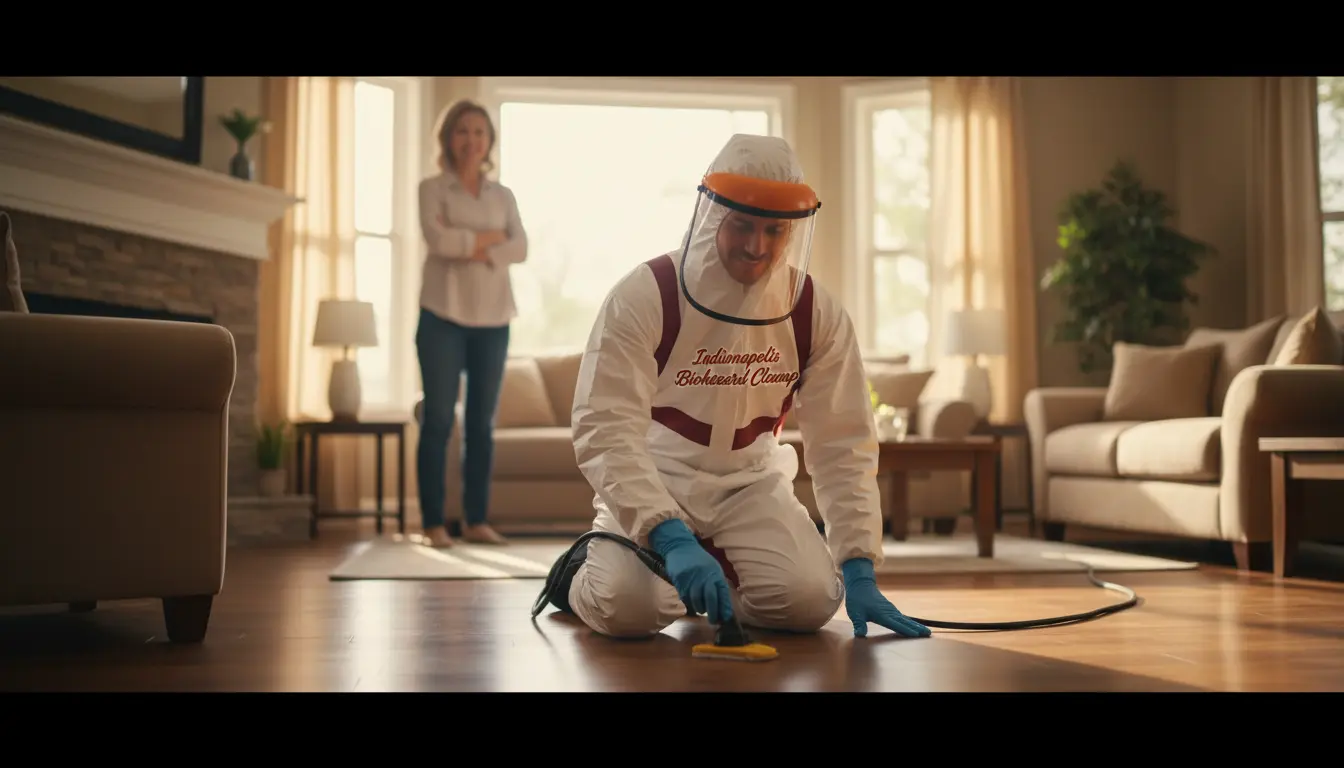
Restoring a property after a traumatic event, a chemical spill, or an infectious disease outbreak requires far more than mops and bleach. It demands a systematic, scientifically grounded protocol that addresses every layer of contamination — visible and invisible. In Indianapolis, where seasonal extremes accelerate decomposition and odor migration, and where historic residential structures pose unique sub‑floor challenges, a step‑by‑step approach is not optional; it is the only way to return a home to a safe, habitable state while preserving its structural integrity and market value. Indianapolis Biohazard Cleanup has built its reputation on this precise, methodical workflow.
Initial Risk Assessment and Scene Stabilization
Every remediation begins before a single tool is unpacked. Our certified technicians conduct a thorough walk‑through to identify all biohazards present: bloodborne pathogens, bodily fluids, sharps, mold colonies, and any chemical contaminants. We document the extent of saturation in porous materials such as drywall, carpet, and untreated wood. In a typical Marion County residence, we also note the age of the structure and the type of sub‑floor construction — balloon‑frame buildings common in pre‑1940s Indianapolis homes allow fluids to travel vertically between floors, a detail that significantly changes the remediation plan.
Simultaneously, we establish containment. Using heavy‑gauge polyethylene sheeting and negative air machines equipped with HEPA filtration, we isolate the affected zone from the rest of the property. Negative pressure ensures that airborne pathogens and particulates do not migrate into clean areas. This step is especially critical during Indianapolis winters when forced‑air heating systems can circulate contaminants throughout an entire building if left unchecked. The goal is to stabilize the scene, prevent cross‑contamination, and protect every occupant and worker before any physical removal begins.
Personal Protective Equipment and Safety Protocols
Before entering the containment zone, all personnel don full PPE in compliance with OSHA’s Bloodborne Pathogens Standard (29 CFR 1910.1030). This includes Tyvek suits, double‑gloved with nitrile, full‑face respirators with P100 cartridges, and chemical‑resistant boot covers. In Indianapolis, where many historic homes lack adequate ventilation, we also run continuous air‑quality monitoring for volatile organic compounds and hydrogen sulfide gas — a byproduct of decomposition that can accumulate in enclosed basements and crawl spaces.
Every piece of equipment is decontaminated before leaving the site. Our technicians follow a strict doffing procedure that minimizes contact with contaminated surfaces. This level of discipline is not bureaucracy; it is the difference between a safe remediation and a secondary exposure incident that could affect the property owner, future occupants, or our own team. The same rigor applies to waste handling: all biohazardous materials are double‑bagged in red, OSHA‑approved bags and transported to an authorized medical waste incinerator in compliance with Indiana state regulations and Marion County environmental codes.
Physical Removal of Biohazardous Materials
Once the scene is isolated and the team is protected, the physical removal process begins. This is the most visually demanding phase. All contaminated porous materials are cut out and removed: saturated carpet and pad, stained drywall, insulation, and any wooden sub‑flooring that cannot be effectively decontaminated. In the case of the east‑side bungalow mentioned earlier, we had to remove a 12‑foot section of original oak flooring and two layers of particleboard sub‑floor that had absorbed fluids over nearly a square meter. The joists beneath were treated with an industrial‑grade enzyme solution that breaks down organic matter at a molecular level, then sealed with a penetrating epoxy to encapsulate any residual biological material.
Non‑porous surfaces — tile, concrete, metal fixtures — are scrubbed with a hospital‑grade disinfectant that has a proven 99.99 percent efficacy against a broad spectrum of pathogens, including hepatitis B, HIV, and norovirus. We use mechanical agitation with stiff‑bristled brushes and microfiber cloths to ensure the disinfectant reaches microscopic cracks and crevices. After the initial wash, the area is rinsed and subjected to a second disinfection pass using an electrostatic sprayer that applies a fine mist to all surfaces, including ceilings and the undersides of cabinets. This method ensures complete coverage even on complex geometries.
Advanced Sanitization and ATP Verification
Chemical cleaning alone is not enough. To verify that we have eliminated biological contamination, we use adenosine triphosphate (ATP) fluorescence testing. ATP is present in all living cells — bacteria, viruses, fungi, and human tissue. A handheld luminometer reading above 30 relative light units (RLUs) on a cleaned surface indicates that organic residue remains and requires further treatment. Our standard is to bring every surface below 10 RLUs. In practice, we often achieve readings of 3 to 5 RLUs after a third disinfection pass.
This scientific verification step is a hallmark of professional biohazard remediation. It provides objective proof that the environment is safe, which is critical for insurance claims, property resale, and the peace of mind of the homeowner or next of kin. In Indianapolis, where humidity can exceed 70 percent for weeks at a time, ATP testing also helps identify hidden biological seepage behind baseboards and under appliances — areas that might otherwise be missed. If a surface tests high, we repeat the cleaning process until it passes.
Structural Decontamination and Odor Neutralization
Even after visible contamination is gone, odors can linger. Decomposition produces volatile fatty acids and amines that penetrate porous materials and can re‑release into the air for months. Our approach combines thermal fogging with a chlorine dioxide‑based vapor that chemically oxidizes odor molecules at the source. We then follow up with ozone treatment in unoccupied spaces to break down any remaining volatile compounds. Throughout this phase, we monitor the containment zone with a photoionization detector to ensure that ozone levels do not pose a hazard to adjacent occupied areas.
For the structural components that remain — joists, studs, concrete slabs — we apply a broad‑spectrum antimicrobial sealant that prevents future microbial growth. This is particularly important in Indianapolis’s older homes, where basements are often damp and prone to mold. Sealing encapsulates any residual biological material and creates a barrier that resists moisture intrusion, effectively future‑proofing the structure against secondary contamination. The final step is a full HEPA vacuuming of the entire work area, including walls and ceilings, to capture any dust particles that may have settled during the process.
Data Comparison: Professional Remediation vs. Standard Cleaning
| Feature / Metric | Professional Biohazard Remediation | Standard Residential Cleaning |
|---|---|---|
| Regulatory Compliance | OSHA 29 CFR 1910.1030, EPA FIFRA, IICRC S540, Indiana medical waste laws | None; not designed for biohazards |
| Pathogen Elimination | 99.99% efficacy verified by ATP testing and independent lab cultures | Surface cleaning; no verification |
| Structural Assessment | Full inspection of sub‑floor, joists, HVAC, and wall cavities; removal of contaminated porous materials | No assessment; cleaning only visible surfaces |
| Odor Control | Thermal fogging, ozone, chlorine dioxide vapor, source‑level oxidation | Air fresheners or deodorizers (temporary) |
| Waste Disposal | Red bag medical waste incineration per Indiana law | Household trash (illegal and unsafe) |
| Insurance Documentation | Detailed report with photos, ATP readings, waste manifest, and compliance certification | None |
Expert Insights: Three Diagnostic Tips and Two Common Pitfalls
Detecting Hidden Biological Seepage
ATP testing is invaluable, but experienced technicians also rely on olfactory cues and moisture meters. A sudden spike in humidity readings inside a wall cavity — even without visible staining — often indicates that biological fluids have wicked upward through capillary action. In Indianapolis’s balloon‑frame homes, this can travel from a ground‑floor incident to the attic joists. We use a borescope to inspect enclosed spaces and confirm contamination before deciding whether to open the wall.
Why Porous Materials Must Be Replaced, Not Cleaned
No amount of scrubbing can fully remove blood or tissue from materials like drywall, carpet, or unfinished wood. The porous structure traps pathogens in microscopic pockets where disinfectants cannot reach. Attempting to clean such surfaces leaves behind a reservoir of infectious material that can reactivate with moisture. The only safe approach is removal and replacement — a principle that applies equally to upholstered furniture and mattresses.
The Importance of Negative Pressure
Without negative air flow, pathogens released during removal can spread throughout the entire building. In a forced‑air heating or cooling system — common in Indianapolis homes — airborne contaminants can be drawn into the HVAC ducts and recirculated for weeks. We seal all supply and return vents in the containment zone and run negative air machines at a rate of six air changes per hour. This is non‑negotiable for cross‑contamination prevention.
Common Mistake 1: Using Household Bleach
Household bleach (sodium hypochlorite) is often the first thing people reach for, but it is ineffective on porous surfaces and can actually fixate proteins, making them harder to remove. Moreover, bleach degrades rapidly in the presence of organic matter. Professional disinfectants — such as accelerated hydrogen peroxide or quaternary ammonium compounds — are far more effective and safer for the environment.
Common Mistake 2: Waiting for Odors to Dissipate
Odor is a sign that volatile organic compounds are still being released. Waiting only allows the contamination to penetrate deeper into the structure. By the time the smell fades naturally, the structural damage may be irreversible, and the cost of remediation skyrockets. Immediate professional intervention saves both time and money.
Pricing Structures for Biohazard Remediation in Indianapolis
- Site mobilization fee: $350–$750, depending on distance and urgency. After‑hours calls (evenings, weekends, holidays) carry a premium. This covers the dispatch of a certified crew, containment setup, and initial assessment.
- Hourly remediation rate: $150–$300 per technician per hour. Most jobs require a team of two to four technicians. The total hours depend on the extent of contamination and the size of the affected area.
- Specialized disposal costs: $75–$150 per red bag of biohazardous waste. Heavier items (soaked carpet, mattress, furniture) are billed by weight. All waste must go to a licensed incinerator, which adds a per‑pound fee.
Three factors that most influence the final cost:
- Extent of structural material replacement: Removing and replacing sub‑flooring, drywall, and insulation adds significant labor and material costs. A single room with total flooring replacement can add $2,000–$5,000 to the quote.
- Total volume of biohazardous waste: The more waste generated, the higher the disposal fees. In cases of advanced decomposition, waste volume can exceed 50 pounds, driving up costs.
- Necessity for specialized HVAC decontamination: If the HVAC system has been contaminated, duct cleaning and antimicrobial fogging of the entire system can cost $1,000–$3,000 extra. This is often required in Indianapolis homes where the system runs continuously during temperature extremes.
Safety and Standards: Certifications That Matter
Professional biohazard remediation is regulated by multiple authorities. The IICRC S540 standard defines the minimum requirements for trauma and crime scene cleanup, including technician training, equipment, and documentation. Our team holds current IICRC certifications in trauma and crime scene remediation. Additionally, we comply fully with OSHA’s Bloodborne Pathogens Standard, which mandates annual training, a written exposure control plan, and the use of engineering controls such as sharps containers and self‑sheathing needles.
We also work within the framework of the EPA’s Federal Insecticide, Fungicide, and Rodenticide Act (FIFRA) by using only registered disinfectants applied according to label instructions. For waste disposal, we contract exclusively with a licensed medical waste transporter that provides a chain‑of‑custody manifest from the property to the incinerator. This is not just good practice — it is legally required in Indiana. Property owners who attempt DIY cleanup or hire unlicensed cleaners risk fines, health code violations, and liability if a future occupant becomes ill.
Frequently Asked Questions About Unattended Death Remediation
How quickly should I call a professional after an unattended death is discovered?
Immediately. Biological fluids begin breaking down within hours, and the rate of decomposition accelerates with heat and humidity. In Indianapolis’s summer months, significant structural damage can occur in as little as 48 hours. Early intervention limits the spread of contaminants, reduces odor migration, and lowers the overall cost of restoration. Even in winter, decomposition continues in heated indoor spaces.
Is it safe to stay in the home during the remediation process?
No. The containment zone is under negative pressure, and the cleaning chemicals — including chlorine dioxide and ozone — can be hazardous to human health without proper respiratory protection. We advise all occupants, including pets, to vacate the property until our final ATP tests confirm that the area is safe. Depending on the scope of work, this may take one to three days.
Will my insurance cover biohazard remediation for an unattended death?
Many homeowners’ insurance policies include coverage for “sudden and accidental” damage, but unattended death is often treated as a separate category. Some policies specifically exclude biohazard cleanup unless an additional rider is purchased. We recommend contacting your insurance provider immediately. In our experience, the insurance adjuster will often require a detailed remediation report with ATP readings and waste manifests — which we provide as standard.
Can you restore a property that has been contaminated for several weeks?
Yes, but the process becomes more extensive. Fluids may have wicked into sub‑flooring, joists, and even foundation concrete. Odor compounds can permeate framing lumber and drywall. Our protocol for advanced decomposition includes removing all affected porous materials, treating the structural frame with enzyme cleaners, applying antimicrobial sealants, and using multiple rounds of thermal fogging and ozone. In severe cases, we may recommend replacing entire sections of sub‑floor and wallboard. The property can be fully restored, but the cost and timeline increase proportionally.
Professional Biohazard Remediation in Indianapolis
Restoring a property after biohazard contamination is not a task for general contractors or well‑meaning janitors. It demands technical expertise, regulatory knowledge, and a deep respect for the emotional weight of the situation. Every step — from the first walk‑through to the final ATP pass — is designed to protect people, preserve property value, and provide closure to families and property owners. In Indianapolis, where seasonal extremes and aging housing stock create unique challenges, working with a certified, experienced team is the only way to guarantee a safe and complete restoration.
Indianapolis Biohazard Cleanup has performed hundreds of remediations across Marion County, from downtown lofts to historic homes in Irvington and newer subdivisions in Fishers. We understand the local climate, the building codes, and the regulations. More importantly, we understand that behind every call is a person who needs help. Our technicians are trained to be both technically rigorous and compassionate. If you are facing a biohazard situation, do not wait. Call us today for a discreet, no‑obligation assessment. We will walk you through every step, answer your questions, and restore your property to a safe, livable condition.