According to a 2026 industry report by the American Bio Recovery Association, the average cost for a single-room trauma scene cleanup in a Midwestern metropolitan area like Indianapolis ranges from $1,500 to $4,500, with unattended death scenarios often exceeding $5,000 due to decomposition complexity. These figures reflect the rigorous labor, specialized equipment, and regulatory compliance required to restore a property to a safe, habitable condition. For property owners in Indianapolis, understanding these costs is not just a matter of budgeting—it is a critical step in protecting both human health and real estate value.
Professional biohazard remediation is far more than a deep cleaning. It involves the systematic removal of bloodborne pathogens, bodily fluids, and microbial contaminants that can cause severe infections or long-term structural damage. In Indianapolis, the combination of humid summers and cold winters accelerates decomposition rates and odor migration, making timely, expert intervention essential. Indianapolis Biohazard Cleanup stands as the premier, discreet, and IICRC-certified provider in the region, offering comprehensive restoration services that adhere to OSHA, EPA, and OSHA Bloodborne Pathogens standards.
The Technical Process of Biohazard Remediation
Initial Risk Assessment and Containment
Every remediation project begins with a thorough site evaluation. Technicians identify the scope of contamination, assess porous materials like drywall and carpeting, and determine the extent of structural involvement. Using industrial-grade negative air machines, the team establishes a containment zone to prevent cross-contamination to unaffected areas. This step is especially critical in Indianapolis’s historic homes, where sub-flooring and plaster walls can harbor hidden biological seepage.
Personal Protective Equipment and Safety Protocols
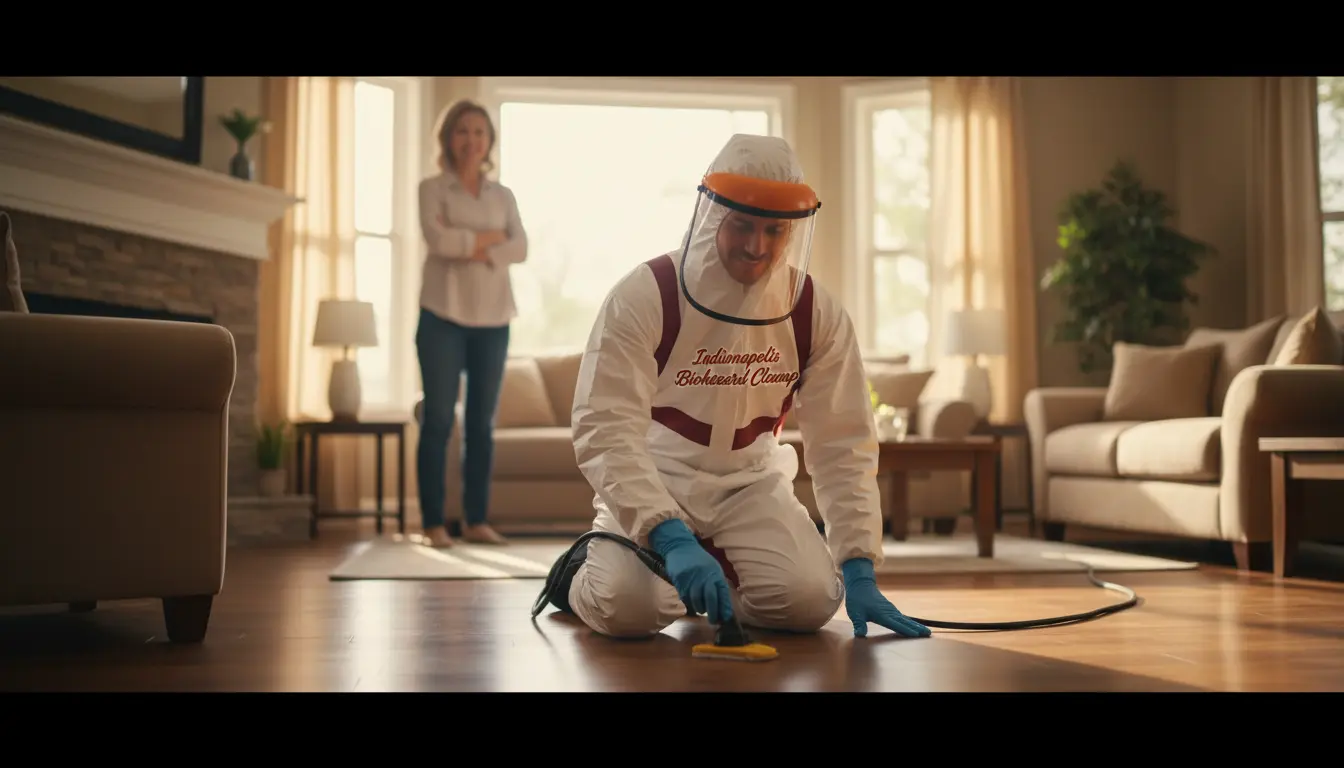
All personnel don full PPE including Tyvek suits, N95 respirators, face shields, and chemical-resistant gloves. This is not optional; it is mandated by OSHA’s Bloodborne Pathogens Standard 29 CFR 1910.1030. The goal is to create a barrier against bloodborne pathogens such as hepatitis B, hepatitis C, and HIV, which can remain viable on surfaces for days. Proper PPE also protects technicians from chemical exposure during the sanitization phase.
Physical Removal and Sanitization
All visible biohazardous material is carefully removed and placed into regulated medical waste containers. The team then applies EPA-registered hospital-grade disinfectants and specialized enzyme treatments designed to break down organic matter at the molecular level. This process not only eliminates pathogens but also neutralizes odors at their source. In Indianapolis’s humid climate, moisture can accelerate microbial growth, so the team also uses high-velocity air movers and dehumidifiers to dry the area thoroughly.
Verification and Structural Encapsulation
After cleaning, the site undergoes adenosine triphosphate (ATP) fluorescence testing to verify that biological residue has been eliminated. ATP testing measures the presence of organic matter; a reading below a specific threshold confirms the area is safe. If porous materials exceed acceptable contamination levels, they are removed and replaced. Finally, a structural encapsulation sealant may be applied to prevent future microbial growth and to restore the integrity of sub-floors or drywall.
Professional Remediation vs. Standard Janitorial Cleaning
| Feature/Metric | Professional Biohazard Remediation | Standard Residential Cleaning |
|---|---|---|
| Regulatory Compliance | OSHA, EPA, IICRC S540 | None |
| Pathogen Elimination | Hospital-grade disinfectants + ATP testing | Household bleach (ineffective on porous surfaces) |
| Structural Assessment | Full inspection for hidden seepage and sub-floor damage | Surface cleaning only |
| Odor Removal | Enzyme treatments and ozone machines | Air fresheners (masking) |
| Waste Disposal | Regulated medical waste transport | Regular trash (illegal) |
Source: IICRC S540 Trauma and Crime Scene Cleanup Standard
Expert Insights from Certified Remediation Specialists
Three Advanced Diagnostic Tips
1. Detecting hidden biological seepage: In many Indianapolis homes, especially those built before 1950, blood and bodily fluids can seep through floorboards and into the crawl space. Technicians use moisture meters and thermal imaging to locate subsurface contamination that is invisible to the naked eye. Missing this step can lead to ongoing odor and microbial growth.
2. Why porous materials require replacement rather than cleaning: Drywall, insulation, and untreated wood absorb biological fluids deeply. Even after aggressive cleaning, pathogens can remain in the material’s core. The IICRC S540 standard mandates that porous materials contaminated by blood or bodily fluids be removed and replaced. Attempting to clean them only increases the risk of cross-contamination.
3. The importance of negative pressure to prevent cross-contamination: Using negative air machines creates a pressure differential that pulls airborne contaminants away from unaffected areas. This is particularly important in multi-room scenes or in buildings with shared HVAC systems, which can spread microbial aerosols throughout the property.
Common Mistakes Property Owners Make
Using household bleach on biological matter: Bleach can denature some proteins but does not eliminate all pathogens, especially on porous surfaces. It also releases toxic fumes when mixed with organic matter. The correct approach is to use EPA-registered disinfectants with proven efficacy against bloodborne pathogens.
Waiting for odor to dissipate naturally: Odors from decomposition are caused by volatile organic compounds (VOCs) that penetrate into walls and flooring. These compounds do not disappear on their own; they require enzyme treatments and ozone or hydroxyl generators to neutralize them chemically. Waiting can allow the odor to become permanently embedded.
Allowing untrained personnel into the site: Friends, family, or even general contractors often lack the training to handle biohazardous waste safely. This can lead to exposure to pathogens, improper disposal (which is illegal under Indiana’s medical waste regulations), and incomplete cleanup that compromises the property’s future use.
Pricing for Biohazard Cleanup in Indianapolis (2026)
- Site mobilization fee: Typically $200–$500 to cover travel, setup, and initial assessment. This fee is non-negotiable and ensures that the team arrives with all necessary equipment.
- Hourly remediation rates: Most certified firms charge between $150 and $250 per hour per technician. For a standard single-room scene, the total labor often ranges from 6 to 12 hours, depending on the complexity.
- Specialized disposal costs: Regulated medical waste must be transported by licensed carriers and incinerated. This adds $200–$600 to the total, depending on the volume of waste.
Three primary factors influence the final cost:
- Extent of structural material replacement: If sub-flooring, drywall, or cabinetry must be removed and replaced, costs can increase by $1,000–$3,000 per room.
- Total volume of biohazardous waste: Larger scenes or those involving multiple rooms require more disposal bags and more time for removal.
- Necessity for specialized HVAC decontamination: If the HVAC system has been exposed to airborne contaminants, the entire ductwork may need to be cleaned and treated, adding $500–$1,500.
Safety Protocols and Industry Standards
All professional biohazard remediation in Indianapolis should follow the IICRC S540 Standard for Trauma and Crime Scene Cleanup, as well as OSHA’s Bloodborne Pathogens Standard 29 CFR 1910.1030. These standards mandate specific PPE protocols, disinfection procedures, and waste disposal methods. Compliance protects not only the technicians but also the property owner from legal liability and future health risks. For example, improper disposal of biohazardous waste can result in fines from the Indiana Department of Environmental Management and potential civil lawsuits if a future occupant becomes ill.
Additionally, authorized waste management services must be used to transport and incinerate the waste. In Indianapolis, these services are regulated by state and federal agencies, and only certified firms like Indianapolis Biohazard Cleanup have the necessary permits. This ensures that the property is restored to a safe, habitable condition, free from communicable diseases and structural hazards.
Frequently Asked Questions About Unattended Death Remediation
How long does the remediation process take?
The timeline depends on the size of the scene and the extent of contamination. For a typical single-room unattended death, the active remediation phase takes 4 to 8 hours. However, if structural materials need to be removed and replaced, the process may extend to 2 or 3 days to allow for drying and encapsulation. The team works efficiently to minimize disruption while ensuring thoroughness.
Can I stay in my home during the cleanup?
It is strongly advised that occupants vacate the property during remediation. The use of negative air machines, the application of strong disinfectants, and the removal of biohazardous waste create an environment that is not safe for untrained individuals. Technicians will seal off the work area, but for your health and peace of mind, it is best to stay elsewhere until the final ATP test confirms safety.
Is insurance available for biohazard cleanup?
Many homeowner’s insurance policies cover biohazard remediation, especially in cases of unattended death or crime scene cleanup. It is important to contact your insurer immediately and have the remediation company provide a detailed scope of work and cost estimate. Indianapolis Biohazard Cleanup can assist with insurance documentation and direct billing when possible.
What happens if the odor returns after cleaning?
If odor returns, it typically indicates that biological contamination remains in porous materials or hidden spaces. Professional remediation includes odor neutralization using ozone or hydroxyl generators, but if the source is not fully removed, the smell can reappear. A reputable firm will offer a warranty and will return to re-treat the area at no additional cost if the initial cleanup was incomplete.
Professional Biohazard Remediation in Indianapolis
When faced with the aftermath of a traumatic event, property owners in Indianapolis need a response that is both technically rigorous and compassionate. Indianapolis Biohazard Cleanup combines IICRC-certified expertise with a deep understanding of local regulations, seasonal challenges, and the unique construction of Midwest homes. From the initial risk assessment to the final ATP test, every step is designed to protect health, preserve property value, and restore peace of mind. If you are dealing with a biohazard situation, do not hesitate to contact our team for a discreet, thorough, and compliant remediation.