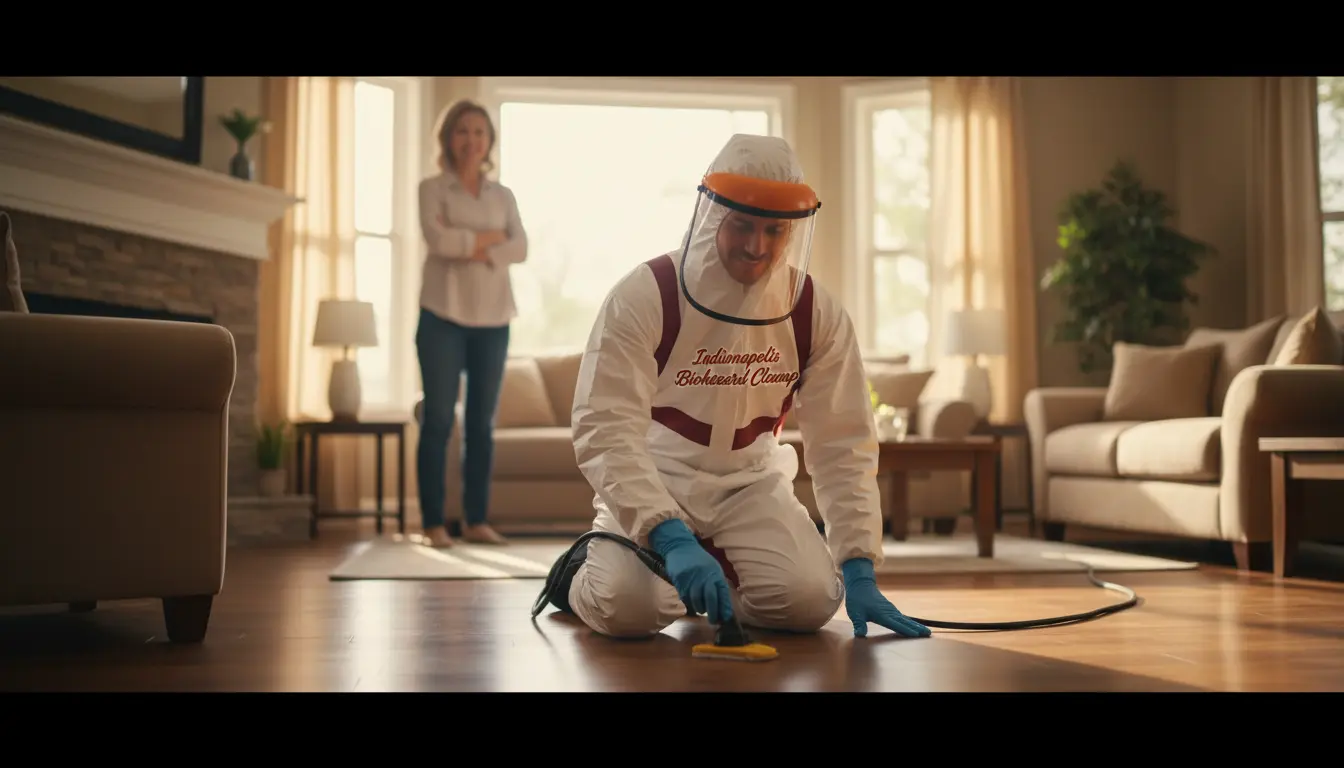
If you are attempting to manage a biohazard situation on your own property in Indianapolis—whether it involves blood, bodily fluids, an unattended death, or a hoarding scene—you are likely making a series of expensive mistakes that could cost you tens of thousands of dollars in structural damage and legal liability. The moment you reach for a mop, a bottle of bleach, or a set of rubber gloves, you have already underestimated the complexity of biological contamination and the invisible pathogens that can linger for years. What seems like a simple cleanup is actually a high-stakes remediation process governed by federal OSHA regulations, IICRC S540 standards, and Marion County health codes. Without the proper training, equipment, and disposal protocols, you are not cleaning—you are spreading contamination and exposing yourself, your family, and your property to irreversible harm.
Professional biohazard cleanup in Indianapolis is not a luxury service reserved for extreme cases; it is a necessary intervention that protects your health, your property value, and your peace of mind. The technical process involves far more than removing visible debris. It requires a scientific approach to identifying biological hazards, containing airborne pathogens, neutralizing microbial threats, and ensuring that every surface—from subflooring to HVAC ducts—is restored to a safe and sanitary condition. Indianapolis Biohazard Cleanup is the region’s most trusted provider because we combine rigorous certification with decades of hands-on experience in some of the most challenging environments in the Midwest.
The Technical Workflow of Professional Biohazard Remediation
Every professional biohazard remediation project in Indianapolis follows a strict, step-by-step workflow that is designed to eliminate all biological hazards while preventing cross-contamination to adjacent areas. This process begins with a thorough initial risk assessment, during which our certified technicians evaluate the scope of contamination, identify the types of biological material present, and determine the appropriate level of personal protective equipment (PPE) required. In cases of unattended death, the assessment also includes an evaluation of decomposition fluids that may have saturated flooring, drywall, and structural supports. This initial stage is critical because it dictates every subsequent decision, from the choice of cleaning agents to the method of waste disposal.
Once the assessment is complete, we establish a strict containment zone using physical barriers and negative air machines. Negative air pressure is not optional; it is a scientific necessity. By continuously drawing contaminated air out of the space and filtering it through HEPA-grade filters, we prevent airborne pathogens from migrating to other parts of the building. This is especially important in Indianapolis’s older residential structures, where shared ductwork and porous building materials can quickly spread contamination. After containment, our technicians begin the physical removal of biohazardous materials—including saturated carpet, padding, drywall, and insulation—using industrial-grade tools designed to minimize aerosolization of bloodborne pathogens. Every piece of removed material is placed into double-lined, DOT-approved biohazard bags and sealed for transport to a licensed medical waste incineration facility.
The Role of ATP Testing in Verifying Sanitation
After physical removal, the next phase involves chemical sanitation using EPA-registered hospital-grade disinfectants and specialized enzyme treatments. These cleaning agents are selected based on the specific types of pathogens present—whether bacterial, viral, or fungal—and their ability to break down organic matter at a molecular level. For example, enzymatic cleaners are particularly effective at digesting blood and tissue residues that standard disinfectants cannot fully penetrate. Once cleaning is complete, we deploy adenosine triphosphate (ATP) fluorescence testing to verify sanitation. ATP testing measures the presence of biological residue on surfaces by detecting the energy molecule found in all living cells. A clean surface should show less than 10 relative light units (RLUs); any reading above that threshold triggers a repeat cleaning until the surface is microbiologically safe.
The final step in the remediation workflow is structural encapsulation and restoration. In many Indianapolis homes, especially those built before the 1950s, subflooring and framing may have sustained deep biological saturation that cannot be fully cleaned. In these cases, we apply a specialized antimicrobial encapsulant that seals the remaining biological residue beneath a durable, impermeable coating. This approach prevents future odor migration and microbial regrowth while preserving the structural integrity of the home. After encapsulation, we conduct a final visual inspection and odor verification using electronic olfactory sensors to ensure that no trace of decomposition remains.
Professional Remediation vs. Standard Janitorial Cleaning: A Data-Driven Comparison
The difference between professional biohazard remediation and standard residential cleaning is not a matter of opinion—it is a matter of science, regulation, and measurable outcomes. The table below outlines the critical distinctions between the two approaches based on industry standards and practical application.
| Feature/Metric | Professional Biohazard Remediation | Standard Residential Cleaning |
|---|---|---|
| Regulatory Compliance | Full compliance with OSHA 29 CFR 1910.1030, EPA RCRA, and IICRC S540 standards | No formal regulatory framework applied |
| Pathogen Elimination | Verified via ATP testing with pass/fail threshold of <10 RLUs | Visual check only; no microbiological verification |
| Structural Assessment | Comprehensive inspection for hidden seepage and material saturation | Surface-level cleaning only; no structural evaluation |
| Waste Disposal | DOT-approved transport to licensed medical waste incinerator | Disposal in standard trash, often violating local ordinances |
| Cross-Contamination Prevention | Negative air pressure machines and HEPA filtration during entire process | No containment protocols; risk of airborne spread |
Expert Insights: Advanced Diagnostic Principles for Property Owners
Understanding how biological contamination behaves in a closed environment is essential for both property owners and remediation professionals. One of the most overlooked challenges in Indianapolis is the detection of hidden biological seepage beneath flooring and behind walls. Decomposition fluids can travel horizontally along floor joists and vertically through capillary action in drywall, creating contamination zones that are completely invisible to the naked eye. Professional remediation includes the use of moisture meters and thermal imaging cameras to map these hidden pathways and ensure that every saturated area is identified and treated.
Another critical principle is the decision to replace rather than clean porous materials. Carpet, padding, upholstered furniture, and unsealed wood that have been exposed to bloodborne pathogens or decomposition fluids cannot be fully sanitized. The porosity of these materials allows biological material to become trapped deep within the fibers or grain, where disinfectants cannot reach. Attempting to clean such items leaves behind a reservoir of pathogens that can reactivate under the right humidity and temperature conditions. In practical terms, this means that a 10-foot section of saturated carpet may cost $2,000 to replace, but the alternative—keeping it and risking chronic illness or odor—can cost far more in diminished property value and health expenses.
The importance of negative air pressure cannot be overstated. Without it, any disturbance of contaminated materials—whether from walking, vacuuming, or air movement—can aerosolize bloodborne pathogens and spread them to the rest of the building. In Indianapolis, where many homes share a single HVAC system, cross-contamination can affect multiple units in an apartment building or townhouse complex within hours. Negative air machines create a low-pressure zone inside the containment area, ensuring that all airborne particles are drawn into the filtration system rather than escaping into clean spaces.
Common Mistakes Property Owners Make and Their Consequences
The most frequent mistake we encounter is the use of household bleach on biological matter. Bleach is a general disinfectant, but it is ineffective against many types of bloodborne pathogens because organic material denatures the chlorine component before it can kill the microorganisms. Worse, bleach can actually fix blood stains to surfaces, making them more difficult to remove and creating a permanent visual and biological trace. The consequence is a surface that appears clean but remains biologically hazardous, potentially exposing future residents to hepatitis B, hepatitis C, or HIV.
A second common error is waiting for odor to dissipate naturally. Decomposition odor is not simply an inconvenience—it is the smell of gases produced by bacteria breaking down organic tissue. As long as the odor is present, active microbial growth is occurring. Waiting days or weeks for the smell to subside allows contamination to spread deeper into building materials, leading to more extensive—and expensive—remediation. In many cases, what could have been a $3,000 cleanup escalates into a $15,000 structural restoration project because of the delay.
Finally, allowing untrained personnel—family members, friends, or general cleaning crews—into the site before professional remediation is a serious mistake. These individuals may inadvertently track contaminants into other areas of the home, contaminate their clothing or shoes, and expose themselves to bloodborne pathogens without the proper PPE or vaccination history. The legal liability for such exposure can extend to the property owner, especially if an untrained worker becomes ill. Professional remediation protects not only the property but also the owner from potential lawsuits and health claims.
Pricing Structures and Cost Factors
- Standard site mobilization fees range from $350 to $750, covering the transport of equipment, setup of containment barriers, and initial risk assessment documentation.
- Hourly remediation rates for biohazard cleanup in Indianapolis typically fall between $125 and $250 per hour, depending on the complexity of the scene, the number of technicians required, and the level of PPE needed (e.g., Level B vs. Level C suits).
- Itemized costs for specialized disposal of biohazardous materials are calculated by weight and volume. Medical waste incineration fees in the Indianapolis area average $0.50 to $1.00 per pound, with typical unattended death scenes generating 50 to 200 pounds of regulated waste.
Three primary factors influence the total cost of a biohazard remediation project. The first is the extent of structural material replacement required. If decomposition fluids have saturated subflooring, drywall, or insulation, these materials must be removed and replaced, adding material costs and additional disposal fees. The second factor is the total volume of biohazardous waste. Larger spaces with greater volumes of contamination require more labor, more supplies, and higher disposal costs. The third factor is the necessity for specialized HVAC decontamination. If the contamination has entered the ductwork—common in cases of advanced decomposition—the HVAC system must be cleaned and treated by a certified technician, which adds $1,500 to $4,000 to the total project.
Safety Standards and Regulatory Compliance
Certification is not a marketing term in the biohazard remediation industry; it is a legal and operational requirement that ensures the safety of both the workers and the occupants. Indianapolis Biohazard Cleanup holds certifications from the IICRC in trauma and crime scene remediation (S540 standard) and complies fully with OSHA’s Bloodborne Pathogens Standard (29 CFR 1910.1030). This regulation mandates that all technicians receive annual training on handling infectious materials, proper use of PPE, exposure control plans, and post-exposure medical protocols. Without this training, any cleanup activity is a violation of federal workplace safety law.
The practical importance of these standards becomes clear in real-world scenarios. For example, during the remediation of an unattended death in a Marion County apartment building, the risk of airborne pathogen transmission is significant. Our technicians wear full Tyvek suits, N100 respirators, and face shields to protect against inhalation or splash exposure. All waste is double-bagged in red biohazard bags labeled with the universal biohazard symbol and transported in sealed, leak-proof containers to a licensed medical waste incineration facility in compliance with Indiana Department of Environmental Management (IDEM) regulations. These protocols are not bureaucratic red tape—they are the only proven methods for preventing the spread of hepatitis, tuberculosis, and other communicable diseases.
Frequently Asked Questions About Unattended Death Remediation
How long does it take for biological contamination to spread after an unattended death?
The timeline for contamination spread depends on several variables, including temperature, humidity, and the presence of insect or animal activity. In Indianapolis, where summer temperatures can exceed 90°F and humidity often surpasses 70%, decomposition accelerates rapidly, with significant fluid migration occurring within 48 to 72 hours. Within a week, decomposition fluids can saturate flooring, wick up drywall, and seep into subflooring, creating a contamination zone that extends far beyond the immediate area of the body. Professional intervention within the first 24 to 48 hours is ideal because it limits the volume of materials that must be removed and reduces the risk of structural damage. Even if the body has been removed, the biological contamination remains and continues to spread until properly remediated.
Can the odor from an unattended death be permanently removed, or will it return?
If the remediation is performed according to IICRC S540 standards, the odor can be permanently eliminated. However, this requires more than surface cleaning. Odor molecules from decomposition are volatile organic compounds (VOCs) that attach to porous surfaces like wood, drywall, and carpet fibers. These VOCs can remain trapped in materials for months or years if not properly treated. Professional remediation uses a combination of enzymatic cleaners that break down the organic source of the odor, followed by targeted ozone treatment or hydroxyl generators that oxidize remaining VOC molecules at a molecular level. Once the source material is removed and the affected surfaces are treated, there is no biological mechanism for the odor to return. If an odor does reappear, it usually indicates that some contaminated material was missed during the initial cleanup, often in hidden areas like crawlspaces, ductwork, or subfloor voids.
Is it safe for me to stay in my home while the remediation is happening?
In most cases, it is not safe for occupants to remain in the home during active remediation. The containment zone created by negative air machines and physical barriers is designed to keep contaminants from spreading, but the process of physical removal and chemical sanitation can still generate airborne particulates and fumes that may be harmful to individuals with respiratory conditions, compromised immune systems, or chemical sensitivities. Additionally, the emotional toll of witnessing the cleanup process can be significant. Indianapolis Biohazard Cleanup recommends that occupants relocate to a hotel or with family for the duration of the active remediation, which typically lasts one to three days for a standard unattended death scene. Once the final ATP testing and odor verification are complete, the home is safe for immediate reoccupation.
Does homeowners insurance cover biohazard remediation for an unattended death?
Many standard homeowners insurance policies in Indiana do cover biohazard remediation as part of their property damage or “other structures” clauses, but coverage varies widely by provider and policy. Generally, if the unattended death results in contamination of building materials like flooring, drywall, or insulation, the cost of removal, disposal, and restoration is considered a covered loss under the dwelling or other structures section of the policy. However, policies may exclude coverage if the death occurred more than 30 days before discovery, or if the property was vacant for an extended period. We recommend contacting your insurance agent directly and requesting a copy of your policy’s “pollution exclusion” and “vacancy clause” language. Indianapolis Biohazard Cleanup can provide detailed documentation of the remediation process, including chain-of-custody logs for waste disposal and ATP test results, which are often required by insurance adjusters to validate the claim.
What should I do if I discover an unattended death in a rental property I own?
If you discover an unattended death in a rental property, do not enter the unit beyond the point of discovery. Seal the door with tape or a note to prevent anyone else from entering, and contact a certified biohazard remediation company immediately. In Marion County, landlords are legally required to restore the property to a habitable condition before re-renting it, and “habitable” under Indiana landlord-tenant law means free from biological hazards. Failure to properly remediate can result in legal liability if the next tenant becomes ill or discovers residual contamination. Additionally, you should notify your insurance provider within 24 hours, as many policies have strict notification timelines for damage claims. Document every step of the remediation with photographs and written reports provided by the cleanup crew; these records serve as your primary evidence of compliance in any future dispute.
Professional Biohazard Remediation in Indianapolis
When you face the aftermath of a traumatic event, your priority is restoring safety, dignity, and normalcy to your property. Attempting to manage biohazard cleanup without professional training and equipment is not a shortcut—it is a risk that compounds the damage and delays the resolution. Indianapolis Biohazard Cleanup brings the full weight of IICRC S540 certification, OSHA compliance, and decades of local experience to every project, ensuring that your property is not only visually clean but microbiologically safe for occupancy. Our team understands the unique challenges posed by Indianapolis’s climate, building stock, and regulatory environment, and we approach every scene with the technical rigor and compassion that the situation demands. If you are facing a biohazard situation in Indianapolis, do not wait. The contamination is spreading, the structural damage is deepening, and the cost of delay far exceeds the cost of professional remediation. Contact us today for a discreet, thorough, and scientifically grounded restoration of your property.