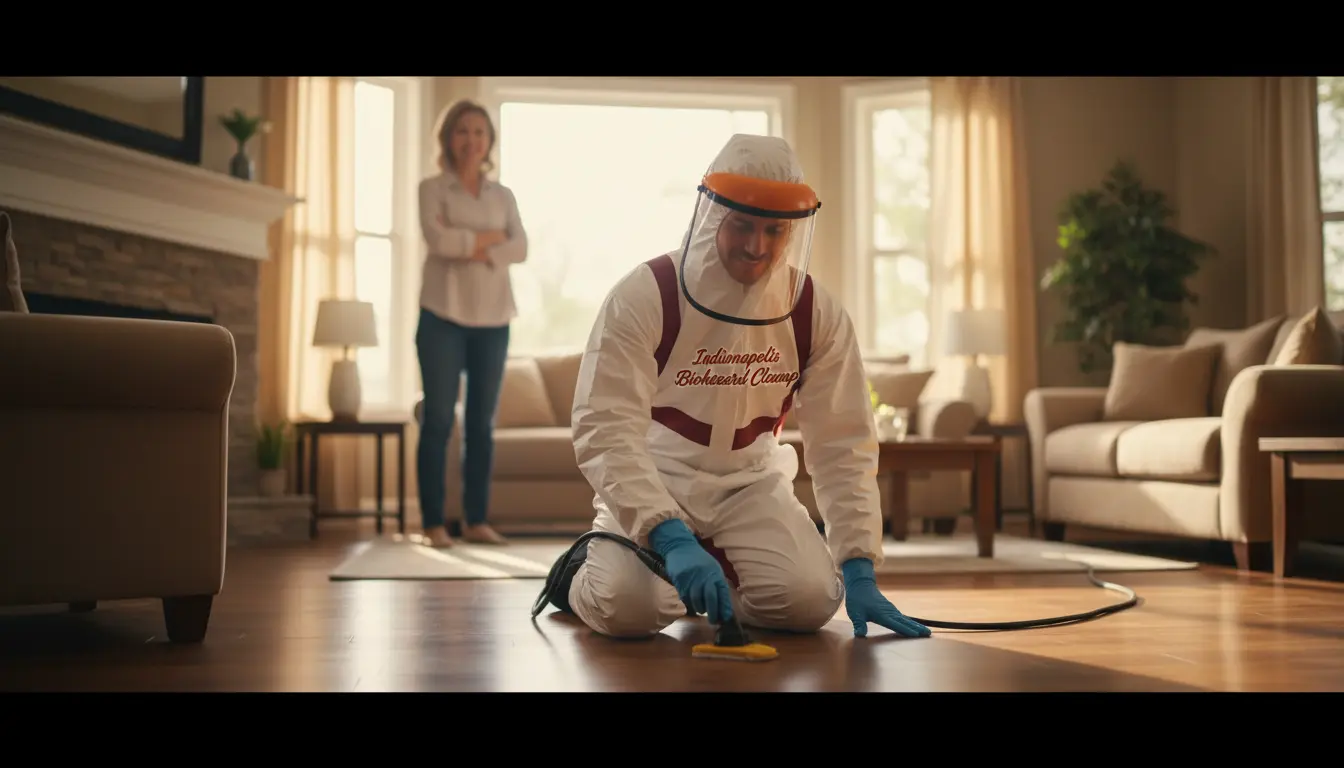
In 2026, the Indianapolis Fire Department responded to over 300 unattended death calls, many of which were not discovered for days or even weeks. During that time, biological decomposition can release a complex mixture of over 400 volatile organic compounds, including putrescine and cadaverine, which permeate porous materials and HVAC systems. This is why professional biohazard cleanup is not optional—it is a critical intervention to restore a safe and livable environment.
The Midwest’s seasonal temperature extremes further complicate the situation. In Indianapolis, summer humidity can accelerate microbial growth and odor migration, while winter ice may delay site access and extend the window for structural damage. Marion County regulations also require strict adherence to OSHA’s Bloodborne Pathogens Standard (29 CFR 1910.1030) and proper disposal of biohazardous waste per Indiana Administrative Code 329 IAC 10. Without specialized training and equipment, property owners risk long-term health hazards, liability, and diminished property value.
Indianapolis Biohazard Cleanup stands as the premier, discreet, and technically rigorous provider in the region. Our certified technicians follow IICRC S540 protocols, use hospital-grade disinfectants, and employ forensic restoration techniques to ensure every trace of biological contamination is eliminated. Whether you are dealing with an unattended death, trauma scene, or industrial accident, we restore safety and peace of mind.
The Technical Process of Biohazard Remediation
Professional biohazard cleanup is a multi-step scientific procedure, not a surface wipe-down. Each phase is designed to systematically remove biological hazards, neutralize pathogens, and prevent cross-contamination. Below is a step-by-step breakdown of the workflow we follow in Indianapolis.
Initial Risk Assessment and Site Containment
Our team begins with a thorough visual and instrumental inspection. Using adenosine triphosphate (ATP) testing and moisture meters, we identify all affected areas, including hidden seepage behind walls or under flooring. We then establish containment zones using negative air machines fitted with HEPA filters to prevent airborne particulates from spreading to unaffected parts of the property. This step is especially important in historic Midwestern homes where porous materials like plaster and hardwood can trap biohazards.
Personal Protective Equipment (PPE) and Hazard Mitigation
Technicians don full Tyvek suits, N95 or powered air-purifying respirators, chemical-resistant gloves, and safety goggles. This protects them from bloodborne pathogens such as hepatitis B, hepatitis C, and HIV, as well as chemical hazards from cleaning agents. We also shut down HVAC systems to avoid circulating contaminants, a common oversight that can lead to recurring odors and microbial growth.
Physical Removal and Structural Decontamination
All visible biological matter is carefully removed using absorbent materials and specialized tools. Non-porous surfaces are scrubbed with EPA-registered hospital-grade disinfectants. Porous materials—such as drywall, carpet, and insulation—are cut out and disposed of in accordance with Indiana medical waste regulations. For example, in many older Indianapolis homes, sub-flooring may require replacement because bodily fluids can seep into the wood grain, creating a permanent biohazard. We also apply enzyme treatments that break down organic residues at a molecular level, ensuring no residual odor or pathogen remains.
ATP Fluorescence Testing and Verification
After cleaning, we perform ATP swab testing to measure the level of organic material on surfaces. A reading below 10 relative light units (RLU) indicates a successfully decontaminated surface. This objective verification is critical for insurance documentation and occupant safety. We then apply a final antimicrobial sealant to encapsulate any remaining microscopic particles, restoring the surface to a safe, non-porous finish.
Professional Remediation vs. Standard Cleaning: A Data Comparison
Many property owners mistakenly believe that household cleaners or general janitorial services can handle biohazards. The table below illustrates the stark differences in methodology, outcomes, and compliance.
| Feature / Metric | Professional Biohazard Remediation | Standard Residential Cleaning |
|---|---|---|
| Regulatory Compliance | Follows OSHA 29 CFR 1910.1030, IICRC S540, EPA waste disposal rules | No biohazard-specific regulation adherence |
| Pathogen Elimination | 99.99% reduction via EPA-registered hospital-grade disinfectants and ATP verification | Up to 90% reduction using household bleach (ineffective against many pathogens) |
| Structural Assessment | Includes moisture mapping, hidden seepage detection, and porous material replacement | Surface cleaning only; no assessment of sub-floor or wall cavities |
| Odor Elimination | Enzyme treatments and ozone or hydroxyl generators neutralize volatile organic compounds | Masking agents that fail to address the source |
| Waste Disposal | Licensed transport to approved incineration facilities per Indiana law | Illegal dumping of biohazardous waste in regular trash |
| Insurance Documentation | Detailed reports, photos, ATP readings, and chain-of-custody records | No documentation for claims |
Source: IICRC S540 Trauma and Crime Scene Cleanup Standard
Expert Insights: Advanced Diagnostic Tips and Common Mistakes
With over a decade of field experience in Indianapolis, our specialists have developed a set of diagnostic techniques that go beyond standard protocols. These insights help prevent recurring issues and protect long-term property integrity.
Three Advanced Diagnostic Tips
Detecting hidden biological seepage. Bodily fluids do not always pool on the surface. In many unattended death scenarios, decomposition fluids migrate through baseboards, under tile, and into floor joists. We use thermal imaging cameras and probe meters to locate invisible moisture pockets. If left untreated, these areas become breeding grounds for mold and pathogenic bacteria that can cause respiratory illnesses years after the initial event.
Why porous materials require replacement, not cleaning. Materials like drywall, carpet, and unsealed wood have microscopic pores that trap blood, tissue, and bacteria. Even with aggressive scrubbing, pathogens can remain deep within the structure. IICRC S540 guidelines mandate that any porous material within 24 inches of the affected area be removed and replaced. Attempting to clean these surfaces often results in chronic odor and recontamination.
The importance of negative pressure to prevent cross-contamination. During remediation, airborne particles can travel through ductwork and doorways. We set up negative air machines that create a pressure differential, pulling air from the contaminated zone through HEPA filters before exhausting it outside. This is critical in multi-unit buildings common in downtown Indianapolis, where one unit’s biohazard could affect neighbors. Failure to use negative pressure has led to class-action lawsuits in similar cases.
Three Common Mistakes Property Owners Make
Using household bleach on biological matter. Many people assume bleach is a universal disinfectant, but it loses efficacy in the presence of organic material. In fact, bleach can react with proteins to form toxic chloramines, which are respiratory irritants. Moreover, bleach does not penetrate porous surfaces. We have seen cases in Indianapolis where bleach application actually spread contamination by breaking down blood clots and pushing them deeper into carpet fibers.
Waiting for odor to dissipate naturally. Odors caused by decomposition are the result of volatile organic compounds that can persist for months. Simply airing out a room is ineffective because the compounds are trapped in walls and furniture. In one Indianapolis case, a family waited three weeks before calling us, during which time the odor permeated the entire three-story home, requiring extensive duct cleaning and structural replacement that could have been avoided with prompt remediation.
Allowing untrained personnel into the site. Well-meaning family members, landlords, or even cleaning staff who enter a biohazard scene without proper PPE risk exposure to bloodborne pathogens. The health consequences can be severe, including hepatitis and HIV. Additionally, untrained individuals may inadvertently spread contaminants to other areas of the building, increasing the scope and cost of remediation. In Indiana, anyone entering a biohazard scene should be fully vaccinated and trained per OSHA standards.
Pricing Structure for Biohazard Remediation
Costs vary widely based on the severity of the incident and the property’s characteristics. Below are typical pricing components used by Indianapolis Biohazard Cleanup:
- Site mobilization fee: $250–$500 covers travel to the property, initial assessment, and containment setup.
- Hourly remediation rate: $150–$250 per technician per hour. Most jobs require 2–4 technicians for 4–12 hours.
- Specialized disposal costs: $50–$150 per biohazard waste container, plus fees for licensed incineration.
- Structural material replacement: Additional charges for drywall, flooring, insulation, or cabinetry removal and replacement—often $500–$3,000 depending on square footage.
- HVAC decontamination: $300–$800 if the system was running during the incident and requires duct cleaning and antimicrobial fogging.
Three primary factors influence the final cost: the extent of porous material replacement needed, the total volume of biohazardous waste generated, and whether specialized HVAC decontamination is required. Insurance policies often cover these expenses under property damage or liability clauses, and we provide detailed documentation to facilitate claims.
Safety Standards and Certifications
Adherence to recognized safety standards is non-negotiable in biohazard remediation. Our company holds certifications from the Institute of Inspection, Cleaning and Restoration Certification (IICRC) in Trauma and Crime Scene Cleanup, and all technicians complete annual OSHA Bloodborne Pathogens training. We also comply with the Indiana Department of Environmental Management (IDEM) for waste transport and disposal.
These standards ensure that every step—from personal protective equipment to decontamination to waste disposal—is performed to eliminate risk of disease transmission. For instance, the IICRC S540 standard requires a “clearance test” using ATP or surface swab cultures after remediation to prove the area is safe for reoccupation. Without this verification, property owners cannot be certain that pathogens have been destroyed. We also use only EPA-registered disinfectants that are proven effective against the specific pathogens encountered, such as norovirus, MRSA, and tuberculosis.
For property owners in Indianapolis, hiring a certified remediation service is not just a best practice—it is a legal responsibility. Improper disposal of biohazardous waste can result in fines and civil liability. Our team handles all paperwork and coordinates with IDEM-approved incineration facilities to ensure full compliance.
Frequently Asked Questions About Unattended Death Remediation
How long does it take for a body to begin decomposing, and why does that matter for cleanup?
Decomposition starts within minutes of death, with visible signs appearing within 24–48 hours depending on temperature and humidity. In Indianapolis summer conditions, an unattended death can result in advanced decomposition within a week, leading to extensive fluid migration and odor penetration. The longer the delay in remediation, the more structural materials become saturated and require replacement. Prompt professional intervention minimizes damage and reduces overall restoration costs.
Is it safe to stay in the home after an unattended death before cleanup begins?
No. Even if the body has been removed by the coroner, residual blood, tissue, and bodily fluids remain on surfaces and in the air. These can harbor bloodborne pathogens that are transmissible through contact or airborne particles. Additionally, decomposition gases can cause respiratory irritation. Until a certified remediation team completes ATP testing and clearance, the area should be sealed off and not occupied. We recommend arranging temporary lodging during the remediation process.
Can I clean up an unattended death myself to save money?
It is strongly discouraged and often illegal. Indiana law requires that biohazardous waste be handled by licensed professionals and disposed of through approved channels. DIY cleanup risks exposure to hepatitis, HIV, and other pathogens. Furthermore, household cleaning products are ineffective against many of the bacteria and viruses present. We have seen cases where attempted DIY cleanup led to lingering odors, mold growth, and insurance claim denials because proper documentation was lacking. The short-term savings are far outweighed by long-term health and financial risks.
How do you ensure that odors are completely removed?
Odor removal requires addressing the source, not masking it. Our process begins with physical removal of all contaminated materials. Then we use industrial-grade ozone generators or hydroxyl machines to oxidize volatile organic compounds at the molecular level. For porous materials that cannot be removed, we apply enzyme treatments that digest organic residue. Finally, we conduct a scent test using a certified olfactory panel to ensure no residual odor remains. In some cases, we also apply an antimicrobial sealant that encapsulates any remaining microscopic particles, preventing future off-gassing.
What should I do immediately after discovering an unattended death?
First, do not enter the area. Contact local authorities (Indianapolis Metropolitan Police Department) and your insurance company. Then call a certified biohazard remediation company like Indianapolis Biohazard Cleanup. The coroner will remove the body, but they do not perform cleaning. We respond 24/7 and can arrive within hours to begin containment and assessment. The sooner we start, the less chance of permanent structural damage and the lower the overall cost.
Professional Biohazard Remediation in Indianapolis
Restoring a home or workplace after a traumatic event requires a blend of technical expertise, compassion, and discretion. In Indianapolis, where seasonal extremes and older building stock present unique challenges, relying on a certified, locally experienced team is essential. Our technicians are trained to handle every aspect of biohazard remediation—from initial risk assessment to final ATP verification—with the goal of returning the property to a safe, livable condition.
Indianapolis Biohazard Cleanup has built a reputation for meticulous work, clear communication, and respect for privacy. We understand that these situations are difficult, and we handle every step with professionalism and empathy. Whether you need assistance with blood cleanup, odor removal, or comprehensive disinfection services, we are here to help. Contact us today for a confidential consultation and a detailed remediation plan.