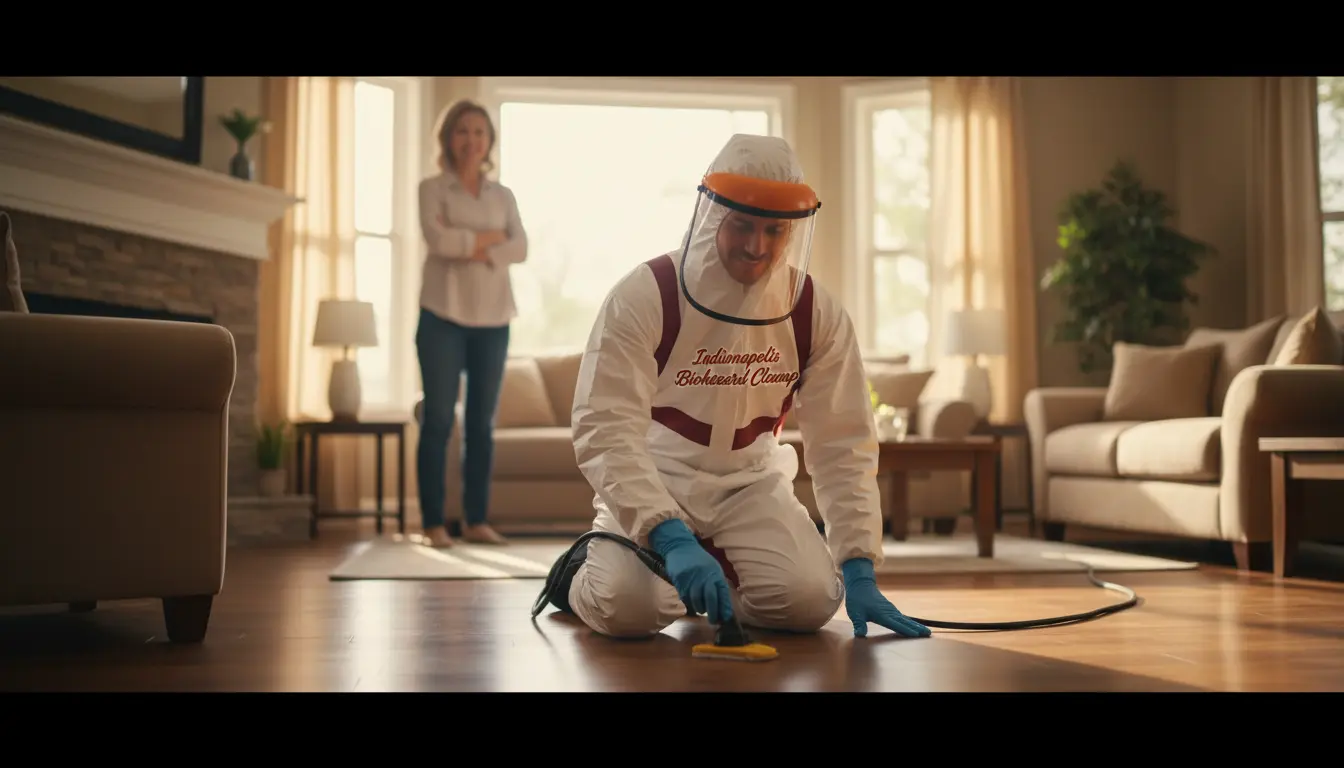
Indianapolis Biohazard Cleanup exists to correct these misunderstandings and to restore properties in Marion County to a safe, habitable condition. We do this by applying forensic restoration techniques that most homeowners and even many general contractors have never encountered. Below, I will walk you through the actual process, the science behind it, the costs, and the mistakes that can cost you far more than a professional remediation fee.
The Real Remediation Workflow: What Actually Happens Inside a Contaminated Site
The moment we receive a call, we initiate a remote risk assessment. We ask about the timeline since the incident, the type of biological matter present (blood, tissue, bodily fluids, decomposition byproducts), the building materials involved (hardwood, carpet, drywall, plaster), and the HVAC configuration. This information determines our first critical decision: the level of PPE and the type of negative air machine required. For an unattended death in a historic Midwestern home with plaster-and-lath walls, we must account for the fact that biological fluids can seep through hairline cracks and saturate the wood lath beneath the plaster. Standard residential cleaning equipment cannot reach those spaces.
Upon arrival, we establish a containment zone. We seal off the affected area with polyethylene sheeting and create a negative pressure environment using industrial-grade HEPA-filtered negative air machines. This prevents airborne pathogens—including bloodborne viruses like Hepatitis B and C and bacterial spores—from migrating to clean areas of the property. We then conduct a thorough inspection using adenosine triphosphate (ATP) testing. ATP testing measures the presence of organic residue on surfaces. A reading above 10 relative light units (RLUs) indicates that biological contamination remains, even if the surface looks clean to the naked eye.
After documentation, we begin physical removal. All porous materials that have been contaminated—carpet, padding, drywall, insulation, subfloor sections—are cut out, bagged in red biohazard waste bags, and placed in rigid disposal containers. Non-porous surfaces like tile, glass, and metal are cleaned with a two-step process: first, a detergent wash to remove gross organic matter, then an application of an EPA-registered hospital-grade disinfectant with a contact time of at least 10 minutes. We use specialized enzyme treatments for areas where blood or tissue has dried and adhered, because enzymes break down the protein bonds that standard cleaners cannot dissolve.
Indianapolis experiences significant seasonal humidity swings—summer dew points can reach the mid-70s, while winter air is bone-dry. High humidity accelerates bacterial growth and odor production. During summer months, we often find that decomposition fluids have wicked upward into wall cavities through capillary action, a phenomenon that many property owners do not suspect. Our protocol includes thermal imaging to detect hidden moisture pockets, followed by targeted microbial remediation. After cleaning, we conduct a final ATP test and, if the site requires structural encapsulation, we apply a sealant to prevent any residual odor from escaping. The entire process is documented with photographs and test results to satisfy insurance requirements and legal standards.
Professional Remediation vs. Standard Janitorial Cleaning: A Data Comparison
To understand why hiring a certified biohazard remediation team is non-negotiable, consider the differences across critical metrics. The following table is based on the IICRC S540 standard and on data from the American Biological Safety Association.
| Feature / Metric | Professional Biohazard Remediation | Standard Residential Cleaning |
|---|---|---|
| Regulatory Compliance | Full compliance with OSHA 29 CFR 1910.1030, EPA waste disposal, and local Marion County health codes | No awareness of bloodborne pathogen regulations; likely illegal disposal of contaminated waste |
| Pathogen Elimination | ATP testing verifies >90% reduction in organic residue; hospital-grade disinfectants with validated log-6 kill rates | Household bleach (5% sodium hypochlorite) may not kill Hepatitis C or bacterial spores; no verification testing |
| Structural Assessment | Thermal imaging, moisture meters, and borescope inspections to identify hidden contamination behind walls and under floors | No assessment; visible cleaning only, leaving biological material to decompose within the structure |
| Odor Removal | Ozone treatment, hydroxyl generators, and structural encapsulation to neutralize volatile organic compounds (VOCs) from decomposition | Air fresheners or enzyme sprays that mask odor without eliminating the source |
| Waste Disposal | Licensed medical waste transporter; incineration or autoclaving per EPA guidelines; chain-of-custody documentation | Household trash pickup; illegal and hazardous to sanitation workers |
| Liability Protection | Insurance coverage for remediation errors; property owner shielded from future health claims | No liability coverage; property owner remains legally responsible for any resulting illness or regulatory fines |
Source: IICRC S540 Trauma and Crime Scene Cleanup Standard, 2022 Revision; OSHA 29 CFR 1910.1030.
Expert Insights: Diagnostic Techniques That Save Properties
Over the years, I have developed three diagnostic approaches that consistently reveal hidden contamination. First, I always test the subfloor in a grid pattern using a moisture meter set to the “deep” mode. In many Indianapolis homes built before 1950, the original pine subfloors have gaps between boards. Blood or decomposition fluid can seep through carpet and padding, run between the subfloor planks, and pool on the top of the ceiling below. I have found situations where a ceiling in the room directly beneath the incident site showed no visible stain, yet the moisture meter read 30%—five times the normal level. The drywall had to be removed, and the joist cavities required microbial remediation.
Second, I pay close attention to the baseboard area. In properties with forced-air heating, the baseboard registers act as air intakes that can draw airborne biological particles into the ductwork. If the incident occurred near a register, the entire duct system may be contaminated. We use a borescope to inspect the first six feet of each duct run. If we find visible biological residue or if ATP swabs return high readings, the HVAC system must be decontaminated by a certified duct-cleaning company with biohazard experience. This is a step that most property owners and even some remediation companies skip, leading to chronic odor and potential health issues for future occupants.
Third, I always request a red-line drawing of the property’s plumbing. In unattended death scenarios, the body’s decomposition gases can pressurize the digestive tract, forcing fluids into the toilet, sink, or shower drain. Those fluids then travel through the pipes and can contaminate the trap and the first few feet of the drainage line. If the property has a septic system, the biological load can overwhelm the bacterial balance. We have had cases where the septic tank needed to be pumped and disinfected separately. Most people never consider the plumbing as a vector of contamination.
Common Mistakes Property Owners Make
One of the most frequent errors I see is the use of household bleach on biological spills. Bleach is effective against many viruses when used at the correct concentration and contact time, but it corrodes metal surfaces, damages grout, and loses potency rapidly in the presence of organic matter. Worse, bleach does not penetrate porous materials. A property owner who pours bleach on a blood-soaked carpet is only bleaching the top fibers; the blood remains in the padding and subfloor, where it continues to decompose and attract insects. The correct approach is removal and disposal of the entire carpet assembly.
Another mistake is waiting for the odor to dissipate naturally. In Indiana’s climate, decomposition odor can persist for months. The volatile organic compounds (VOCs) released during decomposition bind to porous surfaces like drywall, wood, and fabric. Even after the visible biohazard is removed, the VOCs continue to off-gas. Without professional odor control—such as ozone shock treatment or hydroxyl generation—the property will remain uninhabitable. I have consulted on cases where a family waited six weeks before calling us, and by that time, the odor had permeated the entire second floor, requiring the removal of all drywall and insulation.
Finally, allowing untrained personnel—including well-meaning relatives or general contractors—into the site before remediation is complete exposes them to bloodborne pathogens and creates legal liability. OSHA requires that anyone entering a contaminated area must have completed bloodborne pathogen training and be wearing appropriate PPE. If an untrained person is injured by a needle or exposed to blood, the property owner can be held liable for medical costs and potential workers’ compensation claims. Always secure the scene and call a certified remediation team first.
Pricing Breakdown: What You Are Really Paying For
The cost of biohazard remediation varies significantly based on the scope of contamination, but a typical unattended death cleanup in a single bedroom in Indianapolis ranges from $2,500 to $8,000. Here are the main cost components:
- Site mobilization and containment: $400–$800. This covers the initial assessment, setup of negative air machines, sealing of containment zones, and PPE for the crew. It is a fixed cost regardless of the size of the job.
- Hourly remediation labor: $150–$250 per hour per technician. Most jobs require two to four technicians working between four and twelve hours. The hourly rate reflects the specialized training, insurance, and the physical and emotional demands of the work.
- Hazardous waste disposal: $1.50–$3.00 per pound. Biohazard waste is weighed and disposed of at a licensed medical waste incinerator. A typical bedroom cleanup generates 50 to 200 pounds of waste, including carpet, padding, drywall, and contaminated personal items.
- Structural replacement materials: $200–$1,500. This includes new drywall, subfloor patches, insulation, paint, and trim. The cost depends on the extent of removal and the type of materials in the original construction.
- ATP verification testing: $150–$300 per test. We perform tests before and after cleaning to document pathogen reduction. Some insurance policies require this for reimbursement.
- HVAC decontamination: $500–$2,000 if needed. This is only required if the HVAC system was compromised, but it is a common add-on in summer months when the system was running during the decomposition period.
Factors that significantly influence the total include the volume of biohazardous waste (more waste means higher disposal fees), the extent of structural material replacement (plaster-and-lath walls cost more to repair than modern drywall), and the necessity for specialized HVAC decontamination. Additionally, if the property is a historic home in neighborhoods like Woodruff Place or Meridian-Kessler, we must work carefully to preserve original woodwork and trim, which can add labor time and cost.
Safety Standards and Certifications: Why They Matter
Every technician at Indianapolis Biohazard Cleanup holds current certification in the OSHA Bloodborne Pathogens Standard (29 CFR 1910.1030) and has completed the IICRC S540 Trauma and Crime Scene Cleanup course. These certifications are not optional—they are the foundation of safe and legal remediation. The OSHA standard requires that all employees with occupational exposure to blood or other potentially infectious materials receive training at the time of initial assignment and annually thereafter. It also mandates the use of engineering controls (sharps disposal containers, self-sheathing needles), work practice controls (handwashing, proper bagging), and personal protective equipment (gloves, gowns, face shields, respirators).
Beyond training, we follow strict protocols for waste management. All biohazard waste is double-bagged in red bags labeled with the universal biohazard symbol, placed in rigid containers, and transported by a licensed medical waste hauler to an approved treatment facility. We maintain a chain-of-custody document for every load, which protects the property owner from liability if the waste is later found to be improperly disposed of. In Marion County, the Department of Public Works conducts random inspections of waste haulers, and non-compliance can result in fines of up to $10,000 per incident.
The practical importance of these standards cannot be overstated. Bloodborne pathogens such as Hepatitis B can survive on surfaces for up to seven days, and Hepatitis C can remain infectious for up to three weeks at room temperature. Decomposition fluids contain a cocktail of bacteria, including Clostridium perfringens and Escherichia coli, which can cause severe gastrointestinal illness if ingested or inhaled. Proper remediation eliminates these risks, protecting not only the current occupants but also any future tenants or buyers. It also ensures that the property can be safely reoccupied without fear of lingering health hazards.
Frequently Asked Questions About Unattended Death Remediation
How soon after an unattended death should I call a remediation service?
Immediately. Even if the body has been removed by the coroner, the biological fluids and decomposition byproducts remain in the environment. The longer you wait, the deeper the contamination penetrates into porous materials. In Indianapolis’s warm months, bacterial growth accelerates rapidly, and odor can become entrenched within 24 to 48 hours. If the death occurred in a property with central air conditioning, the system may have already circulated airborne particles throughout the home. Calling a certified remediation team as soon as the scene is released by authorities minimizes structural damage and reduces overall remediation costs.
Can I clean the area myself to save money?
I strongly advise against it. The risks include exposure to bloodborne pathogens, improper disposal of biohazard waste (which is illegal and can carry fines), and incomplete remediation that leaves behind hidden contamination. Even if you wear gloves and a mask, you lack the training to identify subsurface seepage, the equipment to test for residual organic matter, and the knowledge to comply with OSHA and EPA regulations. Many property owners who attempt self-cleanup end up calling us later after the odor returns or after a health inspector flags the property. The initial cost savings are almost always outweighed by the expense of a second, more extensive remediation.
What happens to the property owner’s personal belongings that are contaminated?
We conduct a triage of all personal items in the affected area. Non-porous items such as glass, metal, and hard plastics can often be cleaned and disinfected. Porous items like clothing, upholstered furniture, mattresses, and paper products are typically considered biohazard waste and must be disposed of. We work with the family to identify items of sentimental value—photographs, documents, heirlooms—and if possible, we can attempt careful cleaning using specialized techniques. However, any item that has absorbed biological fluids cannot be safely returned to the home. We document all disposed items for insurance and estate purposes.
How long does the remediation process take?
A typical unattended death remediation in a single room takes one to three days, depending on the extent of contamination. Day one involves containment, removal of porous materials, and initial cleaning. Day two focuses on chemical disinfection, ATP testing, and structural repairs. If the contamination has spread to multiple rooms or into the HVAC system, the timeline extends to three to five days. We always provide a detailed timeline in the initial estimate and keep the property owner informed of any changes.
Will my homeowners insurance cover the cost?
Coverage varies by policy, but many standard homeowners insurance policies include provisions for “sudden and accidental” damage, which may apply to unattended death situations if the death was unexpected. Some policies specifically exclude gradual damage or deaths that occurred while the property was unoccupied for an extended period. I recommend contacting your insurance agent immediately after the incident and asking specifically about coverage for biohazard remediation. We can provide documentation, including photographs, ATP test results, and waste disposal receipts, to support your claim. If coverage is denied, we offer payment plans and financing options.
Professional Biohazard Remediation in Indianapolis
Restoring a property after a traumatic event is not a task for amateurs. It requires a deep understanding of bloodborne pathogens, building science, and regulatory compliance—combined with the compassion to work with families during one of the most difficult times of their lives. At Indianapolis Biohazard Cleanup, we bring all of that to every job. Our team is certified, insured, and equipped to handle the most challenging remediations in Marion County, from cramped studio apartments in Broad Ripple to sprawling historic homes in Meridian-Kessler. We know the local climate, the building codes, and the disposal pathways.
If you are a property owner, property manager, or family member facing an unattended death, suicide, or other biohazard incident, do not let misconceptions or fear of cost delay the process. Every hour that passes gives biological contaminants more time to spread. Contact us for a confidential, no-obligation assessment. We will guide you through the process, coordinate with your insurance company, and return your property to a safe, livable condition with minimal disruption. Your safety and peace of mind are our priority.