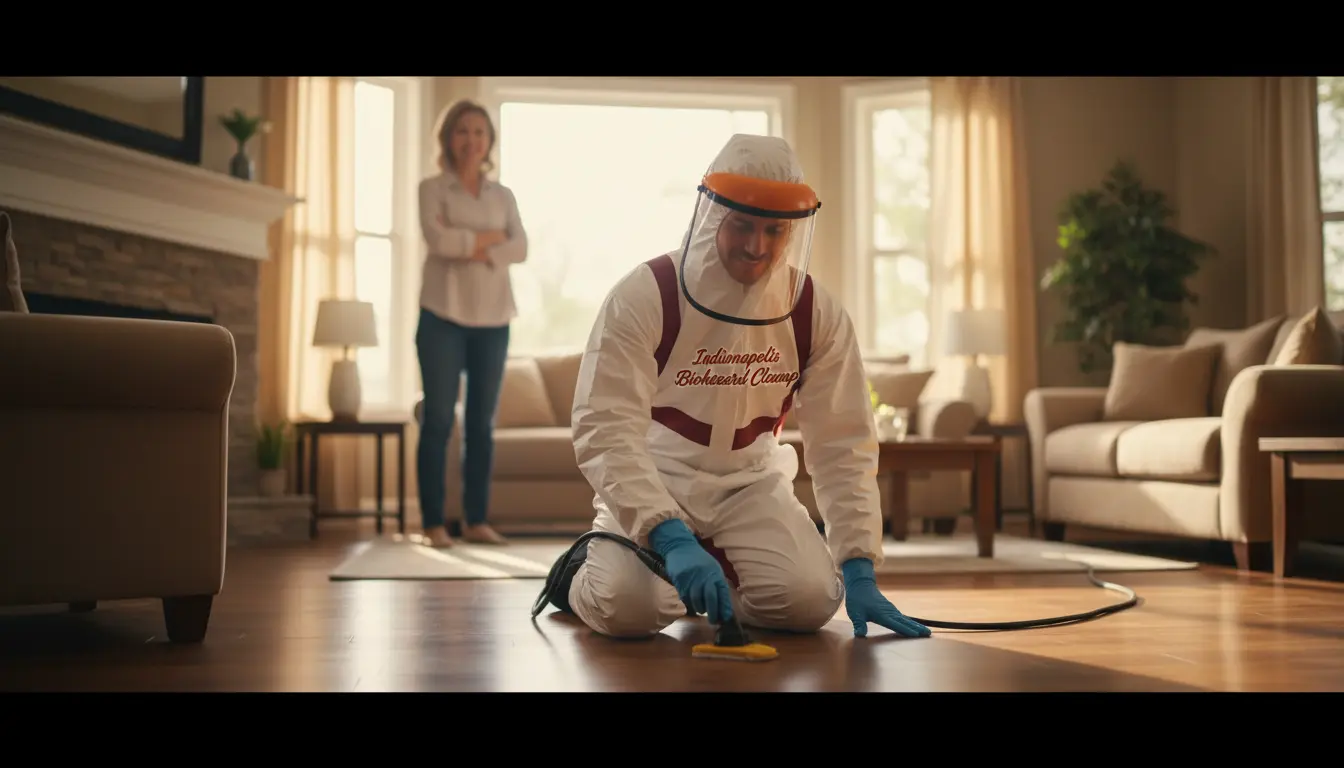
Biohazard cleanup is not a matter of simple sanitation. It is a forensic restoration process governed by strict OSHA, EPA, and IICRC S540 standards. In Marion County, where historic homes with balloon-frame construction were built without vapor barriers, biological fluids can travel through wall cavities and saturate insulation, framing, and even adjacent units. A comprehensive biohazard cleanup checklist for homeowners and property managers is essential to navigate the technical, regulatory, and emotional complexities of such a scene. Without one, the risk of cross-contamination, legal liability, and long-term health consequences rises dramatically.
Indianapolis property owners often assume that a standard cleaning crew can handle the aftermath of a trauma or biohazard event. This is a dangerous miscalculation. The pathogens present in blood, tissue, and other bodily fluids—hepatitis B, hepatitis C, HIV, and a host of bacteria—require specialized containment, disinfection, and disposal protocols. A professional biohazard remediation service like Indianapolis Biohazard Cleanup brings decades of field experience, regulatory knowledge, and compassion to every site, ensuring that the property is restored to a safe, habitable condition while respecting the dignity of those affected.
Understanding the Biohazard Cleanup Checklist for Homeowners and Property Managers
A biohazard cleanup checklist for homeowners and property managers serves as a roadmap through a high-stakes environment. It begins long before any cleaning solution touches a surface. The first step is always a remote risk assessment, often conducted via video call or detailed photographs, to identify the scope of contamination, the structural layout of the property, and any immediate safety hazards like sharps, chemical spills, or unstable flooring. In Indianapolis, where winter temperatures can drop below zero and summer humidity often exceeds 90 percent, these assessments must account for the acceleration of decomposition and the migration of biological fluids through porous materials.
Once on-site, the remediation team establishes a containment zone using negative air machines and heavy-duty plastic sheeting. This creates a pressure differential that prevents airborne pathogens from drifting into uncontaminated areas of the building. Every technician dons appropriate personal protective equipment, including Tyvek suits, N100 respirators, and cut-resistant gloves. The goal is not just to clean what is visible—it is to identify and treat every surface that may have come into contact with biological material, including wall studs, subfloors, HVAC ducts, and even light fixtures. A thorough checklist ensures that no step is overlooked, from the initial walkthrough to the final adenosine triphosphate (ATP) testing that confirms microbial cleanliness.
The Professional Remediation Process: A Step-by-Step Breakdown
Initial Risk Assessment and Site Preparation
The process begins with a meticulous evaluation of the scene. The team documents the location and type of biological material, identifies potential hazards like used needles or chemical residues, and assesses the structural integrity of the area. In a typical Indianapolis residential structure, this might involve inspecting the attic for rodent activity or checking the basement for standing water that could exacerbate contamination. The assessment informs the containment strategy, the selection of cleaning agents, and the disposal plan. Every decision is documented for insurance purposes and regulatory compliance.
Site preparation involves removing all non-porous furniture and objects that can be salvaged. Porous items like carpets, mattresses, and upholstered furniture are typically deemed unsalvageable and are carefully bagged for disposal. The team then erects physical barriers to isolate the work area, installs negative air machines to filter out airborne particulates, and covers any remaining surfaces with protective sheeting. This stage is critical for preventing cross-contamination and ensuring that the remediation process is contained and controlled.
Physical Removal and Chemical Sanitization
With the site prepared, the physical removal of biohazardous materials begins. Technicians use specialized tools—including hospital-grade sharps containers, absorbent pads, and enzymatic sprays—to safely remove all visible biological matter. Enzymatic cleaners are particularly effective because they break down proteins and organic compounds at a molecular level, reducing the risk of lingering odors and pathogen survival. Following the initial removal, the entire affected area is treated with an EPA-registered hospital-grade disinfectant, applied via low-pressure sprayers or electrostatic foggers to ensure every crevice is reached.
After the disinfectant has dwelled for the manufacturer-recommended contact time, the team performs a second round of cleaning using a neutral detergent to remove any residual chemical film. The final step in this phase is ATP fluorescence testing, which uses a bioluminescence reaction to detect the presence of organic material on surfaces. A reading below the industry threshold indicates that the area is biologically clean. If the reading is elevated, the area is re-treated and tested again until the standard is met. This scientific validation is what separates professional remediation from standard cleaning.
Structural Decontamination and Encapsulation
In many cases, biological fluids have penetrated porous materials like drywall, wood flooring, or insulation. When this occurs, the affected materials must be removed and replaced. The team cuts away contaminated sections, carefully sealing them in biohazard bags for disposal. The resulting cavity is then treated with antimicrobial agents to prevent mold growth, and structural encapsulation is applied using sealants that lock in any remaining microscopic contaminants. This step is particularly important in older Indianapolis homes, where balloon framing can allow fluids to travel unseen between floors.
Finally, the team conducts a comprehensive air quality test to ensure that no airborne pathogens remain. If the HVAC system was compromised, it may require duct cleaning or even replacement of ductwork. The entire process is documented with photographs and written reports, providing a clear record that the property has been restored to a safe condition. For property managers in Indianapolis, this documentation is invaluable for insurance claims and for reassuring tenants or future buyers that the property is secure.
Expert Insights: Advanced Diagnostic Tips for Property Managers
One of the most overlooked aspects of biohazard cleanup is detecting hidden biological seepage. When blood or other fluids pool on a surface, they do not simply stay there. Capillary action draws them into porous materials like wood, grout, and drywall. In a historic Indianapolis home with oak flooring, for instance, the fluid can travel along the grain of the wood and saturate the subfloor beneath. The only reliable way to detect this is through moisture meters and thermal imaging cameras, which can reveal temperature and moisture differentials that indicate hidden saturation. Without these tools, a property manager might believe a surface is clean when it is actually harboring dangerous pathogens.
Another critical insight is that porous materials almost always require replacement rather than cleaning. Upholstery, carpets, and even some types of drywall cannot be thoroughly decontaminated because their internal structure traps organic material. Attempting to clean these items with bleach or steam cleaning only pushes the contamination deeper. The safe approach is to remove and dispose of all porous materials that have come into contact with biological fluids. This is not a suggestion—it is a requirement under IICRC S540 standards. Property owners who try to cut corners by keeping salvaged furniture often end up with persistent odors and unseen health risks.
The importance of negative pressure cannot be overstated. Without a properly sealed containment zone and a negative air machine that creates a vacuum within the work area, airborne pathogens can travel through hallways, into HVAC returns, and throughout the entire building. In multi-unit residential buildings common in Indianapolis, this can expose dozens of occupants to biohazards. Proper containment is not just a best practice—it is a legal and ethical responsibility.
Common mistakes property owners make include using household bleach on biological matter. Bleach is a common misconception; it is actually deactivated by organic material and does not penetrate porous surfaces. Waiting for an odor to dissipate naturally is another frequent error. Odors from decomposition are caused by volatile organic compounds that can persist for months or even years, and they signal the ongoing presence of biohazards. Allowing untrained personnel—such as well-meaning family members or general contractors—into a contaminated site can lead to secondary contamination and significant health risks, including hepatitis transmission.
Pricing Structures for Professional Biohazard Remediation
Professional biohazard remediation is not a one-price-fits-all service. Pricing is typically structured around site mobilization fees, which cover the cost of bringing specialized equipment and trained technicians to the property. In Indianapolis, standard mobilization fees range from $500 to $1,500, depending on the location and the complexity of the scene. Hourly remediation rates usually fall between $150 and $300 per hour per technician, with most jobs requiring a team of two to four professionals for several hours or days.
- Site mobilization fees ($500–$1,500): Cover travel, setup, and initial containment measures.
- Hourly remediation rates ($150–$300 per hour per technician): Include physical removal, chemical sanitization, and ATP testing.
- Specialized disposal of biohazardous materials ($200–$800 per cubic yard): Regulated by the Indiana Department of Environmental Management, this covers the cost of licensed transport and incineration.
- Itemized costs for structural material replacement: Drywall removal, subfloor cutting, and insulation replacement are charged by the square foot, typically $5–$15 per square foot.
Three primary factors influence the final cost. The extent of structural material replacement required is the largest variable; a scene that has seeped into subfloors and wall cavities will cost significantly more than one confined to a non-porous surface. The total volume of biohazardous waste also affects disposal fees, as heavier or more extensive waste requires more containers and more frequent transport. Finally, the necessity for specialized HVAC decontamination can add $500 to $2,000, particularly if the system has been compromised and requires duct cleaning or component replacement.
Safety and Standards: The Regulatory Backbone of Professional Remediation
Safety in biohazard remediation is not optional—it is mandated by a regulatory framework that protects both workers and property occupants. The Occupational Safety and Health Administration (OSHA) Bloodborne Pathogens Standard, 29 CFR 1910.1030, establishes requirements for exposure control plans, personal protective equipment, and engineering controls. Every technician at Indianapolis Biohazard Cleanup is trained annually on this standard and carries a current compliance certificate. The Environmental Protection Agency (EPA) governs the use of disinfectants and the disposal of hazardous waste, ensuring that chemicals used on-site are effective against the full spectrum of bloodborne pathogens and that waste is disposed of without harming the environment.
The Institute of Inspection, Cleaning and Restoration Certification (IICRC) S540 standard is the industry’s benchmark for trauma and crime scene cleanup. It covers everything from the initial assessment to final verification, including containment protocols, cleaning procedures, and documentation requirements. Adherence to this standard is not just about best practices—it is often required by insurance companies and may be a legal expectation in litigation arising from a biohazard incident. For property managers in Indianapolis, hiring a company that follows IICRC S540 means that the restoration work meets a nationally recognized standard of care, reducing liability and providing peace of mind.
Authorized waste management services are another critical component. Biohazardous waste cannot be thrown into a dumpster or mixed with regular trash. It must be transported by a licensed medical waste hauler to an approved treatment facility, where it is incinerated at temperatures exceeding 1,800 degrees Fahrenheit. This process ensures complete destruction of all pathogens and prevents environmental contamination. Proper waste disposal is not just a regulatory requirement—it is a public health imperative that protects waste workers, sanitation staff, and the broader community.
Frequently Asked Questions About Unattended Death Remediation
What happens to the property after an unattended death?
After the coroner has removed the body, the property is left with biological fluids, tissue decomposition, and often a strong odor that has permeated walls, floors, and furnishings. Professional remediation is required to safely remove all biohazardous materials, disinfect the area, and restore the property to a habitable state. Without remediation, the property may be uninhabitable due to health risks and persistent odors.
How long does the unattended death cleanup process take?
The duration depends on the extent of contamination, the size of the area, and the condition of the property. A straightforward scene confined to a non-porous floor in a small room may take four to six hours. A scene that has affected multiple rooms, including subflooring and HVAC systems, can take two to three days. The team works efficiently but never rushes, because thoroughness is essential for safety and compliance.
Can I claim unattended death cleanup on my homeowner’s insurance?
Most homeowner’s insurance policies cover biohazard remediation as part of their property damage provisions, particularly if the death was sudden or accidental. You should contact your insurance provider as soon as possible to confirm coverage. The remediation company can provide detailed documentation and a scope of work to support your claim. It is important to hire a licensed and certified provider, as insurance adjusters often require proof of professional standards.
What happens to personal belongings like photos or furniture?
Non-porous items that have not been directly contaminated can often be cleaned and returned to the property. Porous items that have absorbed biological fluids—such as mattresses, carpets, and upholstered furniture—are typically unsalvageable and must be disposed of as biohazardous waste. Items with sentimental value, like photographs in frames, may be salvageable if the frame is non-porous and the paper item is removed and carefully dried. The remediation team will work with the property owner to identify and handle these items with care.
Professional Biohazard Remediation in Indianapolis
When a biohazard situation arises, the difference between a safe, restored property and a lingering health risk lies in the expertise of the remediation team. A comprehensive biohazard cleanup checklist for homeowners and property managers is a vital tool for ensuring that every step is followed, every surface is tested, and every regulation is met. From the initial assessment in a historic bungalow on North Delaware Street to the final ATP verification, the process demands technical skill, regulatory knowledge, and a deep commitment to public safety.
Indianapolis Biohazard Cleanup stands as the most practical, highly-trained, and reliable service provider in the region. Our team is certified in IICRC S540, OSHA Bloodborne Pathogens, and EPA waste management protocols, and we bring decades of field experience to every scene. We understand the unique challenges of Indianapolis properties—the balloon-framed homes, the seasonal extremes, and the importance of discreet, compassionate service. Whether you are a homeowner facing an unimaginable situation or a property manager responsible for the safety of multiple tenants, we are here to restore your property with professionalism and care.