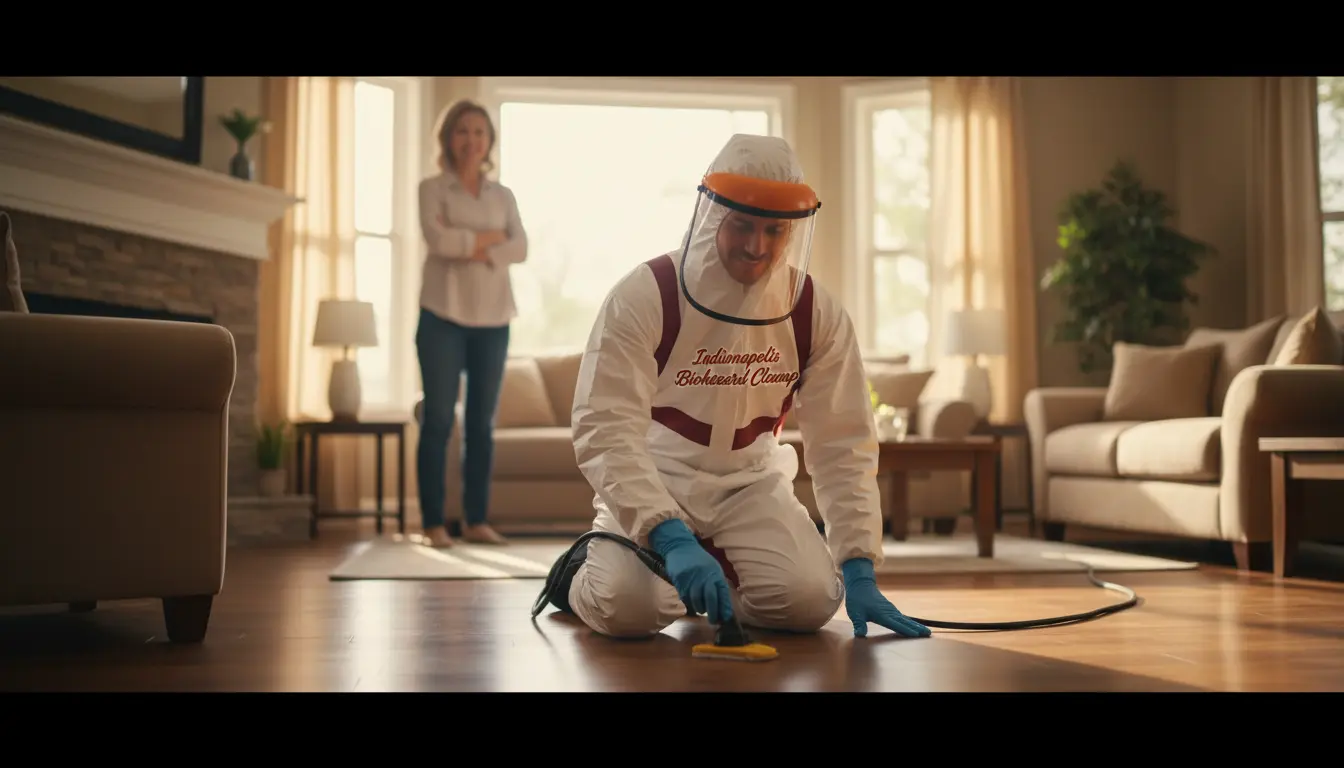
You might be making a costly mistake right now by assuming that a thorough scrubbing with bleach and a few open windows is enough to handle a biohazard situation in your Indianapolis home or commercial property. Property owners who attempt to clean up blood, bodily fluids, or decomposition matter without professional training often end up with lingering health risks, hidden structural damage, and a property that fails to meet Indiana’s health codes, leading to tens of thousands of dollars in avoidable remediation costs down the road. The real danger is not just what you can see; it is the invisible biological contamination that seeps into subflooring, drywall, and HVAC systems, creating a persistent health threat for everyone who enters the space.
Indianapolis Biohazard Cleanup is the city’s foremost authority on restoring properties to a safe, habitable, and legally compliant condition after traumatic events, unattended deaths, or industrial accidents. Our team of certified senior remediation specialists follows strict IICRC S540 standards and OSHA bloodborne pathogens protocols to ensure that every trace of biohazardous material is identified, removed, and neutralized. Whether you are dealing with a recent incident or a decades-old contamination site, understanding what situations require professional biohazard cleanup in Indianapolis is the first step toward protecting your family, your tenants, or your business assets.
From unattended deaths in historic Meridian-Kessler homes to opioid-related scenes in apartment complexes near downtown, the need for specialized remediation is broader than most property owners realize. In this article, we will walk you through the specific scenarios that demand professional intervention, the technical process we follow, and why cutting corners on biohazard cleanup is a gamble you cannot afford to take.
When Crime Scenes Demand Immediate Professional Remediation
Crime scenes involving violence, such as homicides, assaults, or suicides, leave behind blood and bodily fluids that carry bloodborne pathogens like hepatitis B, hepatitis C, and HIV. The immediate risk of infection is high, and the emotional toll on family members or first responders is significant. In Indianapolis, where the Marion County coroner’s office processes hundreds of violent death cases annually, the need for rapid, discreet, and thorough cleanup is a matter of public health.
Professional remediation begins with a comprehensive risk assessment of the scene. Our technicians isolate the affected area using negative air pressure machines to prevent airborne pathogens from spreading to adjacent rooms. Every surface, including walls, ceilings, flooring, and personal belongings, is treated with EPA-registered hospital-grade disinfectants that achieve a 99.9999% reduction in viral and bacterial loads. We also conduct adenosine triphosphate (ATP) fluorescence testing to verify that all biological matter has been removed at the molecular level, a step that standard cleaning services never perform.
Why Standard Janitorial Cleaning Fails at Crime Scenes
The typical cleaning crew lacks the specialized equipment and training to handle bloodborne pathogens safely. Household bleach, for example, can actually fix blood proteins to surfaces, making them harder to remove and leaving behind a hidden biological residue. Professional biohazard remediation uses enzyme-based cleaners that break down proteins at the molecular level, ensuring complete removal. Additionally, we follow strict protocols for the disposal of biohazardous waste, which must be incinerated at a licensed facility per Indiana environmental regulations.
Another common mistake is overlooking porous materials like carpet, upholstery, and drywall. Blood can wick into these materials, creating a persistent source of contamination that can reactivate with moisture. In many older Indianapolis homes, where subflooring may be original hardwood from the early 1900s, hidden seepage can lead to long-term odor issues and structural decay. Professional remediation includes a thorough structural assessment to determine which materials can be decontaminated and which must be removed and replaced.
Unattended Death Cleanup: The Clock Is Ticking on Decomposition
Perhaps the most underestimated scenario requiring professional biohazard cleanup in Indianapolis is the unattended death, where a person passes away and is not discovered for days, weeks, or even months. The Midwest’s seasonal temperature extremes—sweltering summers with high humidity and freezing winters—accelerate or slow decomposition in ways that significantly impact cleanup complexity. During a humid Indiana July, decomposition can advance rapidly, causing body fluids to saturate floorboards and seep into the sub-base, while in winter, the process may be slower but still produces penetrating odors that travel through the HVAC system.
The biological breakdown releases a complex mix of enzymes, bacteria, and gases that create what is known as a “purge fluid,” which can stain and damage structural materials deeply. Professional remediation involves removing all affected materials, treating the underlying surfaces with antimicrobial agents, and using ozone generators or hydroxyl machines to neutralize airborne odors at the molecular level. Our team also addresses the psychological aspect: we work discreetly and compassionately to restore the property without adding to the family’s trauma.
Hidden Risks in Historic Indianapolis Properties
Many Indianapolis neighborhoods, such as Irvington, Fountain Square, and the Old Northside, feature historic homes with plaster walls, hardwood floors, and crawl spaces that complicate cleanup. When decomposition fluids soak into these materials, they can compromise the structural integrity of the home. Professional remediation includes forensic restoration techniques such as sub-floor drying systems, encapsulation of affected joists, and, if necessary, partial structural replacement. Attempting to clean these areas with consumer-grade products only masks the problem, leading to persistent health risks and property devaluation.
ATP testing is critical in these situations because it measures the presence of adenosine triphosphate, a molecule found in all living cells, including bacteria and fungi. A reading below the IICRC threshold confirms that the surface is biologically clean. Without this verification, property owners may unknowingly leave behind active biological contamination that can cause respiratory issues, allergic reactions, or infections for future occupants.
Occupational and Industrial Accidents Requiring Specialized Response
Workplace accidents involving significant blood loss or exposure to hazardous biological materials are another situation that demands professional biohazard cleanup. Indianapolis is home to a diverse industrial sector, including manufacturing plants in the near-east side and distribution centers near the airport. Accidents involving machinery, falls, or chemical exposure can create complex scenes that require immediate containment to protect other employees and comply with OSHA standards.
Our technicians are trained to work alongside OSHA investigators and insurance adjusters to ensure that the site is safe for investigation without compromising evidence. We use industrial-grade negative air machines and HEPA vacuums to capture airborne particles, and we follow strict decontamination protocols for all personnel entering and exiting the scene. The cost of a single OSHA violation resulting from improper cleanup can far exceed the expense of professional remediation, making this a clear case where professional intervention is not optional.
Common Industrial Biohazards Beyond Blood
Industrial accidents can also involve exposure to human waste, chemical spills mixed with biological matter, or animal remains in cases of workplace infestations. Each of these scenarios presents unique challenges. For example, human waste carries bacteria like E. coli and pathogens that can survive on surfaces for weeks. Professional remediation includes microbial remediation with targeted antimicrobial agents that address specific pathogens, followed by a final verification test to ensure the environment is safe for reoccupation.
In Indianapolis, where winters can bring ice and snow that impede site access, our team is equipped with all-terrain vehicles and portable heating units to ensure that the remediation process continues without delays. We also coordinate with local waste management services that are authorized to transport and dispose of biohazardous materials, ensuring compliance with Indiana’s medical waste regulations.
Data Comparison: Professional Biohazard Remediation vs. Standard Janitorial Cleaning
The table below provides a clear, evidence-based comparison of the two approaches, highlighting why professional remediation is non-negotiable in biohazard situations.
| Feature/Metric | Professional Biohazard Remediation | Standard Residential Cleaning |
|---|---|---|
| Regulatory Compliance | Full compliance with OSHA 29 CFR 1910.1030, IICRC S540, and Indiana medical waste laws | No specialized training or compliance protocols |
| Pathogen Elimination | 99.9999% reduction using EPA-registered hospital-grade disinfectants and ATP verification | Typically reduces bacteria by 99% using household cleaners; does not address bloodborne pathogens |
| Structural Assessment | Comprehensive evaluation of porous and non-porous materials; replacement or encapsulation of compromised structures | Superficial cleaning only; hidden biological residue remains in porous materials |
| Odor Neutralization | Ozone generators, hydroxyl machines, and enzyme treatments eliminate odors at the molecular level | Masking agents or air fresheners that do not address the source |
| Waste Disposal | Licensed biohazard waste transport and incineration per Indiana regulations | Standard trash disposal, which is illegal for biohazardous materials |
Expert Insights: Three Diagnostic Tips from a Senior Remediation Specialist
Over decades of service in Indianapolis, our team has developed advanced diagnostic techniques that are essential for identifying and addressing hidden contamination. The first tip is to use an ATP meter to test for biological residue in areas that appear clean to the naked eye. We have found that even after multiple cleaning attempts by property owners, ATP readings often remain above the IICRC threshold, indicating active biological matter that can pose a health risk. This is particularly common in older homes where blood or fluids have seeped into subflooring crevices.
The second diagnostic tip involves inspecting the HVAC system for odor migration and biological growth. In cases of unattended death, decomposition gases travel through ductwork, depositing microbial particles throughout the property. Our team uses a fiberscope to inspect duct interiors and collects air samples to measure fungal and bacterial spore counts. If contamination is present, we perform HVAC decontamination using HEPA filtration and antimicrobial fogging, followed by post-remediation verification testing.
The third tip is to conduct a moisture survey using non-invasive sensors to detect hidden biological seepage. In many Indianapolis properties, especially those with basements or crawl spaces, fluids from a biohazard event can migrate downward and accumulate in areas not visible during a cursory inspection. A moisture survey identifies these hidden pockets, allowing us to remove affected materials before they cause structural rot or attract pests.
Pricing Factors for Biohazard Cleanup in Indianapolis
The cost of professional biohazard remediation varies based on several factors, but our pricing is transparent and structured to provide value without hidden fees.
- Standard site mobilization fees cover the arrival of our fully equipped response vehicle, which includes negative air machines, industrial-grade disinfectants, PPE, and waste containment supplies. This fee is typically a flat rate and covers the first hour of on-site assessment and setup.
- Hourly remediation rates apply to the hands-on work performed by our certified technicians. The rate reflects the specialized training, insurance, and equipment required to safely handle biohazardous materials. Most residential unattended death cleanups require between 8 and 20 hours of on-site work, depending on the extent of contamination.
- Itemized costs for specialized disposal of biohazardous waste are calculated by weight volume. Indiana law requires that all biohazardous waste be transported by a licensed carrier and incinerated at a permitted facility. Our team provides a manifest for every disposal, ensuring full regulatory compliance.
Three primary factors influence the total cost: first, the extent of structural material replacement required. If decomposition fluids have soaked into subflooring, drywall, or insulation, these materials must be removed and replaced, adding to labor and material costs. Second, the total volume of biohazardous waste directly correlates with disposal fees. Third, the necessity for specialized HVAC decontamination can increase the scope of work, particularly in larger properties or those with complex duct systems. We provide a detailed written estimate before any work begins, so there are no surprises.
Safety and Standards: The Foundation of Professional Remediation
Compliance with industry standards is not optional; it is the legal and ethical foundation of our work. Our team holds certifications from the IICRC in trauma and crime scene cleanup, and we adhere strictly to OSHA Bloodborne Pathogens Standard 29 CFR 1910.1030. This standard requires that all employees with occupational exposure to blood or other potentially infectious materials receive training, hepatitis B vaccination, and access to proper PPE. We also follow Indiana’s medical waste management regulations, which mandate the segregation, packaging, and disposal of biohazardous waste through authorized channels.
The practical importance of these standards cannot be overstated. For property owners, hiring a non-certified cleaner may void insurance coverage if a claim arises from improper handling of biohazardous materials. Moreover, exposure to pathogens can lead to severe health consequences, including chronic infections that may not manifest for years. Professional remediation protects not only the immediate occupants but also future tenants, buyers, or employees who may occupy the space. Our team’s commitment to these standards ensures that every job is completed to the highest level of safety and efficacy.
Frequently Asked Questions About Unattended Death Remediation
How soon should I call a professional after an unattended death is discovered?
Time is critical. The moment a death is discovered, decomposition fluids begin to saturate surfaces and odors start permeating the structure. Ideally, you should contact a professional remediation service within the first 24 hours. In Indianapolis, where summer humidity can accelerate the process, even a few days of delay can double the scope of work and cost. Our team is available 24/7 for emergency response, ensuring that we can begin containment and remediation immediately after law enforcement and the coroner release the scene.
Can I clean the area myself after an unattended death?
We strongly advise against it. Unattended death scenes involve complex biological hazards that require specialized training and equipment. Household cleaners are not effective against bloodborne pathogens, and improper handling can lead to cross-contamination of your home or personal exposure to diseases like hepatitis or MRSA. Additionally, Indiana law mandates that biohazardous waste be disposed of through licensed facilities; illegal dumping carries fines and liability. Professional remediation ensures that the job is done safely, legally, and thoroughly.
What happens if decomposition fluids have seeped into the subflooring?
In that case, the affected subflooring must be removed and replaced. Our team uses moisture meters and thermal imaging to detect the extent of seepage. We cut out the contaminated sections, treat the underlying joists with antimicrobial agents, and install new subflooring that matches the original material. This process is critical to prevent ongoing odor issues and structural weakening. In some historic Indianapolis homes, we work with local carpenters to source matching materials so that the restoration blends seamlessly with the existing structure.
Will my homeowner’s insurance cover the cost of unattended death cleanup?
Most standard homeowner’s insurance policies in Indiana cover biohazard cleanup as part of the dwelling protection clause, provided the death was sudden and accidental. However, policies vary, and some may exclude coverage if the death occurred during the commission of a crime or if the property was vacant for an extended period. We recommend contacting your insurance agent as soon as possible. Our team can provide a detailed scope of work and documentation that supports your claim, including ATP test results and waste disposal manifests.
Professional Biohazard Remediation in Indianapolis
Understanding what situations require professional biohazard cleanup in Indianapolis is the first step toward protecting your property and the health of everyone who uses it. Whether you are facing the aftermath of a violent crime, an unattended death, or an industrial accident, the risks of improper cleanup are too great to ignore. Professional remediation is not an expense; it is an investment in safety, compliance, and peace of mind.
Indianapolis Biohazard Cleanup combines technical rigor with compassionate service. Our certified specialists are equipped to handle the most challenging biohazard scenarios, from blood cleanup in residential homes to full structural decontamination in commercial facilities. We operate with discretion, respect, and an unwavering commitment to the highest standards of safety. If you are facing a biohazard situation, do not wait. Contact us today to schedule an immediate assessment and take the first step toward restoring your property to a safe and habitable condition.
Our team is ready to respond at any hour, throughout Marion County and the greater Indianapolis area. Trust the experts who understand the local conditions, the regulatory requirements, and the technical processes that make the difference between a superficial clean and a true restoration.