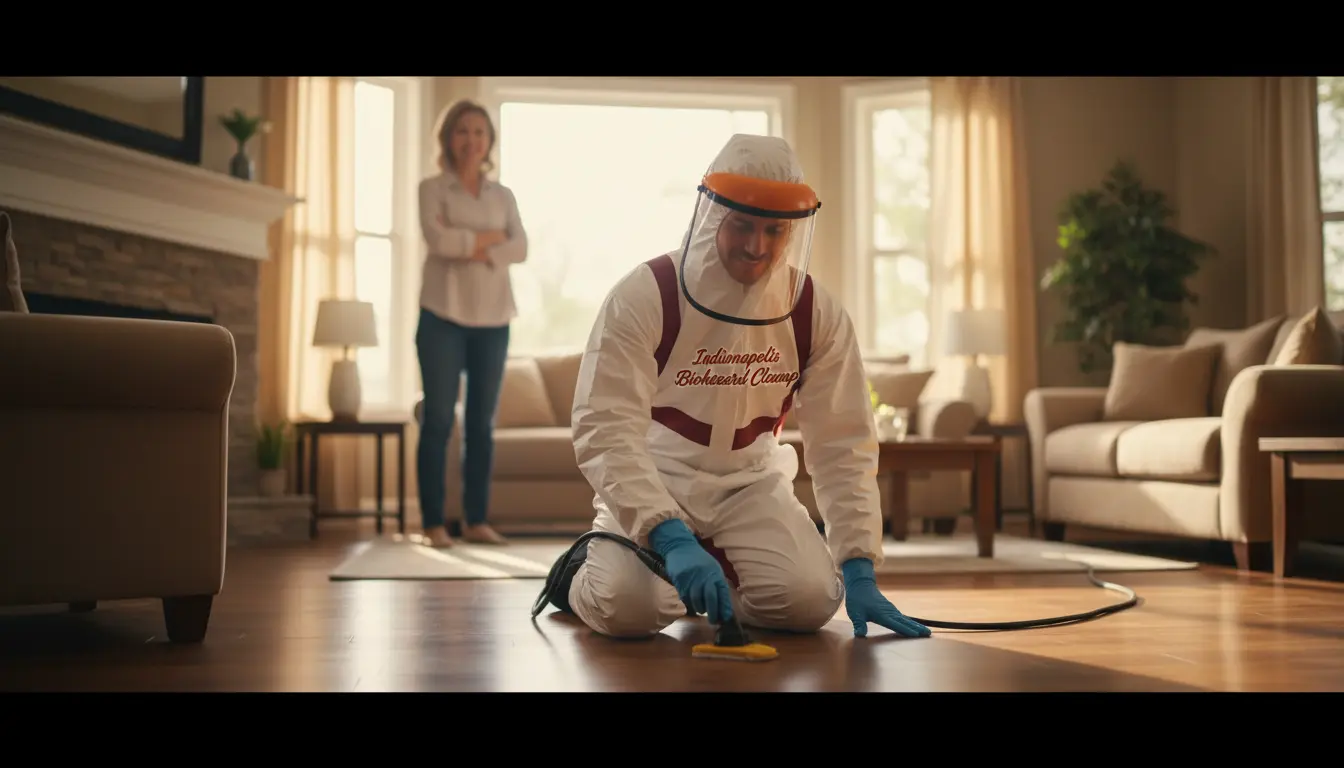
Mark, a property manager overseeing a historic home in the Meridian-Kessler neighborhood of Indianapolis, received a call from the Marion County Coroner’s Office. An elderly tenant had passed away unnoticed, and the body had lain undiscovered for nearly a week. The police had released the scene, but the hardwood floors were saturated with biological fluids, and a heavy, sweet odor of decomposition had already seeped into the walls. Mark’s first instinct was to call a standard cleaning crew, but he knew that would be a mistake. After a quick online search, he found Indianapolis Biohazard Cleanup and learned exactly why biohazard cleanup vs standard cleaning is a distinction that can mean the difference between a safe, restorable property and a long-term health hazard.
Standard residential cleaning services are designed for everyday dirt, dust, and grime. They use household cleaners, mops, and vacuums. Biohazard remediation, on the other hand, is a specialized field governed by strict OSHA, EPA, and IICRC S540 standards. It requires advanced training, industrial-grade equipment, and a deep understanding of bloodborne pathogens, cross-contamination prevention, and structural decontamination. In Indianapolis, where seasonal temperature extremes can accelerate decomposition and humidity can drive odors deep into porous materials, professional remediation is not just recommended—it is essential for protecting occupants and preserving property value.
Technical Process: How Professional Biohazard Remediation Differs from Standard Cleaning
The professional remediation workflow begins with a thorough risk assessment. Technicians from Indianapolis Biohazard Cleanup arrive on site wearing full personal protective equipment (PPE) compliant with OSHA Bloodborne Pathogens Standard 29 CFR 1910.1030. They establish a containment zone using negative air machines to prevent airborne pathogens from spreading to unaffected areas. This is a far cry from the mop and bucket approach of a standard cleaning crew.
Physical removal of biohazardous materials is the next step. This includes saturated carpet, padding, subflooring, and drywall. In historic Indianapolis homes, sub-floor remediation often requires careful removal of original hardwood planks without damaging the surrounding structure. The team uses specialized enzyme treatments to break down organic matter at a molecular level, followed by hospital-grade disinfectants with proven viral inactivation rates against pathogens like hepatitis B and HIV.
After cleaning, adenosine triphosphate (ATP) fluorescence testing is performed to validate that biological residue has been eliminated. A standard cleaning crew cannot provide this level of verification. Finally, structural encapsulation with antimicrobial sealants ensures that any remaining microscopic contaminants are permanently contained. This forensic restoration approach is what sets professional biohazard cleanup apart from janitorial services.
Data Comparison: Professional Remediation vs. Standard Residential Cleaning
| Feature / Metric | Professional Biohazard Remediation | Standard Residential Cleaning |
|---|---|---|
| Regulatory Compliance | OSHA 29 CFR 1910.1030, IICRC S540, EPA waste disposal | None (general cleaning standards) |
| Pathogen Elimination | EPA-registered hospital disinfectants, ATP testing verification | Household bleach or all-purpose cleaners (ineffective against many pathogens) |
| Structural Assessment | Moisture meters, thermal imaging, subfloor inspection | Visual inspection only |
| Odor Removal | Ozone generators, hydroxyl machines, enzymatic deodorization | Air fresheners or open windows |
| Waste Disposal | Controlled, licensed biohazard waste transport and incineration | Regular trash pickup (illegal for biohazard materials) |
| Cross-Contamination Prevention | Negative air pressure, HEPA filtration, full containment | None (mops and rags can spread contaminants) |
Expert Insights: Advanced Diagnostic Tips and Common Mistakes
Three Advanced Diagnostic Tips
First, detecting hidden biological seepage requires more than visual inspection. Technicians use moisture meters and thermal imaging to identify areas where fluids have migrated under flooring or into wall cavities. In Indianapolis, the high humidity of spring and summer can cause these hidden pockets to mold, leading to microbial remediation challenges. Second, porous materials such as unsealed concrete, wood, and drywall must be removed entirely. Bloodborne pathogens can penetrate deep into pores, and cleaning alone cannot guarantee elimination. Third, establishing negative pressure before any disturbance prevents cross-contamination. This is especially critical in multi-unit buildings or attached homes common in older Indianapolis neighborhoods.
Two Common Mistakes Property Owners Make
One mistake is using household bleach on biological matter. Bleach loses effectiveness quickly in the presence of organic soil and can even damage surfaces. It does not kill all pathogens, including prions. Another mistake is waiting for the odor to dissipate naturally. Odor indicates ongoing microbial activity and potential airborne pathogens. Delaying remediation allows mold and bacteria to spread, increasing the scope of structural decontamination required. Allowing untrained personnel into the site is another error—they risk exposure to bloodborne diseases and can track contaminants to other areas.
Pricing: What Influences the Cost of Biohazard Cleanup
Pricing for professional biohazard remediation varies based on several factors. Typical costs include:
- Site mobilization fee covering travel, equipment setup, and initial assessment.
- Hourly remediation rates for technicians and specialist labor.
- Itemized disposal fees for biohazardous waste, which must be transported and incinerated by licensed facilities.
Three factors that significantly influence cost: the extent of structural material replacement required (e.g., removing and replacing subflooring, drywall, or cabinetry), the total volume of biohazardous waste (measured in pounds or gallons), and the necessity for specialized HVAC decontamination if the property’s ventilation system has been contaminated. In Indianapolis, winter ice storms can delay site access, adding logistical costs. Spring rains may require additional drying equipment before remediation can begin. Every project is unique, and Indianapolis Biohazard Cleanup provides transparent, itemized estimates.
Safety and Standards: Protecting Occupants and Future Tenants
Professional biohazard remediation companies operate under strict safety protocols. Certification from the IICRC in trauma and crime scene cleanup (S540) is a baseline requirement. Technicians must complete annual training on OSHA Bloodborne Pathogens Standard 29 CFR 1910.1030, which covers proper handling of sharps, disposal procedures, and emergency exposure protocols. Indianapolis Biohazard Cleanup also partners with authorized waste management services that comply with the EPA’s disposal regulations. These standards are not just paperwork—they directly protect property owners, occupants, and future tenants from communicable diseases such as hepatitis C, HIV, and MRSA.
Frequently Asked Questions About Unattended Death Remediation
How long does it take for a body to decompose and affect the property?
Decomposition begins within minutes of death, but the rate accelerates dramatically in warm, humid environments. In Indianapolis, summer temperatures can rise above 90°F, causing fluids to seep into subflooring within 24–48 hours. Even in cooler months, the body’s own enzymes and bacteria break down tissue, producing liquids that penetrate porous materials. Professional remediation should begin as soon as the scene is released by authorities to prevent permanent structural damage.
Can I clean the scene myself with bleach and bleach?
It is not recommended. Household bleach is not an EPA-registered disinfectant for bloodborne pathogens unless used at the correct concentration and contact time—typically a 1:10 dilution with a ten-minute dwell time. Even then, bleach cannot penetrate porous surfaces to eliminate pathogens. Additionally, handling biological waste without proper training and disposal methods poses significant health risks and legal liabilities. Professional remediation ensures compliance with Indiana regulations and protects your health.
What about the smell? Will it ever go away on its own?
The odor of decomposition is caused by volatile organic compounds released by bacteria. These compounds can be absorbed into drywall, carpet, and wood. Without microbial remediation, the odor can persist for months or even years, especially in humid conditions. Professional deodorization using ozone generators, hydroxyl machines, and enzyme treatments is necessary to eliminate the source at the molecular level.
How do you ensure the area is safe after cleanup?
After physical removal and chemical disinfection, technicians perform ATP fluorescence testing to measure biological residue. Readings below a certain threshold indicate that the surface is safe. They also conduct air quality monitoring to ensure no airborne pathogens remain. A final inspection by a certified remediation specialist provides documentation that the property meets IICRC S540 standards. This is a critical step for insurance claims and property resale.
Professional Biohazard Remediation in Indianapolis
When a property owner or manager faces the aftermath of an unattended death, the choice between biohazard cleanup and standard cleaning can feel overwhelming. However, the differences are clear: professional remediation follows a rigorous, science-backed process that protects health, property, and legal compliance. In Indianapolis, where historic homes, variable weather, and strict local regulations add complexity, relying on an experienced team is the only responsible option.
Indianapolis Biohazard Cleanup provides compassionate, discreet, and technically precise service. From the initial risk assessment to final ATP testing, every step is designed to restore the property to a safe, habitable condition. Whether you are dealing with a tragic loss in a Meridian-Kessler home or a commercial property in the city center, the team’s expertise in forensic restoration and cross-contamination prevention ensures that no detail is overlooked. Standard cleaning has its place, but for biohazard situations, there is no substitute for professional remediation.