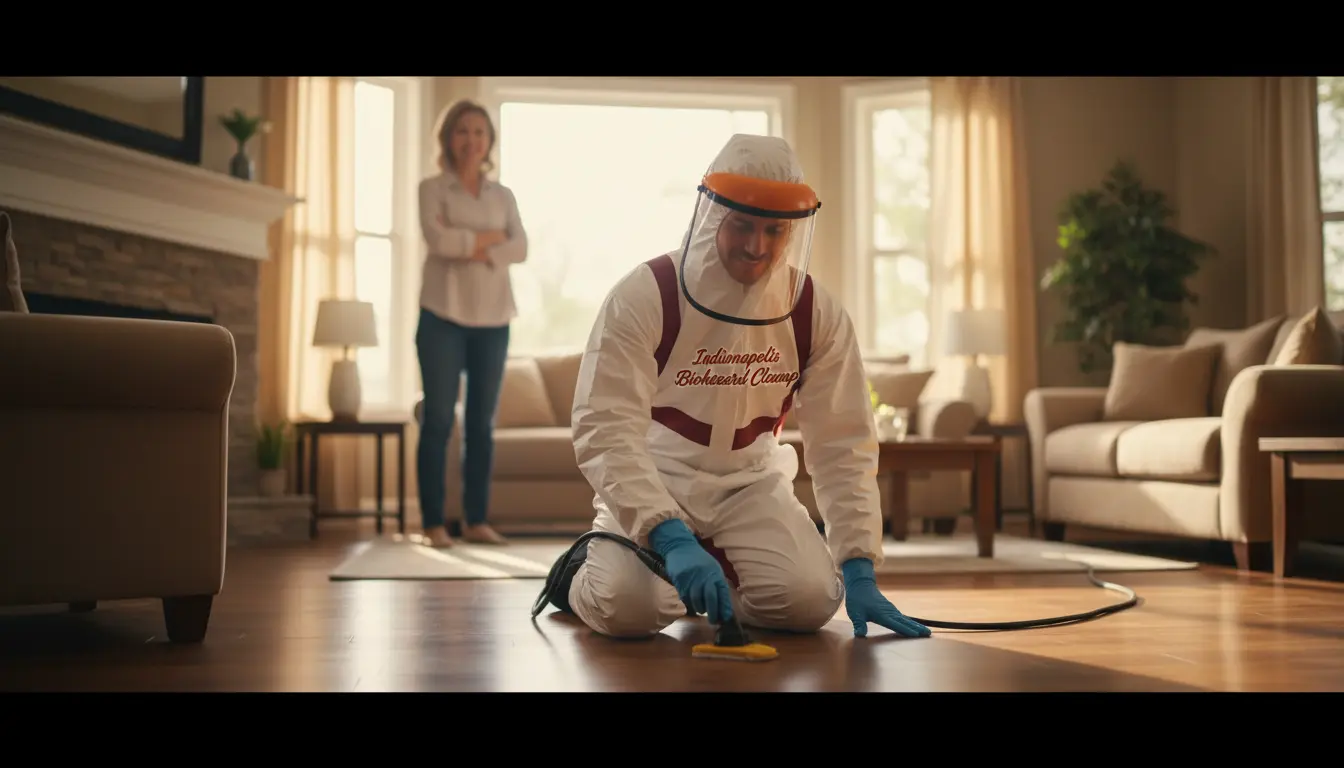
How professional remediation protects families and property owners in Indianapolis goes far beyond surface-level cleaning. It involves a systematic, science-driven process that eliminates bloodborne pathogens, prevents cross-contamination, and restores structural integrity. For homeowners, landlords, and property managers, understanding this difference is critical. A standard cleaning service lacks the training, equipment, and regulatory knowledge required to handle biohazardous materials safely. Professional remediation, on the other hand, follows strict protocols from the Institute of Inspection, Cleaning and Restoration Certification (IICRC) S540 standard and OSHA’s Bloodborne Pathogens Standard, ensuring every biological trace is removed and the property is habitable again.
The Technical Process: Step-by-Step Biohazard Remediation
Professional remediation begins with a thorough risk assessment. The certified specialist evaluates the scene to identify all affected areas, including hidden seepage beneath flooring or behind walls. In Indianapolis’s older homes, sub-floor spaces often harbor decades of dust and debris, which can complicate biological containment. The team then establishes containment zones using heavy-duty plastic sheeting and negative air machines. These industrial-grade units create negative pressure, preventing airborne pathogens from escaping to unaffected rooms.
Next, technicians don full personal protective equipment (PPE) — Tyvek suits, N95 respirators or PAPRs, face shields, and chemical-resistant gloves. All biohazardous materials are carefully removed: saturated carpet, padding, drywall, insulation, and any porous items that cannot be effectively decontaminated. These materials are double-bagged in approved biohazard bags and transported to authorized medical waste disposal facilities, following Marion County environmental regulations. Non-porous surfaces are then cleaned with EPA-registered hospital-grade disinfectants, often using electrostatic sprayers to ensure even coverage.
Scientific Verification: ATP Testing
After cleaning, the team performs adenosine triphosphate (ATP) fluorescence testing. This technology measures organic residue on surfaces by detecting the presence of ATP, a molecule found in all living cells. A reading below a specific threshold confirms that biological material has been eliminated. This objective verification step is absent in standard cleaning and provides property owners with documented proof of decontamination. In Indianapolis’s humid summers, decomposition accelerates rapidly, making ATP testing especially critical to ensure no lingering pathogens remain.
Structural Decontamination and Odor Removal
Odor migration is a major concern in multi-story homes and apartments. Professional remediation uses ozone generators or hydroxyl machines to neutralize volatile organic compounds (VOCs) that cause persistent smells. If the HVAC system is contaminated, technicians clean ductwork with antimicrobial agents and may replace filters with HEPA-grade units. This comprehensive approach prevents future health issues such as respiratory irritation or allergic reactions among occupants. For historic Indianapolis properties with original plaster walls and hardwood, the team may also use specialized enzyme treatments to break down organic matter trapped in porous surfaces.
Data Comparison: Professional Remediation vs. Standard Cleaning
| Feature/Metric | Professional Biohazard Remediation | Standard Residential Cleaning |
|---|---|---|
| Regulatory Compliance | OSHA 29 CFR 1910.1030, EPA guidelines, IICRC S540 | None |
| Pathogen Elimination | 99.99% reduction verified by ATP testing | Surface-level; pathogens can survive |
| Structural Assessment | Full inspection including sub-floor and wall cavities | Visual only |
| Waste Disposal | Licensed medical waste transport and incineration | Regular trash, illegal and dangerous |
| Odor Remediation | Ozone, hydroxyl, HVAC decontamination | Air fresheners (ineffective) |
Expert Insights: What Professionals Know That Others Miss
Over years of field experience in Indianapolis, we’ve developed diagnostic techniques that go beyond the obvious. Here are three advanced insights that separate true remediation from amateur attempts.
1. Hidden Biological Seepage
Biological fluids can seep through hardwood cracks into the subfloor, then travel laterally under the flooring. A simple mop and bucket cannot reach these areas. We use moisture meters and thermal imaging to detect hidden saturation. If left untreated, the organic material will continue to decompose, creating a persistent odor and a breeding ground for bacteria.
2. Porous Materials Require Removal, Not Cleaning
Many homeowners believe that scrubbing a concrete slab or wooden subfloor with bleach will render it safe. In reality, porous materials absorb blood and bodily fluids at the microscopic level. Bleach only disinfects the surface; it does not penetrate. The IICRC S540 standard mandates that any porous material contaminated with blood or other potentially infectious materials (OPIM) must be removed and replaced. This includes carpet, padding, drywall, and even insulation in severe cases.
3. Negative Pressure Prevents Cross-Contamination
Without proper containment, airborne pathogens can travel through the home via HVAC systems, causing secondary contamination. Professional remediation sets up negative air pressure within the work zone, ensuring that air flows inward and is filtered through HEPA exhaust units. This technique, borrowed from hospital infection control, is essential in Indianapolis’s tightly sealed homes during winter months when windows are closed and air circulation is minimal.
Common Mistakes Property Owners Make
Using household bleach on biological matter — Household bleach (sodium hypochlorite) loses efficacy in the presence of organic material. It can also react with ammonia in urine to produce toxic chloramine gas. Professional-grade disinfectants are formulated to cut through biological soils and remain active for longer dwell times.
Waiting for odor to dissipate naturally — Odor is a sign of active decomposition and microbial growth. As temperatures rise in an Indianapolis summer, bacteria multiply faster, and the odor intensifies. Delaying remediation allows contamination to spread deeper into porous materials, increasing restoration costs and health risks.
Allowing untrained personnel into the site — Friends, family, or general contractors entering a biohazard scene without proper PPE risk exposure to hepatitis B, hepatitis C, HIV, and other bloodborne pathogens. Furthermore, they may inadvertently spread contaminants to other areas of the property, turning a contained situation into a widespread problem.
Pricing Factors for Biohazard Remediation
- Standard site mobilization fee — This covers the cost of dispatching a certified team, transport of equipment, and initial risk assessment. In Indianapolis, mobilization fees typically range from $200–$500 depending on distance and urgency.
- Hourly remediation rates — Most professional companies charge by the hour, with rates between $150–$300 per technician. The number of technicians required depends on the size of the scene and the complexity of the contamination.
- Specialized disposal of biohazardous waste — Medical waste disposal is regulated by the Indiana Department of Environmental Management. Costs include heavy-duty biohazard bags, labeled containers, transportation, and incineration. This can add $500–$2,000 to the total bill.
Three primary factors influence the final cost:
- Extent of structural material replacement required — Removing and replacing subfloor, drywall, insulation, or cabinetry significantly increases labor and material costs. In older Indianapolis homes with plaster and lath, this is especially expensive.
- Total volume of biohazardous waste — The more biological material present (e.g., after an unattended death of multiple weeks), the more waste must be disposed of, driving up disposal fees.
- Necessity for specialized HVAC decontamination — If the HVAC system has been contaminated, duct cleaning and antimicrobial treatment add $500–$1,500. In some cases, sections of ductwork may need replacement.
Safety and Standards: Certifications That Matter
Professional remediation is not a service that can be performed without proper credentials. The most important certifications include:
- IICRC S540 — The industry standard for trauma and crime scene cleanup. Technicians must pass exams covering bloodborne pathogens, chemical safety, and restoration techniques.
- OSHA Bloodborne Pathogens Standard (29 CFR 1910.1030) — Mandates exposure control plans, PPE protocols, and proper disposal methods. Compliance protects both workers and property occupants from disease transmission.
- Authorized waste management services — In Indiana, biohazardous waste must be handled by transporters registered with the state. Professional remediators use licensed partners to ensure legal disposal and avoid liability.
These standards have practical real-world implications. For example, a property owner who attempts cleanup without following OSHA guidelines could face fines from the Indiana Occupational Safety and Health Administration (IOSHA) if an employee or family member becomes ill. More importantly, incomplete remediation can leave behind hepatitis or MRSA bacteria, endangering future tenants. Professional remediation provides documented proof of compliance, which is often required by insurance companies before paying claims.
Frequently Asked Questions About Unattended Death Remediation
What makes unattended death remediation different from regular crime scene cleanup?
Unattended deaths often involve advanced decomposition, where bodily fluids have broken down tissues and spread through porous materials. The decomposition process releases gases that can permeate walls and furniture. Crime scene cleanup typically addresses fresh blood and tissue, whereas unattended death remediation requires specialized enzyme treatments to break down liquefied remains and extensive structural decontamination. In Indianapolis’s hot summers, decomposition can advance in days, making rapid response essential.
How long does the remediation process usually take?
Duration depends on the size of the affected area and the level of contamination. A single room with minimal saturation might take 4–8 hours, while a multi-room situation involving subfloor replacement and HVAC decontamination can take 2–3 days. The team must also allow time for drying and ATP verification between steps. In winter, when heating systems run continuously, the process may require additional time to ensure all moisture is removed to prevent mold growth.
Is it safe to stay in the home during remediation?
No. The containment area is under negative pressure, but the work involves heavy chemicals and potential airborne particles. For the safety of occupants, the team typically recommends vacating the property until the final ATP test confirms a clean environment. In cases where the affected area is isolated and the home has separate HVAC zones, partial occupancy may be possible, but this is evaluated on a case-by-case basis.
Will my homeowner’s insurance cover the cost?
Many homeowner’s insurance policies include coverage for biohazard cleanup as part of their dwelling or personal property protection, especially if the death is accidental or unexpected. However, policies vary. It’s important to contact your insurance company as soon as possible. Professional remediation companies can often provide documentation and work directly with adjusters to ensure coverage is maximized. In Indianapolis, we recommend policyholders review their coverage for “hazardous material cleanup” or “pollution removal” endorsements.
What happens to the personal belongings in the affected room?
Any porous items that have been contaminated — such as bedding, clothing, upholstered furniture, and mattresses — must be discarded and disposed of as biohazard waste. Non-porous items like glass, metal, or plastic can be decontaminated and returned to the family. The team will inventory and photograph items before removal, providing a detailed report for insurance and family records. In some cases, sentimental items can be carefully cleaned, but safety is always the priority.
Professional Biohazard Remediation in Indianapolis
When a family faces the aftermath of an unattended death or other biohazard incident in Indianapolis, the decision to hire a professional remediation team is not just about cleanliness — it’s about safety, legality, and peace of mind. The technical expertise, specialized equipment, and adherence to IICRC and OSHA standards ensure that the property is fully restored and safe for occupancy. From the initial risk assessment to the final ATP verification, every step is designed to protect families and property owners from the hidden dangers of biological contamination.
Indianapolis Biohazard Cleanup brings years of experience in forensic restoration and microbial remediation, serving the unique needs of Marion County’s diverse housing stock. Whether it’s a historic home in Irvington requiring delicate sub-floor treatment or a modern apartment on the north side needing HVAC decontamination, our team responds with discretion, compassion, and technical rigor. We handle all aspects of remediation — from blood cleanup and odor removal to comprehensive disinfection services — so families can focus on what matters most. For property owners and managers, we also provide documentation for insurance claims and regulatory compliance. Contact us today for a confidential consultation and take the first step toward restoring your property safely.