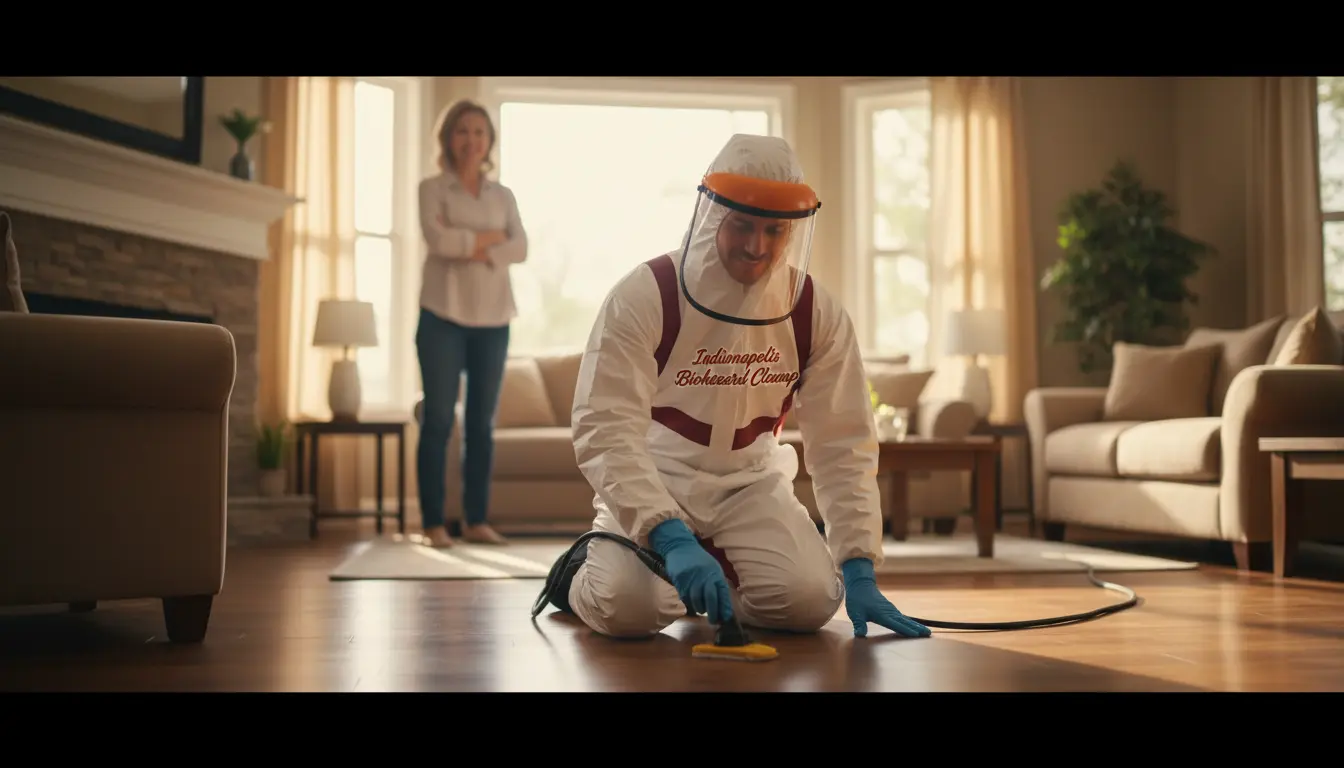
Understanding how odor removal and sanitization work after biohazard incidents is critical for property owners, real estate professionals, and restoration contractors in Indianapolis. Unlike a standard cleaning, biohazard remediation operates under strict IICRC S540 and OSHA Bloodborne Pathogens standards. The goal is not to mask the smell but to physically remove the source of contamination, chemically neutralize pathogens, and restore the structure to a safe, habitable condition. For Indianapolis Biohazard Cleanup, this process integrates local environmental realities—Midwest humidity that accelerates decomposition, aging residential infrastructure that requires sub-floor remediation, and seasonal extremes that complicate site access.
This article breaks down the technical workflow, the science behind odor neutralization, and the regulatory framework that governs our work. Whether you are managing a property after an unattended death, a violent crime, or a hoarding incident, knowing what professional remediation entails protects your health and your property’s long-term value.
Initial Risk Assessment and Containment Protocols
Every remediation begins with a thorough walkthrough. We document the extent of biological saturation using moisture meters, thermal imaging, and olfactory mapping. In the Irvington bungalow, thermal imaging revealed fluid migration beneath the baseboards and into the wall cavities. The next step is establishing a containment zone. We use 6-mil polyethylene sheeting to seal off the affected area from the rest of the structure. Negative air machines with HEPA filtration are deployed to create negative pressure, preventing airborne contaminants—including fungal spores and bloodborne pathogens—from spreading to other rooms.
Personal protective equipment (PPE) for our team includes Tyvek suits, N100 respirators, face shields, and double-gloved hands with cut-resistant liners. This is not optional. The Occupational Safety and Health Administration (OSHA) 29 CFR 1910.1030 standard mandates these precautions when handling blood or other potentially infectious materials (OPIM). In Indianapolis, we also account for seasonal factors: in winter, ice and snow complicate the setup of decontamination trailers, requiring pre-positioning of equipment. In summer, high humidity slows the drying process, demanding extended use of desiccant dehumidifiers and industrial air movers.
Physical Biohazard Removal and Structural Decontamination
Once containment is verified, we proceed with the physical removal of all biologically contaminated materials. This includes saturated carpet, padding, subflooring, drywall, insulation, and any porous furnishings. Non-porous items like metal fixtures and glass are cleaned on-site using EPA-registered hospital-grade disinfectants with a 10-minute dwell time. For porous materials, removal is the only safe method. Cleaning a contaminated subfloor is impossible because biological fluids penetrate deeply into the wood grain, creating a reservoir for pathogens and odor-causing bacteria.
In the Irvington property, we removed the original oak flooring and two layers of subfloor plywood. Beneath that, we found soil contamination that had migrated through gaps in the foundation sill plate. This required excavation and treatment with an antimicrobial foam. Every biohazard waste item is double-bagged in red biohazard bags, labeled, and transported to a licensed medical waste incinerator—typically Stericycle or a similar authorized provider. This disposal process is regulated by the Indiana Department of Environmental Management (IDEM).
Enzyme Treatments for Odor Neutralization
After physical removal, we apply enzyme-based cleaners to the remaining surfaces. These solutions contain specific bacteria that digest organic residues—blood, tissue, bodily fluids—at a molecular level. Unlike bleach, which only kills surface pathogens and leaves organic matter behind, enzymes break down the proteins and fatty acids that cause persistent odors. This is the foundation of effective odor removal after biohazard incidents. The enzymes are applied as a foam or spray, allowed to dwell for 24 to 48 hours, and then rinsed with a low-pressure extraction system.
ATP Fluorescence Testing for Verification
To confirm that a surface is microbiologically clean, we use adenosine triphosphate (ATP) testing. A swab sample is inserted into a luminometer that measures the amount of ATP present—a proxy for organic residue. Readings below 10 relative light units (RLUs) are considered clean for healthcare environments. We apply this same standard in residential biohazard remediation. If a surface fails, we re-treat and re-test until compliance is achieved. This objective data is documented and provided to the property owner or insurance adjuster as proof of decontamination.
Professional Remediation vs. Standard Janitorial Cleaning: A Data Comparison
| Feature / Metric | Professional Biohazard Remediation | Standard Residential Cleaning |
|---|---|---|
| Regulatory Compliance | OSHA 29 CFR 1910.1030, IICRC S540, IDEM waste disposal | None |
| Pathogen Elimination | EPA-registered disinfectants with 10-min dwell time; ATP testing validation | Household bleach or general-purpose cleaners; no dwell time control |
| Structural Assessment | Thermal imaging, moisture meters, subfloor inspection, wall cavity probing | Visual inspection only |
| Odor Removal Method | Enzyme digestion, hydroxyl generators, ozone shock treatment, negative air scrubbing | Air fresheners or candles (masking only) |
| Waste Disposal | Licensed medical waste incineration (red bag stream) | Household trash (illegal and hazardous) |
| Insurance Documentation | Detailed chain-of-custody logs, ATP results, photographic evidence | None |
Expert Diagnostic Insights for Odor Remediation
Over a decade of field experience in Indianapolis has taught me three critical diagnostic principles that separate effective remediation from costly failures.
Detecting Hidden Biological Seepage
Odor does not travel in a straight line. In older Midwestern homes with balloon-frame construction, biological fluids can seep through gaps between floor joists and travel laterally inside wall cavities before emerging in a seemingly unrelated room. We use a combination of canine olfactory detection—trained dogs that can locate minute traces of decomposition—and electronic sniffers (photoionization detectors) that measure VOC levels. If you only clean the visible stain, the odor will return within weeks as bacteria re-activate in hidden pockets.
Porous Materials Require Replacement, Not Cleaning
Many property owners assume that steam cleaning or sanding will remove odor from wood. It will not. Porous materials—wood, drywall, carpet, padding, insulation, and unsealed concrete—absorb biological fluids and VOCs at a molecular level. Once absorbed, no amount of cleaning can fully extract the contaminants. The only reliable method is removal and replacement. Failing to do so leaves a continuous source of odor and potential microbial growth. In one Indianapolis case, a homeowner tried sanding a blood-stained hardwood floor. Three months later, the odor returned during a humid spell, and the entire floor had to be replaced at twice the original cost.
The Importance of Negative Pressure in Cross-Contamination Prevention
Without proper containment and negative air pressure, remediation efforts can spread contamination throughout a building. We set up at least two negative air machines with HEPA filters—one inside the containment zone and one at the exit point. Air pressure differentials are measured with a manometer; we maintain a minimum of -0.02 inches of water column relative to adjacent rooms. This ensures that any airborne particulates—including fungal spores from decomposing tissue—are captured before they migrate. In multi-unit residential buildings like those common in downtown Indianapolis, this step is legally and ethically mandatory to protect neighbors.
Common Mistakes Property Owners Make and Their Consequences
Despite the best intentions, many property owners attempt to handle biohazard incidents themselves or hire unqualified cleaning crews. The results are often disastrous.
Mistake 1: Using household bleach on biological matter. Bleach is corrosive, ineffective on porous surfaces, and creates toxic fumes when mixed with organic material. It also fails to eliminate odor-causing bacteria. The consequence is a false sense of cleanliness and a lingering odor that worsens over time as the underlying organic matter continues to decompose.
Mistake 2: Waiting for odor to dissipate naturally. Decomposition odor does not go away on its own. As bacteria break down tissue, they release volatile organic compounds such as putrescine and cadaverine. These compounds persist in porous materials for months or even years. Waiting only allows the contamination to spread deeper into the structure, increasing remediation costs and health risks.
Mistake 3: Allowing untrained personnel into the site. Family members, real estate agents, or general contractors who enter a contaminated area without proper PPE risk exposure to bloodborne pathogens (hepatitis B, hepatitis C, HIV), bacterial infections, and toxic fungal spores. In one Indianapolis incident, an agent entered a crime scene to take photos and later developed a respiratory infection requiring hospitalization. Professional remediation includes strict access control and decontamination protocols.
Pricing Structure for Biohazard Odor Removal
Costs vary significantly based on the scope of work, but understanding the typical pricing components helps property owners plan. At Indianapolis Biohazard Cleanup, we provide transparent estimates after a free on-site assessment.
- Site mobilization and containment setup: $350–$750, depending on property size and access complexity. This includes negative air machines, HEPA filters, polyethylene sheeting, and signage.
- Hourly remediation rate: $125–$200 per technician per hour. Most jobs require 2–4 technicians and range from 8 to 40 hours. Unattended death scenarios typically fall on the higher end due to advanced decomposition.
- Specialized disposal of biohazardous waste: $150–$500 per drum (55-gallon). Disposal is priced by weight and type. Blood-soaked materials are heavier and more expensive than general biohazard waste.
- Odor neutralization treatments: $200–$1,200, including enzyme application, hydroxyl generator rental, and post-treatment ATP testing.
- Structural material replacement: Variable—$2,000–$15,000 for subfloor, drywall, and insulation replacement. This is often the largest cost driver.
Three primary factors influence total cost: (1) the extent of structural material replacement required—porous materials must be removed and replaced; (2) the total volume of biohazardous waste—more waste means higher disposal fees; and (3) the necessity for specialized HVAC decontamination—if biological particles have entered the ductwork, the entire system must be cleaned and sanitized by a NADCA-certified professional.
Safety Standards and Regulatory Compliance
Every remediation we perform follows the IICRC S540 standard for trauma and crime scene cleanup. This standard dictates everything from PPE requirements to waste disposal protocols. Additionally, we comply with OSHA’s Bloodborne Pathogens Standard (29 CFR 1910.1030), which mandates that all employees receive annual training, hepatitis B vaccinations, and have access to a written exposure control plan.
In practice, these standards mean that every technician on our team is trained to handle sharps, blood spill cleanup, and disinfectant application with precision. We use only EPA-registered disinfectants with proven efficacy against hepatitis B, C, and HIV. Our waste is transported by licensed medical waste haulers and incinerated at permitted facilities. For the property owner and future occupants, this compliance eliminates the risk of disease transmission and legal liability. In Indianapolis, where many homes date back to the early 1900s, structural integrity can be compromised by improper cleaning methods—following standards protects both health and property value.
Frequently Asked Questions About Unattended Death Remediation
How long does the odor from an unattended death last if left untreated?
Decomposition odor begins within 24–48 hours after death and intensifies over the first two weeks as bacteria proliferate. If the biological material is not removed, the odor will persist indefinitely. In one Indianapolis case, a property sat vacant for six months after an unattended death; the odor had saturated the entire structure, requiring full gutting of the interior. Professional remediation can typically eliminate the odor within one to two weeks, depending on the extent of contamination and the materials involved.
Can I clean up an unattended death myself to save money?
It is not recommended and may be illegal. Handling human remains, blood, and bodily fluids without proper training and PPE exposes you to bloodborne pathogens, toxic gases from decomposition, and psychological trauma. Furthermore, household cleaning products are ineffective against biological contamination. Professional remediation ensures that the site is decontaminated to a medically safe level and that waste is disposed of in compliance with IDEM regulations. Attempting DIY cleanup can void insurance policies and create long-term health risks for occupants.
What about pets in the home during the incident?
Pets can be affected by the same pathogens and odors. If a pet was present during the incident, it may require decontamination. In some cases, pets may have ingested contaminated materials or come into contact with hazardous substances. We work with local veterinarians to assess and treat pets. The home must be fully remediated before pets are allowed back, as residual odors can cause respiratory issues and behavioral stress in animals.
Will homeowners insurance cover biohazard remediation after an unattended death?
Coverage depends on the policy. Many standard homeowners insurance policies include coverage for the cleanup of “debris removal” after a death on the property, but exclusions often apply for intentional acts or criminal incidents. We recommend contacting your insurance provider directly. Indianapolis Biohazard Cleanup can provide detailed documentation and invoices to support your claim. We also work with several local restoration adjusters who are familiar with the claims process for unattended death scenarios.
Professional biohazard remediation is not a luxury—it is a critical step in restoring safety, health, and property value after a traumatic incident. In Indianapolis, where historic homes and extreme weather create unique challenges, relying on a certified, locally experienced team makes all the difference. At Indianapolis Biohazard Cleanup, we combine technical rigor with compassion, ensuring that every property we restore is returned to a condition that is safe for occupancy and free of the biological and olfactory evidence of what occurred. If you are facing a biohazard situation, do not attempt to handle it alone. Contact us for a discreet, thorough, and scientifically sound remediation plan.