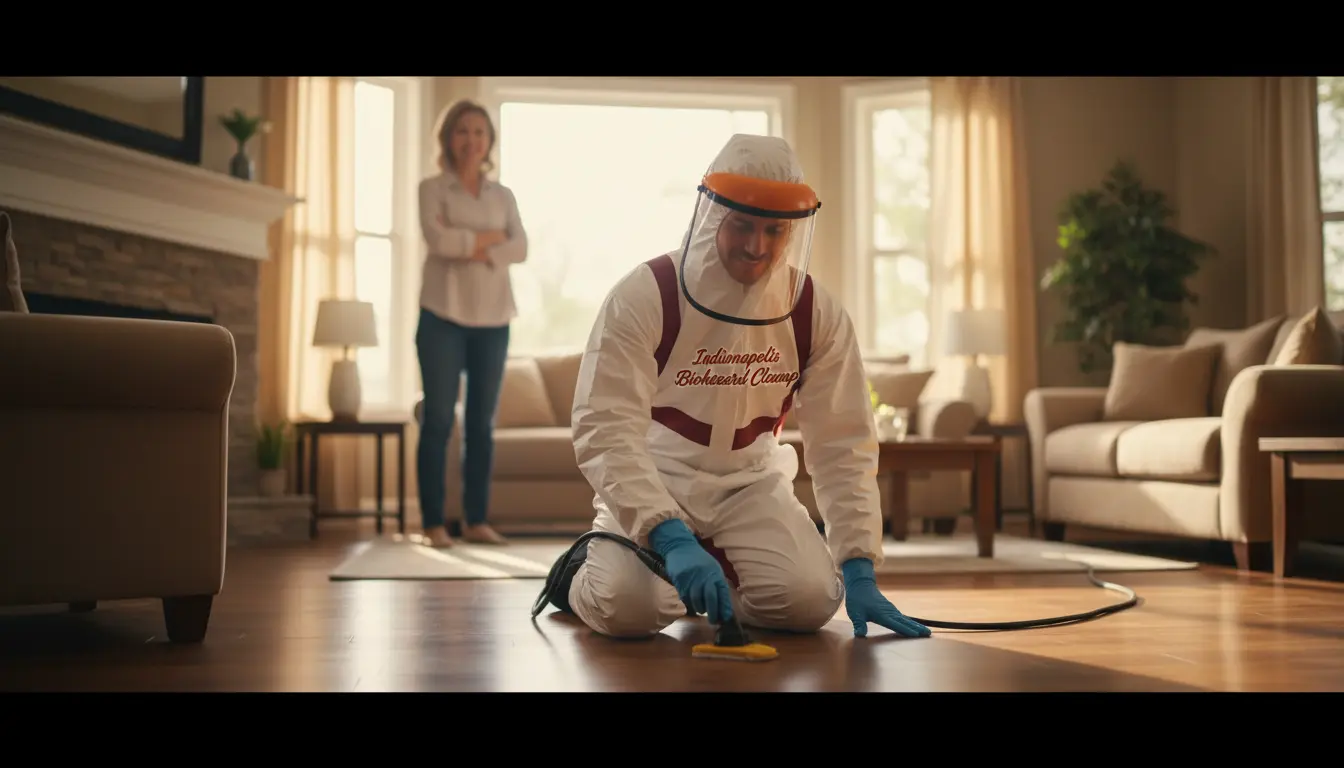
The call came in from a family attorney in Meridian-Kessler. An elderly gentleman had passed away alone in his bungalow, and four weeks had passed before anyone noticed. The property manager had opened the door and immediately backed out. The smell of advanced decomposition had saturated the plaster walls, the hardwood floors, and even the crawlspace below. That is the moment when the difference between a professional biohazard remediation crew and a general cleaning service becomes a matter of life and death — literally. Indianapolis faces unique challenges in unattended death cleanup, from the humid summers that accelerate microbial growth to the historic residential structures that require delicate sub-floor restoration. Choosing the right company is not just about price; it is about ensuring that the site is structurally safe, legally compliant, and emotionally respectful for the families involved.
Indianapolis Biohazard Cleanup is the premier, discreet, and technically rigorous provider in the region. Our team holds IICRC S540 certifications and undergoes annual OSHA Bloodborne Pathogens training. When you are faced with the aftermath of a trauma, suicide, hoarding, or unattended death, the decision of which company to call can have lasting consequences on property value, health, and peace of mind. This article outlines the exact criteria you need to evaluate before hiring a biohazard cleanup company in Indianapolis, drawing on real local conditions and industry best practices.
What Sets Professional Biohazard Remediation Apart from Standard Cleaning
Many property owners assume that a deep cleaning crew can handle a biohazard scene. That assumption is dangerous. Biohazard remediation involves the removal of bloodborne pathogens, bodily fluids, and decomposed tissue that may be aerosolized or soaked into porous materials. Standard cleaning products, even industrial-strength bleach, cannot kill all pathogens like hepatitis B, HIV, or MRSA when organic matter is present. The IICRC S540 standard defines a clear protocol: initial risk assessment, containment, physical removal, chemical decontamination, ATP fluorescence testing, and final structural encapsulation. Indiana’s Marion County health codes also require that any space with potential airborne pathogens be treated with negative air pressure to prevent cross-contamination to adjacent units or HVAC systems.
Another critical difference is the handling of porous materials. In older Indianapolis homes, especially those built before 1950, subflooring often consists of softwood planks that absorb bio-fluids deeply. Professional remediation teams understand that salvaging such materials is rarely possible; they must be removed and replaced. A standard cleaning crew would simply mop the surface, leaving dangerous pathogens to re-emerge when humidity rises. The Midwest’s seasonal temperature swings — from freezing winters to steamy summers — cause porous materials to expand and contract, which can release trapped biological matter into the air months later. Only a certified biohazard company knows how to perform a complete structural assessment and deploy the right tools, including polymer-based encapsulants that seal the remaining surfaces.
The Technical Process of Biohazard Remediation in Indianapolis
Professional remediation follows a rigorous, step-by-step workflow that ensures every trace of biological hazard is eliminated.
Initial Risk Assessment and Containment
Upon arrival, the lead technician conducts a thorough visual inspection and uses a moisture meter to detect hidden seepage in walls and subfloors. The team then establishes a containment zone using heavy-gauge polyethylene sheeting and negative air machines with HEPA filtration. This prevents microscopic particles — including dried blood, tissue fragments, or fungal spores — from traveling to unaffected areas of the property. In Indianapolis row houses and multi-family units, this step is especially important because airborne contaminants can drift through shared ductwork.
Physical Removal of Biohazardous Materials
All porous materials that have been contaminated — including carpet, padding, drywall, insulation, and subfloor sections — are carefully cut out and double-bagged in biohazard-specific red bags. The team uses specialized tools such as forensic saws with vacuum attachments to minimize dust. The removed waste is then transported to a licensed medical waste incinerator, in compliance with Indiana Department of Environmental Management regulations. At this stage, the affected area is often reduced to the bare structural frame.
Chemical Decontamination and Odor Removal
After physical removal, the remaining surfaces are treated with EPA-registered hospital-grade disinfectants that are effective against a broad spectrum of pathogens, including tuberculosis (TB) and Clostridium difficile (C. diff). Enzyme treatments are applied to break down organic residues that cause lingering odors. In Indianapolis, where summer humidity often exceeds 70%, the team also uses industrial-grade ozone generators or hydroxyl machines to address odor molecules trapped in the HVAC system. This step is crucial because decomposition odors can trigger fear and distress in returning family members, and they also attract pests like flies and rodents.
ATP Fluorescence Testing and Verification
Before the final encapsulation, the team performs adenosine triphosphate (ATP) testing on surfaces. A swab is taken and analyzed with a luminometer; if the relative light units (RLU) exceed a threshold of 30, the area is retreated. This scientific verification ensures that all biological material has been removed. Many companies skip this step, but it is a mandatory part of the IICRC S540 standard and should be a requirement in your contractor evaluation.
Data Comparison: Professional Remediation vs. Standard Janitorial Cleaning
| Feature / Metric | Professional Biohazard Remediation | Standard Residential Cleaning |
|---|---|---|
| Regulatory Compliance | IICRC S540, OSHA 29 CFR 1910.1030, Indiana IDEM waste disposal | None |
| Pathogen Elimination | Using EPA-registered disinfectants with proven kill claims (e.g., HIV, HBV, MRSA) | Household bleach may not kill all bloodborne pathogens |
| Structural Assessment | Moisture meters, thermal imaging, and subfloor removal | Visual only |
| Odor Control | Negative air pressure, ozone, hydroxyl generators, enzyme treatments | Air fresheners or open windows |
| Waste Disposal | Medical waste incineration via licensed transporter | Trash or landfill (illegal for biohazard) |
| Verification Testing | ATP fluorescence testing (RLU <30) | None |
Source: IICRC S540 Trauma and Crime Scene Cleanup Standard
Expert Insights for Property Owners and Managers
Three diagnostic tips that experienced technicians use can save you from costly mistakes:
Tip 1: Detect hidden biological seepage. Blood and bodily fluids can travel through baseboards, under carpet tack strips, and into the subfloor. A professional will use a moisture meter that measures electrical conductivity; organic fluids conduct electricity differently than water. If the readings are elevated in a pattern that does not match a plumbing leak, biological contamination is likely. This is particularly common in Indianapolis homes with hardwood floors, where fluids seep through the gaps between boards.
Tip 2: Porous materials require replacement, not cleaning. No amount of surface cleaning can remove pathogens from drywall, unsealed wood, or soft furnishings. Even if the material looks clean, it can harbor viable bacteria for months. The only safe approach is to cut out and replace porous materials up to 18 inches above the visible stain line, as recommended by the IICRC. Skimping on removal often leads to future mold growth and health complaints.
Tip 3: Negative pressure is non-negotiable. Without a controlled negative pressure environment, airborne pathogens can travel through the house. In Indianapolis, where many homes share common walls or have window-unit air conditioners, cross-contamination is a real risk. Professional remediation crews use HEPA-filtered negative air machines that create a pressure gradient, ensuring that air flows only from clean areas into the contaminated zone — never the reverse.
Common mistakes property owners make include:
- Using household bleach on biological matter. Bleach is neutralized by organic matter, making it ineffective on blood and tissue. Worse, it can create toxic fumes when mixed with other cleaning agents. Certified technicians use disinfectants with a higher concentration of quaternary ammonium compounds or hydrogen peroxide.
- Waiting for the odor to dissipate naturally. Odors are caused by volatile organic compounds released by decomposing tissue. These compounds can also adhere to surfaces and cause long-term health issues like respiratory irritation. The odor will not fade on its own; it requires active remediation with ozone or hydroxyl technology.
- Allowing untrained personnel into the site. Friends, family, or even handymen should never enter a biohazard scene. They lack the proper PPE and training, exposing themselves to bloodborne pathogens and psychological trauma. Additionally, their presence can compromise the site for insurance claims and legal proceedings.
Pricing Structure for Biohazard Remediation in Indianapolis
Biohazard cleanup costs vary widely based on the scope of the job, but understanding the typical pricing structure helps you evaluate quotes. Most reputable companies use a combination of a site mobilization fee, hourly labor, and itemized disposal costs.
- Site mobilization fee: This covers the cost of transporting specialized equipment — such as negative air machines, industrial vacuums, and containment supplies — to your location. In Indianapolis, traffic and weather can affect this, but a standard fee ranges from $300 to $600.
- Hourly remediation rate: Expect $150 to $250 per hour per technician. A typical unattended death cleanup requires two to four technicians working for four to eight hours. The larger the affected area and the more advanced the decomposition, the higher the hours.
- Specialized disposal of biohazardous materials: Medical waste disposal is charged per pound. The average cost is $50 to $100 per bag of biohazard waste. A moderate cleanup may generate 10 to 20 bags.
Three factors that influence cost are:
- Extent of structural material replacement: If subflooring, drywall, and insulation must be removed, this adds labor and disposal fees. In older homes with plaster and lath, removal is more time-consuming and may require specialized techniques.
- Total volume of biohazardous waste: Heavily decomposed bodies produce more fluid and tissue, requiring more bags and more chemical treatment. This is the single biggest cost driver.
- Necessity for specialized HVAC decontamination: If the home’s central heating and cooling system has circulated air through the contaminated space, the ductwork must be cleaned and treated. This can add $500 to $1,500 to the total.
Safety and Standards: What Certifications Matter
When selecting a biohazard cleanup company in Indianapolis, look for the following certifications and protocols. They are not just badges; they represent a commitment to safety and legal compliance.
IICRC S540 Certification: The Institute of Inspection, Cleaning and Restoration Certification sets the standard for trauma and crime scene cleanup. Technicians must pass an exam and complete continuing education. This certification ensures they understand biological hazards, containment, and decontamination methods.
OSHA Bloodborne Pathogens Standard (29 CFR 1910.1030): This is a federal regulation that requires employers to provide a written exposure control plan, free hepatitis B vaccinations, and proper PPE. Any company handling biohazard waste must be in full compliance. Ask to see their exposure control plan — a reputable company will share it.
EPA-registered disinfectants: The products used must be listed on the EPA’s List N or have specific claims against bloodborne pathogens. Using a generic cleaner is a red flag. The company should be able to provide the product’s Safety Data Sheet (SDS) upon request.
In practice, these standards protect you and your property. For example, if a technician is not properly vaccinated and gets a needlestick injury, the liability could fall on the property owner. Similarly, improper waste disposal can lead to fines from the Indiana Department of Environmental Management. A certified company carries the appropriate insurance — including general liability and worker’s compensation — to cover any incidents.
Frequently Asked Questions About Unattended Death Remediation
How long does it take for a body to decompose in an Indianapolis home during summer?
Decomposition begins immediately after death, but the rate accelerates with temperature and humidity. In Indianapolis, where summer temperatures often exceed 90°F and humidity is high, a body can reach the bloated stage within 48 hours and advanced decay within a week. Fluids can seep through carpets and into subfloors quickly. Professional remediation is essential to address the full extent of contamination before it spreads to adjacent rooms or the foundation.
Can I clean up the scene myself to save money?
No. Cleaning a biohazard scene without proper training, PPE, and equipment exposes you to bloodborne pathogens such as hepatitis B, hepatitis C, and HIV. Additionally, you may miss hidden contamination that leads to long-term health risks or property damage. Most homeowners’ insurance policies will not cover costs if you attempt DIY cleanup and cause further damage. The psychological impact is also significant — many families find it impossible to remain objective when dealing with a loved one’s remains. A professional team handles the work with dignity and discretion.
What should I do if I discover an unattended death in a rental property I own?
First, secure the property and do not allow anyone inside. Contact the Marion County Coroner’s Office if they have not already been notified. Once the scene is released, call a licensed biohazard remediation company immediately. Do not let tenants or maintenance staff enter. Document the scene with photos for insurance purposes, but do not touch anything. The company will work with your insurance adjuster to provide a scope of work and cost estimate. In Indianapolis, many landlords are required by their property management agreements to use certified remediation companies to avoid liability.
How does the remediation process affect the property’s value and resale?
Proper remediation can fully restore the property’s value, provided that all contaminated materials are removed and the area is decontaminated and sealed. Many buyers are concerned about the stigma of a death, but a professional cleanup with documentation — including ATP test results — can reassure them. If the remediation is incomplete, odors and health risks can make the property unsellable. Indianapolis Biohazard Cleanup provides a certificate of remediation that can be shared with potential buyers or appraisers.
Will my insurance cover the cost of biohazard cleanup?
Most homeowner’s insurance policies cover biohazard remediation when it is the result of a sudden, accidental event, such as a suicide or accidental death. Unattended deaths may also be covered if they are considered an accident. However, policies vary by provider. It is best to call your insurance company and ask specifically about coverage for biohazard cleanup. Indianapolis Biohazard Cleanup will work directly with your insurance adjuster to provide a detailed estimate and documentation.
Professional Biohazard Remediation in Indianapolis
Choosing a trusted biohazard cleanup company in Indianapolis is a decision that affects your health, your property, and your peace of mind. The right company brings technical expertise, compassion, and a commitment to safety that goes beyond surface cleaning. Indianapolis Biohazard Cleanup combines rigorous training — including IICRC S540 certification and OSHA compliance — with deep knowledge of local conditions, from historic home structures to seasonal weather extremes. We handle every step of the process, from initial assessment to final verification and documentation, so you can move forward with confidence.