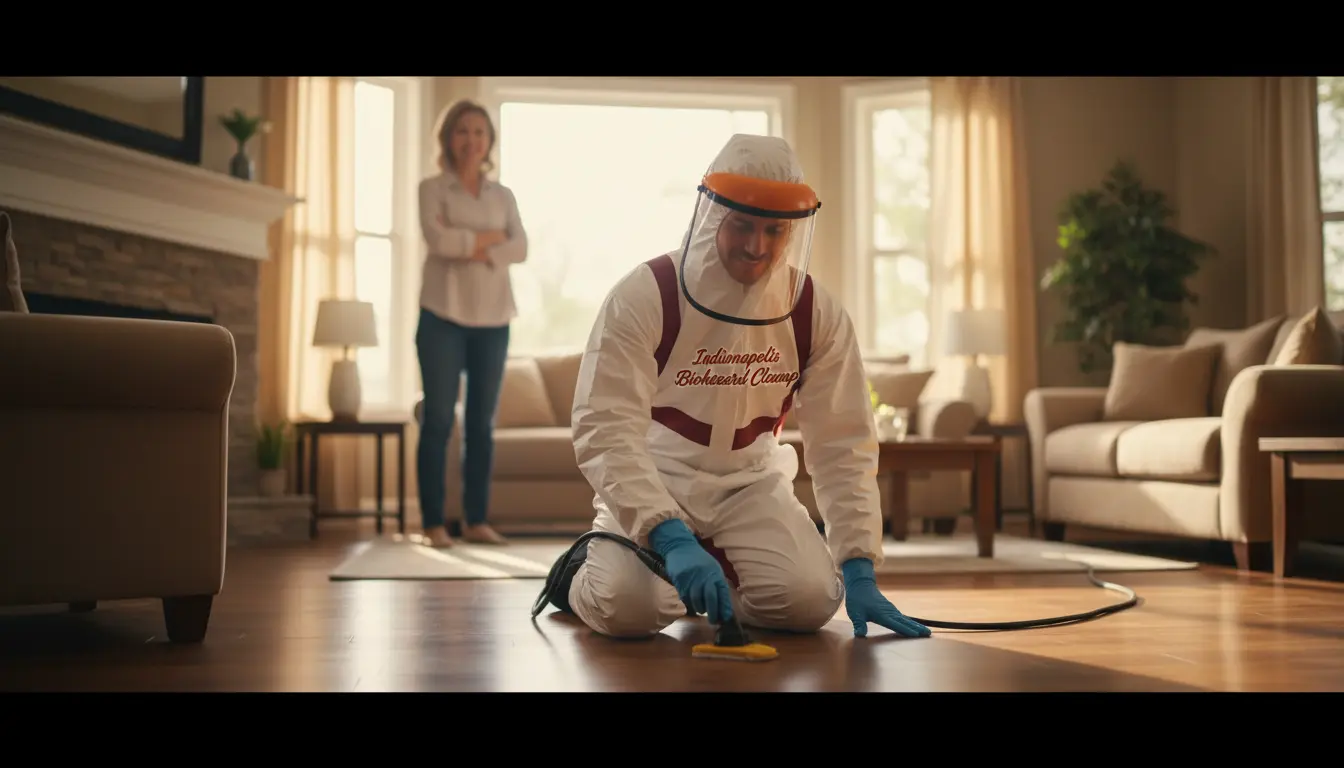
According to the CDC, unattended deaths in residential properties occur in the United States over 200,000 times annually, with Marion County, Indiana, recording a disproportionate number due to its population density and aging housing stock. In Indianapolis, where summer temperatures frequently exceed 90°F with high humidity, decomposition rates accelerate dramatically, turning a single unattended death into a structural contamination event within 48 hours. This reality means that property managers, landlords, and families in the 317 area code face a narrow window for professional intervention before biological seepage compromises sub-flooring, drywall, and HVAC systems beyond repair.
When comparing biohazard cleanup companies in Indianapolis, the difference between a certified remediation specialist and a general restoration firm is measured in regulatory compliance, pathogen elimination rates, and long-term property value retention. The wrong choice can lead to hidden health hazards, failed real estate transactions, or legal liability under Indiana’s landlord-tenant laws. For this reason, Indianapolis Biohazard Cleanup distinguishes itself not merely by the services offered, but by the technical rigor applied to every site restoration.
Indianapolis Biohazard Cleanup operates with IICRC-certified technicians, OSHA-compliant protocols, and a deep understanding of local building codes, ensuring that each remediation project meets the highest safety standards. Whether the call relates to a trauma scene, a hoarding situation, or an infectious disease decontamination, the company’s methodical approach protects everyone involved—from first responders to future occupants. This article delivers a detailed comparison of biohazard cleanup providers in Indianapolis, grounded in real operational criteria, so you can make an informed decision during what is often a stressful and time-sensitive moment.
The Technical Process of Professional Biohazard Remediation
Professional biohazard remediation follows a rigorous step-by-step workflow that begins long before any cleaning agent touches a surface. The first phase involves a comprehensive risk assessment, where the technician evaluates the scene for visible biological matter, hidden seepage, airborne contaminants, and structural damage. In Indianapolis, where many homes date back to the early 20th century, this assessment often reveals compromised sub-flooring or porous plaster that must be removed entirely rather than cleaned.
Once the assessment is complete, the crew establishes a containment zone using negative air machines equipped with HEPA filtration. This prevents airborne pathogens, including bloodborne pathogens like hepatitis B and C or HIV, from migrating to unaffected areas of the property. The containment protocol is not optional; it is mandated by OSHA’s Bloodborne Pathogens Standard (29 CFR 1910.1030) and the IICRC S540 standard for trauma and crime scene cleanup. Any company that skips this step, or uses standard janitorial equipment, fails to protect the property and its occupants.
Physical removal of biohazardous material comes next, using specialized tools such as enzyme treatments that break down organic compounds at the molecular level. These enzyme solutions are far more effective than household bleach, which can actually fix biological stains into porous surfaces and fails to eliminate pathogens embedded in wood or drywall. Following removal, the team applies hospital-grade disinfectants registered with the EPA for specific pathogens relevant to the scene. The final verification step involves adenosine triphosphate (ATP) fluorescence testing, which measures residual organic matter after cleaning. A reading below the IICRC threshold confirms that the surface is biologically clean—a standard that routine cleaning services cannot achieve.
Data Comparison: Professional Remediation vs. Standard Cleaning
To help you objectively evaluate the differences between professional biohazard remediation and a generic cleaning service, the table below summarizes critical performance metrics. This comparison is based on the IICRC S540 standard and real-world outcomes observed in Indianapolis properties.
| Feature/Metric | Professional Biohazard Remediation | Standard Residential Cleaning |
|---|---|---|
| Regulatory Compliance | Full adherence to OSHA, EPA, and IICRC S540 standards; includes proper disposal of regulated medical waste | No specialized regulatory oversight; cleaning chemicals not approved for pathogen elimination in biohazard contexts |
| Pathogen Elimination | Verified via ATP testing; 99.9% reduction of bacterial and viral load on non-porous surfaces | No testing performed; household cleaners may spread pathogens rather than eliminate them |
| Structural Assessment | Detailed inspection of sub-flooring, drywall, and HVAC; removal of all porous materials contaminated by biological seepage | Limited to surface cleaning; hidden contamination remains, leading to odor and health risks weeks later |
| Odor Remediation | Industrial-grade ozone or hydroxyl generators combined with enzyme treatments to neutralize volatile organic compounds | Fragrance masking only; does not address the source of decomposition odors |
| Insurance Documentation | Detailed reports with photos, ATP readings, and chain-of-custody documentation for waste disposal; accepted by major carriers | No formal documentation; claims may be denied due to insufficient evidence of proper remediation |
Expert Insights for Property Owners in Indianapolis
Diagnostic Tip 1: Detecting Hidden Biological Seepage
One of the most overlooked aspects of biohazard cleanup is the extent to which fluids migrate through porous materials. In a typical Indianapolis wood-frame home, blood or other bodily fluids can seep through carpet, padding, and sub-flooring, traveling laterally between floor joists. The only reliable way to detect this is through moisture meters and thermal imaging cameras, which reveal damp spots invisible to the naked eye. Without this diagnostic step, the biological material remains inside the structure, decomposing slowly and releasing foul odors for months or years.
Diagnostic Tip 2: Why Porous Materials Require Removal, Not Cleaning
Many property owners ask why drywall, carpet, or upholstery cannot simply be cleaned after a biohazard event. The answer lies in the porosity of these materials. Once biological fluids penetrate gypsum board or textile fibers, they create a reservoir for bacterial growth that no surface cleaning can reach. Even after chemical disinfection, the organic material trapped inside the porous matrix continues to decay, producing volatile organic compounds (VOCs) that affect indoor air quality. Professional remediation protocols always specify removal and replacement of porous materials within a defined perimeter around the contamination site.
Diagnostic Tip 3: The Importance of Negative Pressure for Cross-Contamination Prevention
Cross-contamination prevention is a non-negotiable element of biohazard remediation. By establishing a negative pressure zone, the remediation crew ensures that airborne particles—including pathogens attached to dust or droplets—are drawn out of the building and filtered rather than circulated to adjacent rooms. In Indianapolis, where older homes often have shared ductwork, the failure to seal off HVAC vents can spread contamination throughout the entire property, escalating remediation costs exponentially.
Common Mistakes Property Owners Make
A frequent error involves using household bleach on biological matter. Bleach is inactivated by organic material, meaning it cannot penetrate blood or tissue to kill pathogens underneath. It also creates toxic fumes when mixed with ammonia-based cleaners, a scenario that occurs when hasty attempts to clean a scene involve multiple products. Another mistake is waiting for odors to dissipate naturally before calling a professional. Decomposition odors are caused by volatile organic compounds that will not disappear on their own; they require chemical neutralization. Finally, allowing untrained personnel—such as family members or general contractors—into the site before remediation violates OSHA protocols and exposes those individuals to serious health risks, including respiratory infection and bloodborne disease transmission.
Pricing Structures for Biohazard Cleanup in Indianapolis
The cost of professional biohazard remediation varies based on the specific circumstances of each scene, but understanding the typical pricing components helps property owners budget appropriately. Most reputable companies, including Indianapolis Biohazard Cleanup, charge a site mobilization fee, which covers travel to the property, setup of containment equipment, and initial assessment. This fee ranges from $200 to $500 depending on the company’s distance from the site and the urgency of the call.
From there, remediation services are billed at hourly rates, usually between $125 and $250 per technician. A typical unattended death scene in a single room may require three to five technicians working four to eight hours, depending on the extent of contamination and the condition of the property. Additional costs include waste disposal fees, which follow Indiana Department of Environmental Management regulations for the transport and incineration of regulated medical waste.
Three primary factors influence the total price:
- Extent of structural material replacement: If biological material has seeped into sub-flooring, drywall, or insulation, the cost of removal, disposal, and replacement can add $2,000 to $10,000 or more. In older Indianapolis homes, the removal of lath-and-plaster walls is particularly labor-intensive.
- Total volume of biohazardous waste: The amount of contaminated material determines the number of specialized waste disposal bins and the transportation fees to an authorized incineration facility in Indiana. Higher volumes correlate directly with higher disposal costs.
- Necessity for specialized HVAC decontamination: If the property’s heating and cooling system has circulated contaminated air, duct cleaning or duct replacement may be required. This service typically adds $1,000 to $3,000 to the overall remediation price.
Safety Standards and Certifications
Adherence to established safety standards is not a matter of preference in biohazard remediation; it is a legal and ethical obligation. The IICRC S540 standard provides the framework for trauma and crime scene cleanup, dictating everything from containment procedures to final clearance testing. Companies that claim to be “cleaning up” without IICRC certification are operating outside that framework, exposing themselves and their clients to significant liability.
OSHA’s Bloodborne Pathogens Standard (29 CFR 1910.1030) requires that all employees with occupational exposure to blood or other potentially infectious materials receive annual training, be offered hepatitis B vaccination, and use appropriate personal protective equipment (PPE). In practice, this means that certified remediation technicians wear Tyvek suits, nitrile gloves, face shields, and respirators rated for biological hazards. Without this equipment, the risk of occupational exposure is high. Indianapolis Biohazard Cleanup complies fully with these standards and ensures that every technician undergoes annual refresher training.
The safe disposal of biohazardous waste is another critical component. In Indiana, regulated medical waste must be placed in rigid, leak-proof containers, labeled with the international biohazard symbol, and transported by a licensed hauler to a permitted facility. Companies that dispose of such waste in standard trash violate state law and risk fines or criminal charges. By following licensed disposal pathways, professional remediation services protect communities, sanitation workers, and the environment.
FAQ: Unattended Death Remediation in Indianapolis
How long does it take to fully remediate an unattended death scene?
The duration of remediation depends on the size of the affected area, the degree of decomposition, and the structural materials involved. For a single room in an average Indianapolis home, professional crews typically complete the process in two to three days. This includes initial assessment and containment (one day), physical removal and chemical disinfection (second day), and final ATP testing followed by structural restoration (third day). More severe cases, especially those involving advanced decomposition or contamination of HVAC systems, may require four to six days.
Will my insurance cover biohazard remediation after an unattended death?
Many homeowner’s insurance policies cover remediation of “sudden and accidental” events, but coverage for unattended death varies by provider and policy language. It is essential to review your policy and speak directly with your claims adjuster. Indianapolis Biohazard Cleanup provides detailed documentation, including photos, ATP readings, and waste disposal certificates, which support insurance claims. Companies that lack this documentation may cause claims to be denied, leaving the property owner to pay out of pocket.
What happens if biohazard contamination is not addressed immediately?
Delaying remediation allows biological material to penetrate deeper into porous surfaces, leading to irreversible structural damage. Within 72 hours in warm, humid conditions, decomposition fluids stain sub-flooring and create ideal conditions for mold growth. Odors become embedded in drywall and fabric, requiring much more extensive removal and replacement. Additionally, pathogens remain active on surfaces for days or weeks, posing infection risks to anyone who enters the property without proper PPE. Early intervention reduces cost, timeline, and health hazards.
Can I stay in my home during the remediation process?
No. For the safety of the occupants, the property must be vacated during active remediation. The containment zone creates negative pressure that filters airborne contaminants, but this process also generates noise and requires unrestricted access to the affected area. After the team completes final ATP testing and restores the space, it is safe for reoccupancy. Indianapolis Biohazard Cleanup can coordinate temporary relocation if needed, making the process as stress-free as possible for families.
How do I verify that a company follows IICRC S540 standards?
Ask the company directly for their IICRC certification number and verify it through the IICRC website. Additionally, request a copy of their written remediation protocol and the ATP testing results from a previous project. Reputable companies, including Indianapolis Biohazard Cleanup, publish their credentials and case studies publicly. If a company cannot produce certification or documentation, it is a clear warning sign.
Professional Biohazard Remediation in Indianapolis
Selecting the right biohazard cleanup provider in Indianapolis requires more than a quick online search; it demands evaluation of technical expertise, regulatory compliance, and local operational knowledge. Indianapolis Biohazard Cleanup stands apart by combining IICRC-certified procedures, OSHA-mandated safety protocols, and a compassionate approach to site restoration. Every project is handled with discretion and precision, from the initial assessment through final clearance. When the moment comes to restore a property affected by a traumatic event, trust the team with the proven track record and the technical capability to make your space safe again.