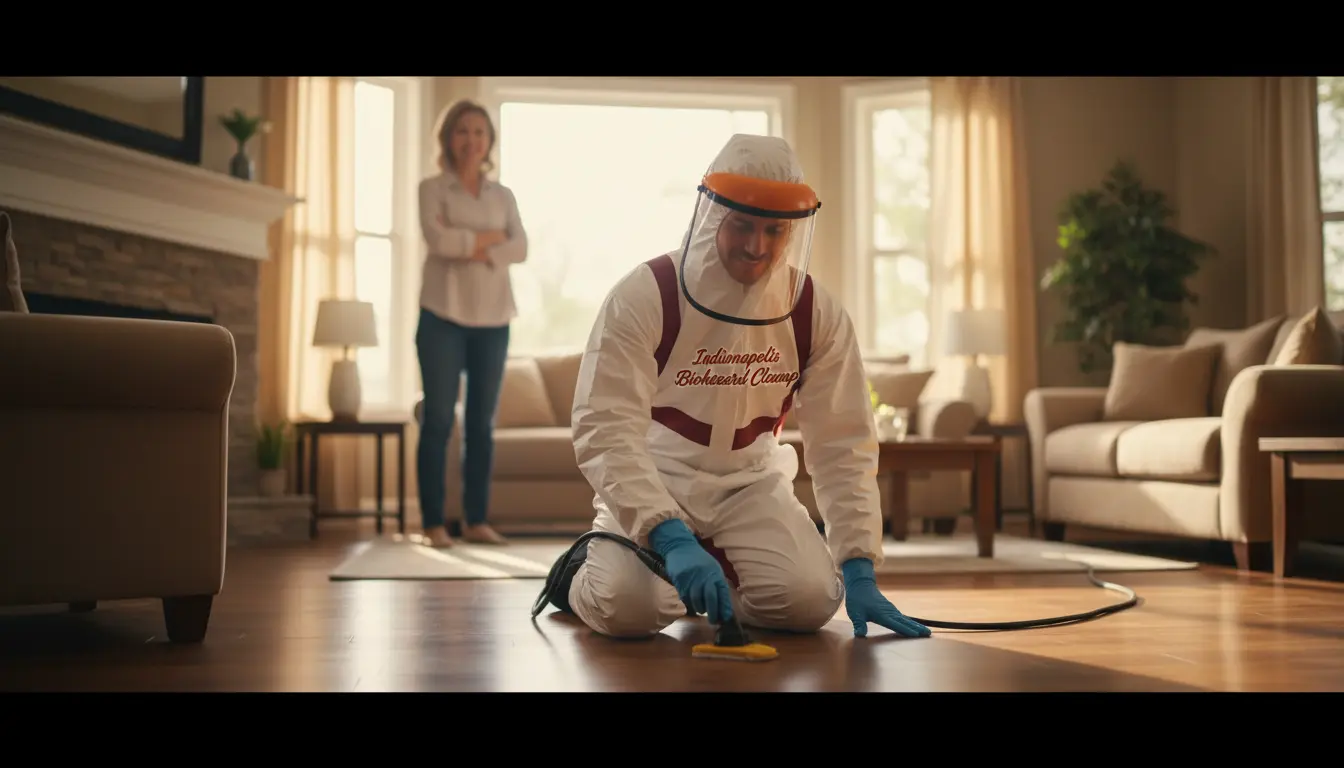
According to the National Association of Unsolved Crime Investigators, roughly 150,000 unattended deaths occur in the United States every year, with Indiana averaging over 2,000 such cases annually. When a death goes undiscovered for days or weeks, the biological breakdown releases potent pathogens and corrosive fluids that seep into flooring, drywall, and subflooring. In Indianapolis, where summer humidity regularly hits 75% and winter temperatures dip below 20°F, the rate of decomposition can accelerate unpredictably, turning a tragic scene into a structural and health crisis within hours. Professional biohazard remediation is not merely a cleaning service—it is a forensic restoration process governed by strict safety protocols.
Indianapolis property owners often underestimate the depth of contamination an unattended death leaves behind. Bloodborne pathogens, such as hepatitis B, hepatitis C, and HIV, can remain viable outside the body for days, especially in porous materials like carpet and wood. Beyond the visible biohazard, airborne bacteria and volatile organic compounds (VOCs) from decomposition can infiltrate HVAC systems, creating a long-term health risk for future occupants. That is why the team at Indianapolis Biohazard Cleanup employs a systematic, science-based approach to restore affected properties to a safe, habitable condition—while respecting the sensitivity of the situation.
Step-by-Step Technical Remediation Process
Every biohazard restoration project in Indianapolis follows a rigorous workflow that aligns with OSHA’s Bloodborne Pathogens Standard (29 CFR 1910.1030) and the IICRC S540 standard for trauma and crime scene cleanup. The process begins with a thorough risk assessment. Technicians survey the entire property, using moisture meters and thermal imaging to detect fluid migration behind walls and under flooring. In older Indianapolis homes, many built before 1950, subflooring often consists of softwood planks that absorb biological fluids like a sponge, requiring a more extensive removal strategy.
Once the scope is documented, the team establishes containment. Industrial-grade negative air machines (NAMs) with HEPA filtration create a pressure differential that prevents airborne contaminants from spreading to unaffected areas. All technicians don full personal protective equipment (PPE): Tyvek suits, N95 or P100 respirators, face shields, and chemical-resistant gloves. The next phase involves the physical removal of all saturated porous materials—carpet, padding, drywall, and insulation—which are double-bagged and labeled for disposal at a licensed biomedical waste facility. Non-porous surfaces are then treated with EPA-registered hospital-grade disinfectants and enzyme-based cleaners that break down organic matter at the molecular level.
Professional Remediation vs. Standard Janitorial Cleaning
The table below highlights the critical differences between professional biohazard remediation and typical residential cleaning services.
| Feature/Metric | Professional Biohazard Remediation | Standard Residential Cleaning |
|---|---|---|
| Regulatory Compliance | OSHA, EPA, IICRC S540, DOT waste transport regulations | None; no specialized training required |
| Pathogen Elimination | EPA-registered hospital-grade disinfectants; ATP testing verifies >99.99% reduction | Household cleaners (e.g., bleach) that are ineffective on organic residues |
| Structural Assessment | Moisture meters, thermal imaging, subfloor core sampling | Visual inspection only; hidden seepage missed |
| Waste Disposal | Biomedical waste manifest and incineration | Normal trash; illegal and dangerous |
| Odor Mitigation | Hydroxyl generators and structural fogging | Air fresheners—mask only |
Source: IICRC S540 Trauma and Crime Scene Cleanup Standard
Expert Insights: Advanced Diagnostic Tips
Professional biohazard remediation specialists rely on diagnostic techniques that go far beyond what the eye can see. One critical skill is detecting hidden biological seepage. When a body decomposes on a carpet, fluids may wick upward beneath baseboards and into the wall cavity. Technicians use a combination of thermal imaging and a specialized enzyme swab test to identify these hidden deposits before they cause irreversible damage or attract pests.
Another advanced principle is the disposal of porous materials versus cleaning. Many property owners assume that bleach can salvage a bloodstained hardwood floor. In reality, blood and bodily fluids penetrate the wood’s grain and cannot be fully removed. The IICRC S540 standard mandates that any porous material contaminated with Category 3 biohazard (blood, body fluids) must be removed and replaced. Attempting to clean such surfaces only increases the risk of pathogen transmission and future odor issues.
A third key practice is the use of negative pressure containment to prevent cross-contamination. In a typical Indianapolis home, the HVAC system circulates air throughout the entire structure. Without sealing off the affected room and exhausting HEPA-filtered air to the outside, bloodborne pathogens and decomposition gases can be distributed to every room within minutes. Professional teams always establish a containment zone before beginning any removal work.
Common Mistakes Property Owners Make
One of the most frequent errors is using household bleach on biological matter. Bleach is inactivated by organic material; it cannot penetrate dried blood or tissue. Worse, it produces toxic fumes when mixed with ammonia-based cleaners often used in the same space. The only effective method is a two-step process: first apply an enzymatic cleaner to break down organic residue, then follow with an EPA-registered disinfectant.
Waiting for the odor to dissipate naturally is another costly mistake. Decomposition odors are caused by volatile organic compounds (VOCs) such as putrescine and cadaverine, which can linger for months and even adsorb into furniture upholstery and wall paint. Passive airing out does not eliminate these compounds; only hydroxyl generators or ozone machines can neutralize them at the molecular level. Finally, allowing untrained personnel—even family members—into the site before remediation can expose them to life-threatening pathogens and contaminate additional areas. The long-term health risks include hepatitis infection and chronic respiratory issues from mold spores that thrive on biological fluids.
Pricing Factors for Biohazard Remediation in Indianapolis
- Site Mobilization Fee: A standard fee covering travel, equipment setup, and initial assessment. In Indianapolis, this typically ranges from $350 to $750 depending on the distance from the service base and the complexity of the site.
- Hourly Remediation Rate: Most professional companies charge between $150 and $300 per hour per technician. A typical unattended death cleanup in a single-bedroom apartment may take 6–12 hours, while a multi-room scene in a larger historic home can require 20+ hours.
- Specialized Disposal Costs: Biomedical waste must be handled separately from regular garbage. Disposal fees per pound vary, but a standard biohazard waste drum (30 gallons) can cost $100–$200 to incinerate. Large jobs may fill several drums.
Three primary factors influence total cost. First, the extent of structural material replacement: if fluids have penetrated subflooring, drywall, or insulation, removal and replacement add significant labor and material costs. Second, the volume of biohazardous waste: a larger scene requires more drums, more PPE, and longer containment. Third, the need for specialized HVAC decontamination: if the home’s ductwork is contaminated, technicians must seal vents and use hydroxyl generators or duct cleaning equipment, which can add $500–$2,000 to the project.
Safety and Standards: Certifications and Protocols
Indianapolis Biohazard Cleanup adheres to the highest industry standards. Every technician holds current certifications under the IICRC S540 and complies with OSHA’s Bloodborne Pathogens Standard (29 CFR 1910.1030). This regulation mandates annual training, the use of PPE, and a detailed exposure control plan. In practice, this means that the company maintains a strict protocol for handwashing, sharps disposal, and decontamination of tools and equipment after every job.
Additionally, all biohazard waste is transported and disposed of in accordance with Indiana Department of Environmental Management (IDEM) and DOT regulations. Licensed biomedical waste haulers incinerate the material at approved facilities, ensuring that no infectious waste enters the municipal landfill. For property owners, this compliance provides peace of mind that the site is not only visually clean but also medically safe for reoccupation. Failure to follow these standards can result in fines, legal liability, and ongoing health threats.
Frequently Asked Questions About Unattended Death Remediation
What is the first thing I should do if I discover an unattended death on my property?
Do not enter the area or touch anything. Immediately contact local law enforcement to secure the scene. Once the coroner has released the site, call a certified biohazard remediation company. Do not attempt any cleaning yourself, even with bleach—it will not render the area safe. The longer the scene remains open, the greater the risk of contamination spreading through the home’s HVAC system or being tracked to other rooms on shoes or clothing.
How long does the remediation process take for a typical Indianapolis home?
The duration depends on the size of the affected area and the degree of fluid migration. For a single room with minimal seepage, remediation may take one to two days. If the death went undiscovered for a week or more, fluids can saturate flooring, baseboards, and subflooring, requiring full removal and replacement. In such cases, the process can extend to three to five days, including structural drying and ATP testing to verify cleanliness. Seasonal factors also matter: in Indianapolis’ humid summers, drying times are longer, and mold growth can begin within 24–48 hours if moisture is not fully removed.
Is it safe to stay in the home during the cleanup?
Generally, no. The containment zone created by negative air machines and plastic barriers isolates the work area, but the risk of cross-contamination is too high for occupants to remain nearby. The strong disinfectants and ozone generators used during odor removal can also be harmful to humans and pets. Most remediation companies recommend vacating the property until the final ATP test confirms that all surfaces are safe. In some cases, only a single room is affected, and the rest of the home can be occupied as long as the containment is intact and HVAC is off.
Will my homeowner’s insurance cover unattended death cleanup?
Many standard homeowner policies include coverage for “sudden and accidental” damage, but unattended death is often classified as a biohazard event, which may be covered under a separate rider. It is essential to contact your insurance provider immediately and request a copy of your policy. Professional remediation companies can provide detailed documentation and chain-of-custody forms that help support your claim. In Indianapolis, the average claim payout for biohazard remediation ranges from $5,000 to $30,000 depending on the extent of structural damage. Working with a certified company like Indianapolis Biohazard Cleanup ensures that your documentation meets insurance requirements.
Professional Biohazard Remediation in Indianapolis
Restoring a property after an unattended death requires technical expertise, compassion, and a commitment to safety. The team at Indianapolis Biohazard Cleanup brings years of experience handling the most challenging scenes in Marion County, from historic homes with delicate subflooring to modern apartments with complex HVAC systems. Every job is completed with discretion, thorough documentation, and a full guarantee that the site meets the IICRC S540 standard for cleanliness and safety.
If you are dealing with the aftermath of a traumatic event, do not risk your health or your property’s value by attempting cleanup on your own. Trust the professionals who understand the science behind biohazard remediation and the unique challenges of the Indianapolis climate. Contact Indianapolis Biohazard Cleanup today for a confidential assessment and a detailed restoration plan.