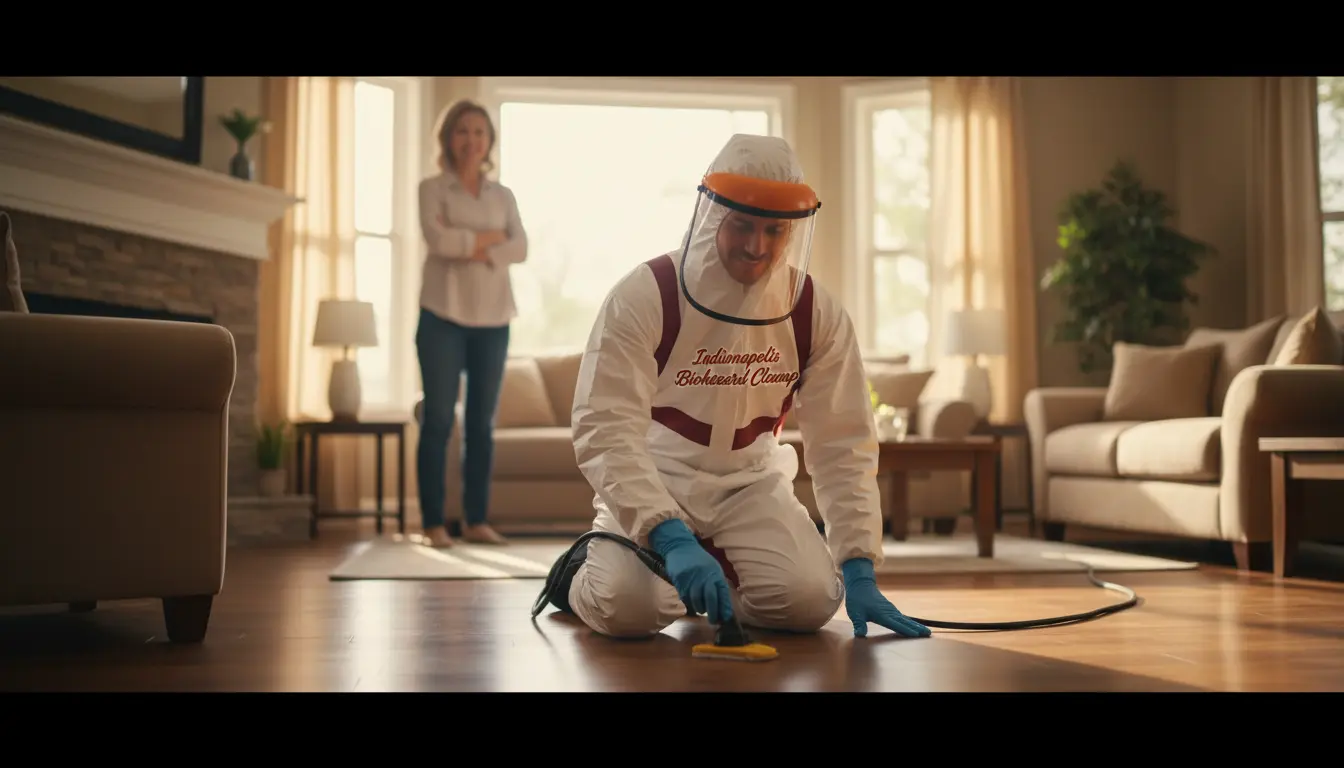
Indianapolis property owners often underestimate the complexity of biohazard remediation. The city’s seasonal extremes—freezing winters that delay discovery and humid summers that speed up microbial growth—create unique challenges. Professional biohazard cleanup for apartments, homes, and commercial properties is not just about cleaning; it is about restoring a space to a safe, habitable condition through forensic restoration and structural decontamination. At Indianapolis Biohazard Cleanup, we combine advanced techniques with local knowledge to deliver results that meet or exceed industry standards.
Technical Process: A Step-by-Step Breakdown
Every remediation project begins with a thorough risk assessment. Our team evaluates the site for bloodborne pathogens, airborne contaminants, and structural damage. Using OSHA’s Bloodborne Pathogens Standard (29 CFR 1910.1030) as a baseline, we establish a containment zone with negative air pressure to prevent cross-contamination. This is critical in older Indianapolis homes with shared HVAC systems, where airborne pathogens can travel between units.
Personal protective equipment (PPE) is donned according to protocol: Tyvek suits, respiratory protection with HEPA filters, and double-gloved hands. The next phase involves removing all visible biohazardous material—blood, tissue, bodily fluids—using specialized enzyme treatments that break down proteins at a molecular level. After physical removal, we apply EPA-registered hospital-grade disinfectants with proven viral inactivation rates. The final step is adenosine triphosphate (ATP) fluorescence testing, which measures residual organic matter. Only when ATP readings fall below the threshold for safe occupancy do we proceed to structural encapsulation.
Local variables like the Midwest’s humidity significantly influence the process. High moisture levels accelerate decomposition and deepen odor migration into porous materials like drywall and subflooring. In contrast, winter conditions create frozen biohazards that require thawing before removal. Our team adjusts dwell times for disinfectants and replaces more materials during humid months to ensure complete microbial remediation.
Professional Remediation vs. Standard Residential Cleaning
Property owners often ask why they cannot simply hire a cleaning crew. The table below highlights the critical differences between professional biohazard remediation and standard janitorial services.
| Feature / Metric | Professional Biohazard Remediation | Standard Residential Cleaning |
|---|---|---|
| Regulatory Compliance | OSHA, EPA, IICRC S540 standards | None |
| Pathogen Elimination | EPA-registered disinfectants, ATP verification | Household bleach, visual inspection |
| Structural Assessment | Full inspection for hidden seepage, replacement of porous materials | Surface cleaning only |
| Odor Control | Industrial-grade ozone treatment, negative air machines | Air fresheners or ventilation |
| Waste Disposal | Certified biohazard waste transport and incineration | Regular trash (illegal) |
Expert Insights
Three Advanced Diagnostic Tips
First, detecting hidden biological seepage requires thermal imaging and moisture meters. In Indianapolis, historic homes often have crawl spaces and dirt basements where fluids can pool undetected. We use these tools to locate saturation before it causes structural rot or mold. Second, porous materials such as carpet, padding, upholstery, and unfinished wood must be removed and replaced—not cleaned. Blood and bodily fluids penetrate deep into fibers, and no amount of sanitization can guarantee safety. Third, negative pressure is non-negotiable. Without it, airborne pathogens spread to adjacent rooms, creating a wide contamination zone that doubles the scope of work.
Common Mistakes Property Owners Make
One frequent error is using household bleach on biological matter. Bleach denatures proteins but does not eliminate all pathogens, and it can actually fix stains, making them harder to remove. Another mistake is waiting for odors to dissipate naturally. Decomposition gases are not only unpleasant but also toxic; they indicate ongoing microbial activity that can cause chronic respiratory issues. Finally, allowing untrained personnel—friends, family, or general contractors—into the site exposes them to bloodborne pathogens without proper protection. This can lead to long-term health risks and legal liability for the property owner.
Pricing for Biohazard Cleanup Services
Pricing varies based on the severity and location of the incident. Below are typical cost components for biohazard cleanup for apartments, homes, and commercial properties:
- Site mobilization fee: $500–$1,000, covering travel, initial assessment, and setup of containment equipment.
- Hourly remediation rate: $150–$250 per technician, depending on the complexity of the scene and the number of technicians required.
- Material disposal: $200–$500 per biohazard waste bag, which includes transport to an authorized incineration facility.
- Structural replacement: $1,000–$5,000 or more for removing and replacing contaminated drywall, flooring, and subflooring.
Three key factors influence the final cost: the extent of structural material replacement needed (e.g., entire rooms vs. a single area), the total volume of biohazardous waste (which directly affects disposal fees), and the necessity for specialized HVAC decontamination if the system has been contaminated. In Indianapolis, we also factor in seasonal access challenges—winter ice can delay equipment setup, while spring rains may require additional drying time.
Safety & Standards
Adherence to established safety standards is the backbone of professional biohazard cleanup. Our team is certified under the IICRC S540 Standard for Trauma and Crime Scene Cleanup, which governs every phase from initial assessment to final clearance. We also strictly follow OSHA’s Bloodborne Pathogens Standard (29 CFR 1910.1030), which mandates proper PPE, vaccination protocols, and exposure control plans. Additionally, we use only authorized waste management services that comply with EPA regulations for the transport and disposal of regulated medical waste.
These standards are not bureaucratic paperwork—they have real-world consequences. For property owners, compliance means that the site is safe for reoccupation without risk of hepatitis, HIV, or other communicable diseases. For future tenants, it provides peace of mind that the property has been restored to a hygienic state. In Indianapolis, where multi-unit apartments and historic homes share common ventilation systems, failing to follow these protocols can lead to widespread contamination and costly legal battles.
Frequently Asked Questions About Unattended Death Remediation
How soon after an unattended death should cleanup begin?
Immediately after law enforcement releases the scene. The longer biological materials remain, the deeper they penetrate into porous surfaces. In Indianapolis’s summer heat, decomposition can saturate subflooring within 48 hours, requiring extensive replacement. Delaying cleanup also allows odors to migrate into adjacent units, increasing the scope of work.
Can I clean up after an unattended death myself?
No. Untrained individuals are at high risk of exposure to bloodborne pathogens such as hepatitis B, hepatitis C, and HIV. Furthermore, household cleaners are ineffective against these pathogens. Professional remediation uses EPA-registered disinfectants and ATP testing to verify elimination. In Indiana, improper disposal of biohazard waste is also a violation of state environmental regulations.
What happens to the deceased’s personal belongings?
Items that are contaminated with blood or bodily fluids are considered biohazardous waste and must be incinerated. Non-porous items like glass or metal can sometimes be decontaminated, but each item is evaluated individually. We document the process for insurance purposes and work with the family to recover any salvageable mementos, following strict cross-contamination prevention protocols.
How long does the remediation process take?
For a standard single-room incident, remediation typically takes one to two days. Larger scenes involving multiple rooms or entire floors can take three to five days. The timeline depends on the volume of biological waste, the extent of structural damage, and the need for HVAC decontamination. We always provide a clear timeline before beginning work.
Professional Biohazard Remediation in Indianapolis
When an unattended death, trauma, or biohazard incident occurs in an apartment, home, or commercial property, the path to restoration requires expertise, empathy, and strict adherence to industry standards. Indianapolis Biohazard Cleanup brings decades of combined experience, IICRC certification, and a deep understanding of local conditions—from the humidity of an Indiana summer to the challenges of winter ice on site access. We treat every property with the same level of care and precision, ensuring that the space is not only clean but structurally safe for future use.
Our team handles all aspects of biohazard cleanup for apartments, homes, and commercial properties, including bloodborne pathogen removal, odor control, and structural decontamination. We work discreetly and respectfully with families, property managers, and insurance companies. For more information on related services, explore our blood cleanup and odor removal offerings. If you need rapid, professional assistance in the Indianapolis area, contact us today. We are available 24/7 to respond to emergencies and restore your property to a safe, habitable state.