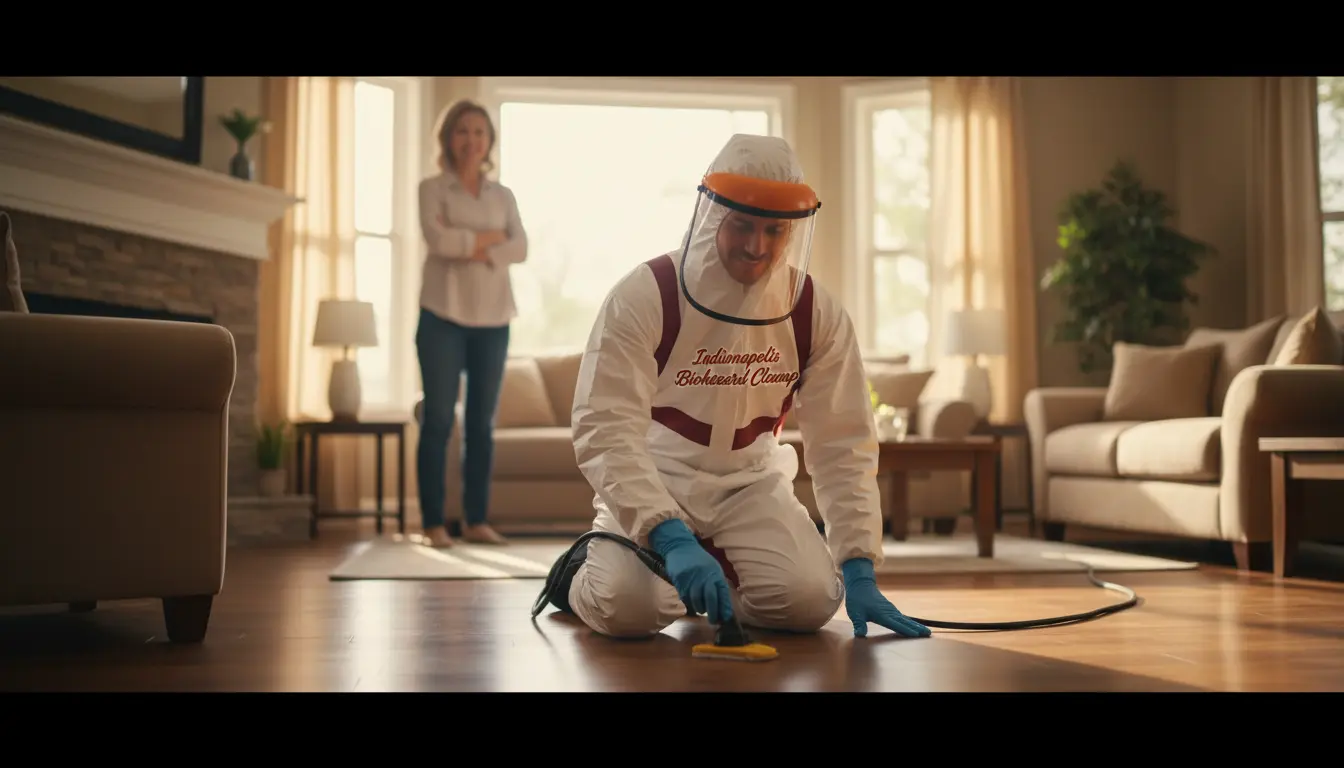
Stories like this play out across Downtown Indianapolis more often than most property owners realize. Unattended deaths, traumatic incidents, and hoarding environments with biological hazards demand a response that goes far beyond what mops and bleach can deliver. For condominium associations, property managers, and family representatives in the Mile Square, the stakes involve not only immediate safety but long-term property integrity and legal liability. Engaging emergency biohazard cleanup services near Downtown Indianapolis is not a discretionary expense — it is a regulatory and ethical obligation that protects everyone who occupies or visits the affected space.
Indianapolis Biohazard Cleanup provides the region’s most technically rigorous and discreet remediation services. Our teams hold current IICRC S540 certifications, operate under strict OSHA bloodborne pathogens protocols, and bring the specialized equipment necessary to address the unique challenges of Indianapolis’s older residential and commercial structures. When you need emergency biohazard cleanup services near Downtown Indianapolis, we deliver a science-based response that restores safety and peace of mind.
The Technical Workflow for Emergency Biohazard Remediation
Professional biohazard remediation follows a structured, sequential protocol that prioritizes worker safety, containment, and complete pathogen elimination. Every project begins with a site-specific risk assessment that evaluates the type of biological material present, the duration of exposure, environmental conditions such as humidity and temperature, and the construction characteristics of the building. In Downtown Indianapolis, where many residential buildings date from the early twentieth century, this assessment must account for plaster-and-lath walls, hardwood subfloors, and shared ventilation systems that create pathways for contamination to travel between units.
Once the assessment is complete, the next step involves establishing a containment zone using heavy-gauge polyethylene sheeting and zipper entry systems. Inside this zone, our technicians don full personal protective equipment — Tyvek suits, N100 respirators, face shields, and chemical-resistant boots — to eliminate any risk of exposure to bloodborne pathogens such as hepatitis B, hepatitis C, and HIV. We deploy negative air machines fitted with HEPA filters to create directional airflow that pulls airborne contaminants out of the work area and prevents cross-contamination into adjacent spaces.
Physical removal of biohazardous materials is the most labor-intensive phase. Our technicians use single-use, hospital-grade tools to lift and dispose of saturated carpet, padding, drywall, and insulation. In cases involving decomposition fluids that have penetrated porous subflooring, we often remove and replace entire sections of plywood or hardwood to ensure that no biological residue remains embedded in the structure. This step is critical because organic fluids break down into volatile organic compounds that continue to emit odors and harbor pathogens long after surface cleaning.
After gross removal, we apply EPA-registered hospital-grade disinfectants with demonstrated efficacy against a broad spectrum of pathogens. These chemicals are left to dwell for the manufacturer-specified contact time — typically ten to fifteen minutes — to ensure viral inactivation and bacterial kill rates exceeding 99.99 percent. We follow this with adenosine triphosphate (ATP) fluorescence testing, a verification method that measures residual organic matter on surfaces. Any reading above the established threshold triggers re-cleaning and retesting until the surface meets our strict standard for biological cleanliness.
Professional Remediation vs. Standard Janitorial Cleaning: A Comparison
Property owners sometimes underestimate the difference between a professional biohazard remediation crew and a general cleaning service. The table below highlights the critical distinctions based on the IICRC S540 standard and real-world outcomes observed in Indianapolis projects.
| Feature/Metric | Professional Biohazard Remediation | Standard Residential Cleaning |
|---|---|---|
| Regulatory Compliance | OSHA 29 CFR 1910.1030, EPA FIFRA, DOT hazardous materials transport, IICRC S540 | No specific biohazard regulatory adherence |
| Pathogen Elimination | EPA-registered hospital-grade disinfectants with verified contact times, ATP testing for verification | Household bleach or general-purpose cleaners without efficacy data against bloodborne pathogens |
| Structural Assessment | Engineered containment, moisture mapping, subfloor evaluation, HVAC inspection for hidden contamination | Surface-level visual inspection only |
| Waste Disposal | Licensed medical waste transporter, incineration or autoclaving, chain-of-custody documentation | Standard trash pickup, illegal and dangerous |
| Odor Remediation | Negative air scrubbing, enzyme neutralization, thermal fogging, ozone treatment as needed | Air fresheners or open windows, temporary masking |
Expert Diagnostic Insights from a Certified Remediation Specialist
Detecting Hidden Biological Seepage Behind Walls
Visual inspection alone is insufficient when decomposition fluids have migrated into wall cavities. In older Indianapolis homes with plaster-and-lath construction, liquids can travel laterally along wooden laths before pooling in hidden pockets. Our team uses thermal imaging cameras and moisture meters to detect temperature differentials and elevated moisture levels behind surfaces that appear dry to the touch. In a recent project near Lockerbie Square, we identified a saturated area behind a seemingly intact wall that contained over three gallons of biological fluid — a finding that would have been missed entirely by a conventional cleaning crew and would have led to persistent odor and eventual structural rot.
Why Porous Materials Require Replacement, Not Cleaning
A common misconception is that thorough scrubbing can restore porous materials like carpet padding, upholstery, or unfinished wood to a safe condition. This is biologically impossible. Porous materials trap organic matter within their internal structure, where liquid disinfectants cannot reach. Even after repeated cleaning, the embedded material continues to decompose, releasing volatile organic compounds and providing a nutrient source for mold and bacteria. The IICRC S540 standard is unambiguous: any porous material that has been contaminated with blood or other potentially infectious materials must be removed and disposed of as regulated medical waste. In Downtown Indianapolis, where many units feature original hardwood floors, this often means selective removal and replacement of affected boards rather than sanding and refinishing, which would only drive contaminants deeper into the wood grain.
The Importance of Negative Pressure to Prevent Cross-Contamination
In multi-unit buildings common in the downtown core, failure to establish negative pressure during remediation can spread pathogens through shared air spaces. Negative pressure machines exhaust air through HEPA filters to the outside, creating a lower pressure inside the containment zone compared to the surrounding areas. This ensures that any airborne particles generated during removal — including fungal spores, viral particles, and dust contaminated with bloodborne pathogens — are captured and filtered rather than drifting into hallways, adjacent apartments, or common areas. Skipping this step not only violates OSHA standards but also exposes unsuspecting neighbors and building staff to serious health risks. Every project we undertake in Indianapolis includes continuous pressure monitoring with audible alarms to verify containment integrity.
Common Mistakes Property Owners Make
One of the most dangerous errors is applying household bleach to biological matter. While bleach is an effective disinfectant on clean, non-porous surfaces, it is rapidly inactivated by organic material such as blood or tissue. Applying bleach to a heavily contaminated area can actually protect pathogens by failing to penetrate the organic load, while simultaneously releasing toxic chlorine gas that poses an inhalation hazard. We have responded to multiple sites in Indianapolis where well-meaning family members attempted to clean a scene themselves before calling professionals, only to create a more hazardous environment that required additional decontamination time and expense.
Another frequent mistake is waiting for odors to dissipate naturally. The smell of decomposition is caused by volatile organic compounds that continue to be released as biological material breaks down. These compounds do not disappear on their own — they migrate into porous surfaces, HVAC systems, and neighboring units. By the time an odor is noticeable to a visitor or prospective tenant, the contamination has already spread significantly. Early intervention by a professional remediation team can contain the damage to a single room; delay often escalates the scope to an entire floor or building.
Pricing for Emergency Biohazard Cleanup Services
- Standard site mobilization fee for emergency response within Downtown Indianapolis: $350 to $650, which covers after-hours dispatch, initial risk assessment, and setup of containment and negative pressure systems.
- Hourly remediation rates typically range from $185 to $295 per technician, with a minimum of two technicians required for any biohazard scene to ensure safety and efficiency. Most residential unattended death cleanups require eight to sixteen hours of on-site labor.
- Specialized disposal of biohazardous waste is billed by weight and volume, with costs ranging from $75 to $200 per disposal container. All waste is transported to a licensed medical waste incineration facility in compliance with Indiana Department of Environmental Management regulations.
Several factors influence the final cost of a project. The extent of structural material replacement is often the largest variable — removing and replacing saturated subflooring, drywall, and insulation can add several thousand dollars to the total. The total volume of biohazardous waste generated by the scene directly affects disposal fees, which are regulated by weight and hazard classification. The necessity for specialized HVAC decontamination, which involves cleaning and disinfecting ductwork and replacing filters, adds additional labor and material costs. Every estimate we provide is based on a thorough on-site assessment and includes a detailed line-item breakdown so property owners understand exactly what their investment covers.
Safety Standards and Certifications That Protect Everyone Involved
Operating without proper certification in the biohazard remediation industry is not only irresponsible but illegal under multiple federal and state regulations. Our technicians complete annual training under OSHA’s Bloodborne Pathogens Standard (29 CFR 1910.1030), which covers proper handling of potentially infectious materials, use of personal protective equipment, emergency response procedures, and post-exposure evaluation and follow-up. We maintain current IICRC S540 certifications for trauma and crime scene cleanup, which require demonstrated competency in technical remediation practices, regulatory compliance, and ethical conduct.
Beyond individual certifications, our company follows written exposure control plans, maintains hepatitis B vaccination records for all at-risk employees, and contracts exclusively with authorized medical waste transporters who hold valid permits from the Indiana Department of Environmental Management. These practices are not bureaucratic formalities — they are the operational backbone that ensures every technician returns home safely and every property is restored to a condition that poses no health risk to future occupants. For property owners in Indianapolis, verifying that a cleanup company holds these credentials is the single most important step in selecting a service provider.
Frequently Asked Questions About Unattended Death Remediation
How quickly should I call for biohazard cleanup after an unattended death is discovered?
Immediately. Time is the single most critical factor in determining the scope and cost of remediation. Biological fluids begin to break down and migrate into porous surfaces within hours of death, and the rate of decomposition accelerates dramatically in warm or humid conditions — a reality that Indianapolis residents face during our humid summer months. Every hour of delay allows contamination to spread deeper into subflooring, drywall, and HVAC systems, turning a contained scene into a whole-structure remediation. Calling emergency biohazard cleanup services near Downtown Indianapolis the moment a death is discovered can reduce cleanup time by days and save thousands of dollars in structural material replacement.
Can I stay in my home or apartment during the remediation process?
No. The containment zone, negative pressure equipment, and chemical disinfectants used during professional remediation create an environment that is unsafe for untrained occupants. Additionally, the psychological impact of remaining in a space where a traumatic event occurred can be significant. We recommend that property owners and tenants vacate the affected unit until we have completed final clearance testing and verified that all biological hazards have been eliminated. In multi-unit buildings, we coordinate with property managers to ensure that adjacent units are not affected and that common areas remain safe for use.
Will my homeowner’s insurance or renters insurance cover the cost of biohazard cleanup?
Many standard homeowner’s and renters insurance policies cover the cost of biohazard remediation, particularly when the cleanup is related to an unattended death, crime scene, or accident. However, coverage limits, deductibles, and exclusions vary widely by policy and carrier. We strongly recommend contacting your insurance provider as soon as possible to confirm coverage and initiate a claim. Our team provides detailed documentation, including photographs, chain-of-custody records, and a comprehensive remediation report, that supports insurance claims and helps expedite reimbursement.
What happens to personal belongings that are contaminated?
Any item that has come into direct contact with blood or other potentially infectious materials must be treated as regulated medical waste and disposed of through incineration. This includes clothing, bedding, upholstered furniture, carpeting, and any porous items that cannot be effectively disinfected. Items that are not directly contaminated but are located within the affected area can often be cleaned and returned, provided they are non-porous and can withstand hospital-grade disinfection. Our technicians carefully sort and document all items on-site, and we work closely with family representatives to ensure that valuable or sentimental possessions are handled with respect and, where possible, preserved.
Professional Biohazard Remediation in Indianapolis: Restoring Safety and Dignity
Responding to a scene involving unattended death, trauma, or hazardous biological material requires a combination of technical expertise, regulatory knowledge, and human compassion. The work is physically demanding, emotionally challenging, and legally complex — yet it is essential for protecting the health of everyone who will later occupy, visit, or manage the affected property. Property owners in Downtown Indianapolis deserve a remediation partner who understands the unique construction challenges of our historic buildings, the logistical realities of emergency response in an urban environment, and the importance of restoring a space to a condition that is not only clean but truly safe.
Indianapolis Biohazard Cleanup brings decades of combined experience, current IICRC S540 and OSHA certifications, and a commitment to discreet, respectful service. When you need emergency biohazard cleanup services near Downtown Indianapolis, our team is on standby twenty-four hours a day, seven days a week, ready to deploy with the equipment, training, and protocols necessary to handle any situation. Contact us today to schedule an immediate assessment or to learn more about how we can help you navigate the difficult process of property restoration after a biological incident.