According to the Centers for Disease Control and Prevention, roughly 30% of unattended death calls require biohazard remediation due to the accelerated breakdown of bodily fluids in sealed environments—a statistic that hits close to home for many Indianapolis homeowners and property managers. In Marion County alone, the mix of historic homes with porous hardwood floors and modern apartments with shared HVAC systems creates a unique challenge. When biological matter seeps into subflooring or drywall, standard cleaning methods simply don’t cut it.
Professional biohazard cleanup in Indianapolis isn’t just about scrubbing visible stains; it’s a science-driven process governed by strict OSHA and EPA standards. Whether you’re dealing with an unattended death, a violent crime scene, or a severe hoarding situation, the goal is to restore the property to a safe, habitable condition while respecting the emotional weight of the event. That’s where Indianapolis Biohazard Cleanup steps in as the trusted local authority, combining technical expertise with compassionate discretion.
The Anatomy of Professional Biohazard Remediation
Biohazard remediation follows a precise, step-by-step workflow designed to eliminate all traces of potentially infectious materials. The process begins long before any cleaning agent touches a surface. Our team conducts a thorough risk assessment, evaluating the extent of contamination, the type of biological materials present, and the structural vulnerabilities of the site—especially critical in older Indianapolis homes with crawl spaces and unfinished basements.
Once the assessment is complete, we establish containment zones using poly sheeting and negative air pressure units. These industrial-grade machines create a vacuum effect, preventing airborne pathogens from migrating to uncontaminated areas of the property. This is a non-negotiable step under the IICRC S540 standard, and it’s one that property owners often overlook when attempting DIY cleanup.
PPE Protocol and Site Preparation
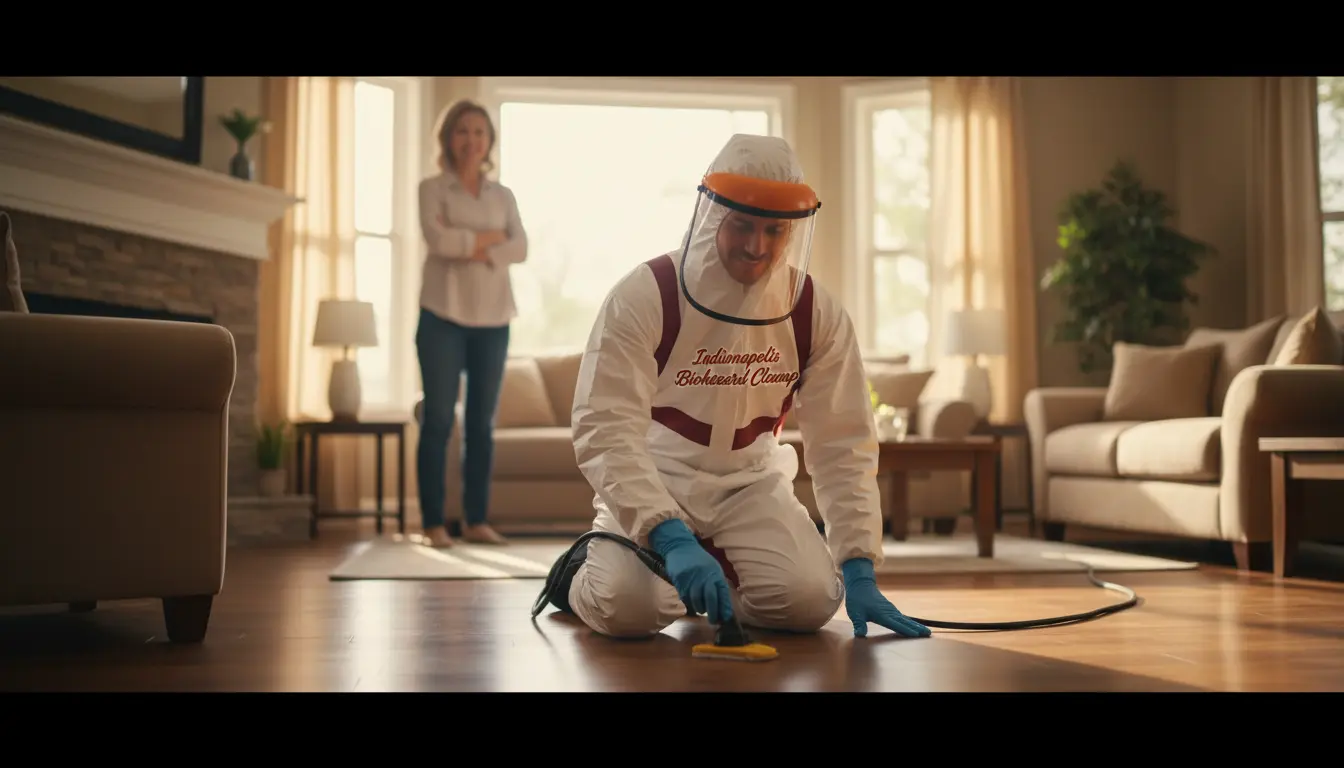
Every technician on site must be equipped with Level B personal protective equipment, including full-face respirators with HEPA filters, Tyvek suits, and cut-resistant gloves. Donning and doffing PPE follows a strict sequence to prevent cross-contamination. In Indianapolis, where summer humidity can exceed 80%, this gear also protects workers from the intense microbial activity that thrives in warm, damp conditions.
Site preparation involves removing all non-porous furniture and covering electrical outlets and vents. We also shut down the HVAC system to prevent the spread of bioaerosols throughout the structure. In multi-unit buildings, this step is crucial for protecting neighboring tenants.
Physical Removal and Chemical Sanitization
With the site secured, we begin the physical removal of all biohazardous materials. This includes blood-soaked carpeting, saturated drywall, and any porous items that cannot be effectively disinfected. For structural elements like wooden floor joists, we use specialized enzyme treatments that break down organic matter at the molecular level. After gross removal, we apply EPA-registered hospital-grade disinfectants with verified viral inactivation rates—typically quaternary ammonium compounds or accelerated hydrogen peroxide solutions.
The final phase of chemical sanitization involves adenosine triphosphate (ATP) testing. We use a bioluminescence reader to measure residual organic matter on surfaces. A reading below 100 relative light units (RLU) indicates a hygienic surface; anything higher requires re-cleaning. This objective metric ensures that no hidden biological material remains, which is particularly important in Indianapolis homes where subfloor moisture can reactivate dormant pathogens.
Professional Remediation vs. Standard Cleaning: A Data-Driven Comparison
The table below highlights the critical differences between professional biohazard remediation and a standard janitorial approach. The gap isn’t just about thoroughness—it’s about safety and legal compliance.
| Feature/Metric | Professional Biohazard Remediation | Standard Residential Cleaning |
|---|---|---|
| Regulatory Compliance | OSHA 29 CFR 1910.1030, EPA FIFRA, IICRC S540 | None or minimal |
| Pathogen Elimination | 99.99% reduction verified by ATP testing | Surface-level disinfection only |
| Structural Assessment | Full evaluation of porous vs. non-porous materials | Visual inspection only |
| Containment Protocols | Negative air pressure, isolation barriers | None |
| Waste Disposal | Regulated medical waste incineration | Standard trash disposal (illegal) |
Source: IICRC S540 Trauma and Crime Scene Cleanup Standard
Expert Insights: What Professionals Know That Others Don’t
After years of field work in Indianapolis, our lead technicians have developed a set of diagnostic insights that separate a thorough remediation from a hazardous half-measure. These are not theoretical—they come from hands-on experience handling everything from attic decompositions to bloodborne pathogen contamination in rental properties.
Hidden Biological Seepage
Bodily fluids do not stay on the surface. In a typical unattended death, blood and other fluids can seep through carpet padding and into the plywood subfloor within hours. If the subfloor is not tested with a moisture meter for biological indicators, the contamination will remain and can lead to long-term odor issues and microbial growth. We always cut back at least 12 inches beyond the visible stain to ensure all affected material is removed.
Porous Materials Require Replacement, Not Cleaning
Many property owners assume that cleaning a bloodstained area rug or upholstered sofa is sufficient. It is not. Porous materials like fabric, foam, and unsealed wood cannot be fully disinfected because bloodborne pathogens can penetrate deep into the fibers. The only safe option is removal and proper disposal according to Marion County regulations. Attempting to clean porous items is a violation of the IICRC S540 standard and puts future occupants at risk.
Negative Pressure Prevents Cross-Contamination
When the temperature in Indianapolis fluctuates dramatically, the air inside a home can become stagnant or drafty. Using negative air machines ensures that any airborne particles are drawn out of the work area and filtered through HEPA systems before being exhausted to the outside. Without this step, dislodged contaminants can spread to adjacent rooms—or even to neighboring properties in attached homes.
Common Mistakes Property Owners Make
It’s natural to want to save money or restore order quickly after a traumatic event, but certain shortcuts can have devastating consequences. Here are the most frequent errors we see in Indianapolis.
Using Household Bleach on Biological Matter – Household bleach is often diluted and lacks the contact time needed to kill bloodborne pathogens like hepatitis B or HIV. Moreover, bleach can react with biological proteins to create toxic fumes. We use only EPA-registered disinfectants with validated kill claims and appropriate dwell times.
Waiting for Odor to Dissipate Naturally – The smell of decomposition is not just unpleasant—it is a sign that airborne pathogens and volatile organic compounds are present. Waiting for odors to fade can take weeks, all while the contamination continues to degrade the structural integrity of the property. Prompt remediation is essential to prevent secondary damage like mold growth and insect infestation.
Allowing Untrained Personnel into the Site – Family members, friends, or well-meaning neighbors who enter a biohazard scene without proper PPE and training risk exposure to serious diseases. They can also track contaminants through the home, spreading the problem. Securing the site and calling professionals immediately is the only safe course of action.
Understanding the Cost of Professional Biohazard Cleanup
Pricing for biohazard remediation in Indianapolis varies widely depending on the specifics of each case. Transparency is important, so here is a realistic breakdown of what you can expect.
Standard site mobilization fees cover the travel, setup of containment equipment, and the initial risk assessment. These typically range from a few hundred to over a thousand dollars, depending on the complexity of the property layout.
Hourly remediation rates reflect the labor of trained technicians, the use of industrial equipment, and the cost of specialized disposal. In most cases, a full remediation takes between 4 and 12 hours for a single room.
Itemized costs for the disposal of biohazardous waste are based on weight. All materials removed from the site—including saturated carpet, drywall, and personal protective equipment—must be transported in designated biohazard bags to a licensed medical waste incineration facility. This is not optional; it is required by Indiana law.
Three factors that significantly influence the final cost include the extent of structural material replacement needed, the total volume of biohazardous waste generated, and the necessity for specialized HVAC decontamination if the system was running during the incident. A thorough on-site inspection is the only accurate way to determine pricing.
Safety Standards and Industry Certifications
Every biohazard remediation performed by Indianapolis Biohazard Cleanup adheres to the highest industry standards. Our technicians are certified by the IICRC in trauma and crime scene cleanup, and we strictly follow OSHA’s Bloodborne Pathogens Standard (29 CFR 1910.1030). This standard mandates specific procedures for handling human blood, certain body fluids, and any materials contaminated with these substances.
Equally important is the use of authorized waste management services. All biohazardous waste generated at a site is stored in leak-proof, labeled containers and transported under a medical waste manifest. The disposal facility incinerates the waste at temperatures exceeding 1,800 degrees Fahrenheit, ensuring complete destruction of all pathogens. This chain of custody protects everyone from the technician to the landfill worker.
For property owners, the practical result of these standards is peace of mind. You are not just getting a clean space; you are getting a space that has been scientifically verified as safe for reoccupation. This is especially relevant for rental properties in Indianapolis where landlords must ensure the safety of future tenants under landlord-tenant law.
Frequently Asked Questions About Unattended Death Remediation
What exactly happens during an unattended death cleanup?
An unattended death cleanup involves the removal of all biological materials, the disinfection of the affected area, and the restoration of the property to a safe condition. The process begins with containment and continues through physical removal, chemical disinfection, ATP testing, and final structural encapsulation if necessary. The goal is to eliminate all health risks and odors, allowing the property to be returned to its owner.
Is it safe for family members to be present during the cleanup?
We strongly recommend that family members do not remain on-site during the cleanup. The emotional toll of witnessing the process can be overwhelming, and there is a risk of exposure to airborne pathogens if containment is breached. Our team works compassionately and discreetly, and we provide regular updates without requiring the client’s physical presence.
Can an unattended death scene ever be fully decontaminated?
Yes, if the proper protocols are followed. However, certain materials like porous flooring and drywall may need to be removed entirely. With professional remediation, the vast majority of rooms can be restored to habitable condition. In rare cases where structural integrity is compromised, we coordinate with contractors to replace affected sections. ATP testing provides empirical evidence that all organic material has been eliminated.
How soon after discovery should cleanup begin?
Immediately. The longer biological materials remain in place, the greater the risk of pathogen spread, odor migration, and structural damage. In Indianapolis, where seasonal temperatures can accelerate decomposition, even a 24-hour delay can complicate the cleanup considerably. We offer emergency response services 24/7 to ensure rapid containment.
Professional Biohazard Remediation in Indianapolis
Biohazard cleanup is not a task for amateurs. The science, the regulations, and the emotional sensitivity required demand a team that is both highly trained and deeply respectful of the situation. At Indianapolis Biohazard Cleanup, we bring years of field experience, IICRC certification, and a commitment to restoring your property with integrity. Our technicians treat every site as if it were their own home, working carefully until the final ATP test confirms a zero-risk environment.
If you find yourself facing a biohazard situation in Indianapolis, know that you don’t have to handle it alone. We provide discreet, compassionate, and technically rigorous service from the initial assessment to the final sign-off. Contact us to learn more about our step-by-step guide to professional biohazard cleanup in Indianapolis and how we can help restore your property safely.