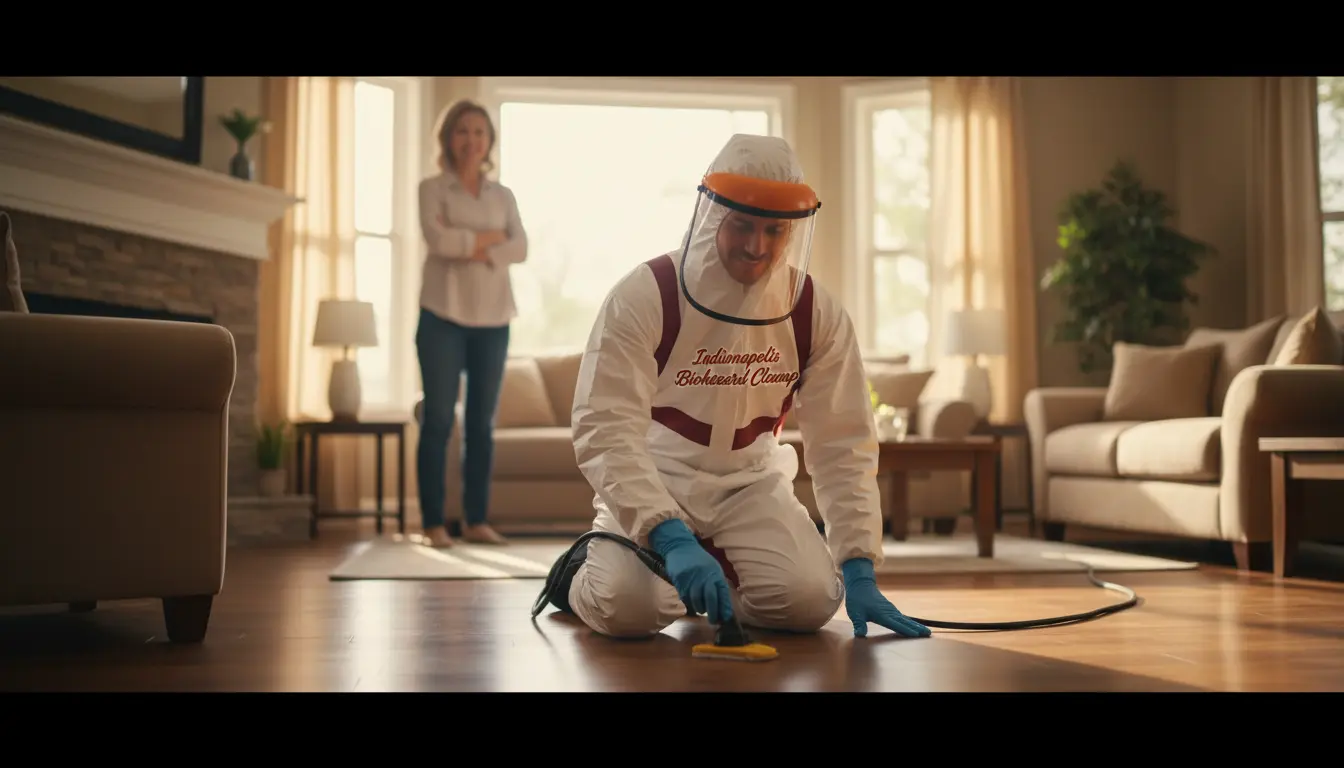
Most property managers and landlords in Indianapolis assume that standard cleaning crews, armed with bleach and good intentions, can handle the aftermath of a biohazard event like an unattended death or severe trauma. That assumption is not just wrong; it is a legally and medically dangerous fallacy that can lead to long-term property damage, tenant health crises, and significant liability exposure. The reality is that biohazard remediation is a specialized scientific discipline governed by strict OSHA, EPA, and IICRC standards, and treating it as an extension of housekeeping is a recipe for disaster in the Indianapolis rental market.
Indianapolis presents unique challenges for property managers. The city’s historic housing stock, with its porous wooden subfloors and unsealed brick foundations, can absorb biological fluids in ways that modern construction does not. Add to that the Midwest’s dramatic seasonal shifts—summer humidity that accelerates decomposition and winter freezes that complicate site access—and you have a scenario where only a trained professional can ensure complete structural decontamination. This is precisely where Indianapolis Biohazard Cleanup steps in as the authoritative, discreet, and technically rigorous partner for property owners who value both safety and asset preservation.
Why Professional Remediation Is Non-Negotiable for Indianapolis Properties
The first and most critical reason to hire a certified biohazard remediation specialist is the invisible threat of bloodborne pathogens. Hepatitis B, Hepatitis C, and HIV can remain viable in dried blood or other bodily fluids for days or even weeks, depending on environmental conditions. In an Indianapolis apartment building where turnover is rapid, a tenant exposed to these pathogens through a poorly cleaned carpet or baseboard could file a lawsuit that easily exceeds the cost of professional remediation. Standard cleaning agents simply do not achieve the required log reductions in pathogen load to render a site safe.
Second, the odor profile of biological decomposition is notoriously difficult to eliminate. Organic compounds like putrescine and cadaverine penetrate deep into porous materials, and masking them with air fresheners or ozone generators is a temporary fix at best. Professional remediation involves enzyme-based treatments that break down these compounds at a molecular level, followed by the application of sealants that encapsulate any remaining residues. This is not a cosmetic fix; it is a structural necessity that prevents ongoing tenant complaints and property devaluation in the competitive Indianapolis rental market.
The Technical Process of Biohazard Remediation
The remediation workflow begins long before any cleaning solution touches a surface. The first phase is a comprehensive risk assessment. A certified specialist arrives in full personal protective equipment (PPE) compliant with OSHA’s Bloodborne Pathogens Standard (29 CFR 1910.1030) and conducts a visual inspection complemented by adenosine triphosphate (ATP) fluorescence testing. This handheld device measures biological residue at the molecular level, revealing contamination that the naked eye cannot see. In an older Indianapolis home, for example, ATP testing might detect seepage through floorboards that has reached the crawlspace below.
Once the assessment is complete, the team establishes containment zones using poly sheeting and negative air machines that filter the air through HEPA filters. This negative pressure environment ensures that airborne pathogens do not migrate to unaffected areas of the property. The actual removal of biohazardous materials is performed using forensic-grade tools, including disposable scalpels for cutting away saturated carpet padding and industrial vacuums with HEPA filtration for capturing fine particulate matter. Every piece of removed material is double-bagged in biohazard-specific red bags and transported to a licensed medical waste incineration facility in compliance with Indiana Department of Environmental Management (IDEM) regulations.
Chemical Sanitization and Structural Encapsulation
After physical removal, the affected area undergoes a rigorous chemical sanitization process using EPA-registered hospital-grade disinfectants with verified viral inactivation rates. For instance, a quaternary ammonium compound might be applied with a dwell time of ten minutes to ensure complete pathogen elimination. This is followed by a second ATP test to confirm that biological residue levels have dropped below the threshold considered safe for human occupancy.
The final step is structural encapsulation. In many Indianapolis properties, especially those built before 1950, the subflooring is made of porous yellow pine. If biological fluids have soaked into this material, cleaning alone is insufficient. The specialist applies a commercial-grade sealant that bonds with the wood fibers, locking in any residual contaminants and preventing future odor release. This step alone can save a property manager from having to rip out entire sections of flooring, which would be far more expensive and disruptive.
Professional Remediation vs. Standard Janitorial Cleaning
The following table provides a clear, data-driven comparison between professional biohazard remediation and standard residential cleaning services. The differences are not subtle; they represent the gap between a safe, compliant property and a ticking legal liability.
| Feature/Metric | Professional Biohazard Remediation | Standard Residential Cleaning |
|---|---|---|
| Regulatory Compliance | Full compliance with OSHA 29 CFR 1910.1030, IICRC S540, and IDEM waste disposal regulations | No specialized biohazard training; no regulatory oversight |
| Pathogen Elimination | Verified via ATP fluorescence testing; log-6 reduction of bloodborne pathogens | No testing; reliance on household disinfectants that are ineffective against dried bodily fluids |
| Structural Assessment | Detailed inspection of subflooring, walls, and HVAC systems for hidden contamination | Surface-level cleaning only; no assessment of porous materials |
| Odor Elimination | Enzyme-based molecular breakdown followed by sealant encapsulation | Masking with fragrances; odor returns within days |
| Waste Disposal | Licensed medical waste incineration with chain-of-custody documentation | Standard trash disposal, which is illegal for biohazardous material |
Source: IICRC S540 Trauma and Crime Scene Cleanup Standard
Expert Insights: Three Diagnostic Tips for Property Managers
First, always test for hidden biological seepage using ATP meters. A clean-looking carpet can harbor dangerous levels of bacteria underneath. In one case in a historic Irvington home, the visible stain was small, but ATP readings behind the baseboard were off the charts. We had to remove the lower four inches of drywall to fully decontaminate the wall cavity. Second, understand that porous materials like unsealed grout, wood, and drywall almost always require replacement rather than cleaning. The molecular structure of these materials traps biological matter in a way that no amount of scrubbing can fully remove. Third, never underestimate the importance of negative pressure. In a multi-unit apartment building in Broad Ripple, failing to establish proper containment led to cross-contamination of an adjacent unit, doubling the remediation scope and cost for the property owner.
Common mistakes property owners make include relying on household bleach. While bleach is a disinfectant, it is rapidly inactivated by organic matter and can actually fix proteins to surfaces, making them harder to remove. Waiting for odor to dissipate naturally is another costly error; by the time an odor is detectable, biological fluids have already penetrated deep into structural materials. Allowing untrained maintenance staff to enter a contaminated site is perhaps the worst mistake. These individuals are not protected by proper PPE and can unknowingly carry pathogens to other parts of the building on their shoes or clothing, creating a secondary contamination zone that requires even more extensive remediation.
Pricing Structure for Biohazard Remediation in Indianapolis
- Standard site mobilization fee: $250 to $500, which covers the initial risk assessment, ATP testing, and setup of containment equipment. This fee is typically waived if the property owner contracts for full remediation services.
- Hourly remediation rate: $150 to $300 per hour per technician, depending on the complexity of the job and the number of specialists required. A typical unattended death in a single room may require 4 to 8 hours of labor.
- Specialized disposal costs: $50 to $150 per biohazard waste bag. Disposal is priced separately because it involves transportation to a licensed incineration facility and compliance with IDEM documentation requirements.
Three primary factors influence the total cost. The first is the extent of structural material replacement. If fluids have saturated the subflooring, the cost of cutting out and replacing plywood or hardwood adds significantly to the bill. The second factor is the total volume of biohazardous waste. A larger crime scene or a body that has been decomposing for weeks will generate more waste, requiring more disposal bags and incineration fees. The third factor is the need for specialized HVAC decontamination. If the property’s forced-air system has circulated contaminated air, the ductwork must be cleaned and disinfected, which can add $500 to $2,000 to the project.
Safety Standards and Certifications
Certifications are not just pieces of paper; they represent a verifiable commitment to safety and quality. Indianapolis Biohazard Cleanup holds IICRC certifications for trauma and crime scene cleanup, which require ongoing education in the latest remediation techniques. The company also complies fully with OSHA’s Bloodborne Pathogens Standard (29 CFR 1910.1030), which mandates specific protocols for handling sharps, disposing of contaminated waste, and using PPE. Every technician on a job site has completed a 40-hour Hazardous Waste Operations and Emergency Response (HAZWOPER) training program, ensuring they can safely manage the chemical and biological hazards present in a contaminated environment.
The practical importance of these standards cannot be overstated. For property managers, hiring a certified firm provides a documented chain of compliance that can be produced in the event of a legal dispute or a future tenant’s health claim. Without this documentation, a landlord is exposed to potentially ruinous liability. Furthermore, authorized waste management services ensure that biohazardous materials never end up in a standard Marion County landfill, where they could pose a public health risk. This is not just good practice; it is a legal requirement under Indiana law.
Frequently Asked Questions About Unattended Death Remediation
How long does the decomposition process take in an Indianapolis home, and how does that affect cleanup?
The decomposition timeline is heavily influenced by environmental conditions. In the summer, when Indianapolis temperatures regularly exceed 85°F and humidity levels hover above 80%, a body can reach advanced stages of decomposition within 48 to 72 hours. This rapid breakdown releases large volumes of fluids that saturate carpets, subflooring, and drywall. In the winter, decomposition slows, but the fluids that do escape freeze and thaw, which can cause structural damage like cracked floorboards. The longer the body remains undiscovered, the more extensive the remediation effort becomes. A two-week decomposition event may require replacing the entire subfloor in the affected room.
Can I simply repaint the walls after cleaning the visible stains?
No. Paint does not seal biological residues; it merely covers the visual evidence. Over time, the residual proteins in the wall will break down the paint, causing it to peel or discolor. More critically, pathogens can survive beneath the paint layer. Professional remediation requires that any wallboard that has been contacted by bodily fluids is either removed or treated with a specialized encapsulating primer that is registered for use on biohazard-affected surfaces. This is not a step that can be skipped without compromising the safety of future occupants.
Is it safe for my tenants to stay in the unit next door during remediation?
This depends on the containment procedures in place. If the remediation team establishes a negative pressure zone with HEPA filtration and seals all entry points between the affected unit and adjacent spaces, it may be safe for neighboring tenants to remain. However, in many older Indianapolis apartment buildings where walls are not sealed to modern standards, the safest approach is to relocate adjacent tenants for the duration of the work. A professional remediation company will conduct air quality monitoring to verify that no cross-contamination has occurred before allowing reoccupancy.
How do I know the property is truly clean after remediation?
The only reliable indicator is a post-remediation ATP test that shows readings below 100 relative light units (RLUs) on all treated surfaces. Visual inspection is insufficient because biological residues are often microscopic. A reputable remediation company will provide you with a written report that includes the pre- and post-remediation ATP readings, a chain-of-custody document for waste disposal, and a certificate of compliance with IICRC S540 standards. If a company cannot provide these documents, they have not fully decontaminated your property.
Professional Biohazard Remediation in Indianapolis
When a biohazard event occurs in one of your properties, the priority is not just cleaning; it is restoring the space to a condition that is safe for human habitation and free from legal liability. Indianapolis Biohazard Cleanup brings a level of technical rigor and compassionate professionalism that is unmatched in the local market. Every job is approached with the understanding that we are not just fixing a physical problem; we are helping property managers navigate a difficult and often traumatic situation.
Our team is available 24/7, and we understand the urgency of getting a property back on the market as quickly as possible without cutting corners. We handle all communication with insurance companies, provide detailed documentation for claims, and ensure that every step of the process is transparent and compliant with local regulations. For property managers in Indianapolis who value their reputation and their bottom line, there is no substitute for working with a certified, experienced partner.
If you are dealing with a biohazard situation in a rental property, do not risk the health of your tenants or the value of your investment. Contact Indianapolis Biohazard Cleanup today for a discreet, thorough, and scientifically sound remediation. For more information on our specific services, including blood cleanup, odor removal, and disinfection services, please visit our website or call our office. We are here to help you restore safety and peace of mind.